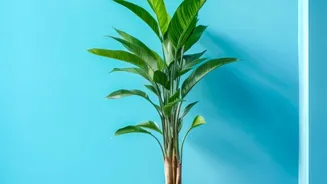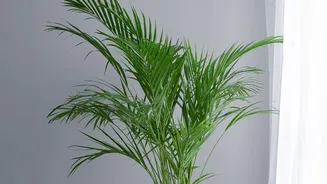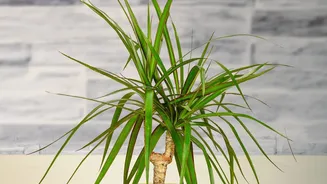





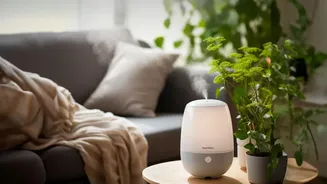
We all love our indoor jungles, and for years we've been told they're silent guardians, scrubbing our air clean. But while plants are wonderful, the idea that a few pots can replace an air filter is a persistent myth.
The NASA Study That Started It All
The belief in air-purifying plants
largely stems from a 1989 NASA study. Facing the challenge of maintaining air quality in sealed space stations, researchers placed common houseplants in small, airtight chambers and injected pollutants like benzene and formaldehyde. The results were promising: the plants, along with microbes in the soil, did absorb some of these volatile organic compounds (VOCs). The study identified species like peace lilies and snake plants as effective, and the 'clean air plant' movement was born. For decades, this has been cited as definitive proof that surrounding ourselves with greenery is a simple fix for indoor pollution.
A Reality Check on The Science
The problem is that your living room is not a sealed NASA chamber. Subsequent reviews by environmental scientists have highlighted a critical flaw in applying these findings to a real-world home. Our homes and offices have constant air exchange from ventilation, open windows, and simple drafts. This process, known as the air exchange rate, dilutes pollutants far more quickly and effectively than a few plants can absorb them. The NASA experiments were conducted in static, contained environments, which doesn't reflect the dynamic conditions of an actual room where pollutants are continuously introduced and air is always moving.
How Many Plants Do You Really Need?
To truly replicate the air-cleaning effects seen in the lab, the number of plants required is staggering. A 2019 review published in the Journal of Exposure Science and Environmental Epidemiology calculated that you would need anywhere from 10 to 1,000 plants per square metre of floor space to compete with a building's standard ventilation. To put that in perspective, a small 15-square-metre room would require between 150 and 15,000 plants to make a meaningful difference. This turns the dream of a clean-air oasis into an impractical indoor jungle. Some recommendations from the original NASA scientist suggested two large plants per 100 square feet, but even this is now considered insufficient for significant purification.
What Plants Actually Do For Us
This doesn't mean you should abandon your leafy friends. While they aren't powerful air scrubbers, indoor plants have proven benefits that technology can't replicate. Studies show that being around greenery reduces stress, improves mood, and can even boost focus and productivity. Through a process called transpiration, plants also release water vapour, which can help regulate humidity levels, especially in dry winter months. They are beautiful, living decor that connects us to nature. The key is to love them for what they are: a boost for your well being, not a substitute for an air filter.
What Truly Cleans Your Air
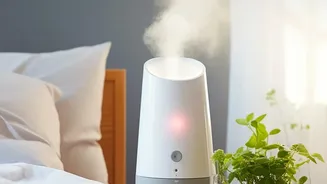
For genuinely clean air, technology and ventilation are king. Mechanical air purifiers with HEPA (High Efficiency Particulate Air) filters are designed to capture 99.97% of tiny airborne particles like dust, dander, and pollen. These devices are rated by their Clean Air Delivery Rate (CADR), which measures how quickly they can filter a room. A typical air purifier has a CADR thousands of times higher than a houseplant. Paired with an activated carbon filter, they can also adsorb the very VOCs that plants were tested on. The simplest method of all is still one of the best: opening your windows to allow for natural ventilation and the exchange of stale indoor air for fresh outdoor air.