






Gross Loss vs. Net Change
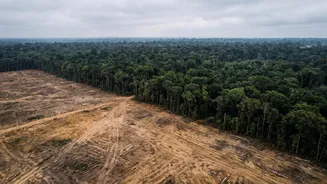
The headline figure of 489 million hectares represents gross deforestation—the total area of forest cleared for other uses like agriculture or infrastructure. However, this isn't the complete story. During the same period, the world also gained forest area through
reforestation and natural expansion. When these gains are subtracted from the losses, we get the 'net change'. The annual rate of this net forest loss has actually slowed significantly, falling from 10.7 million hectares per year in the 1990s to 4.1 million hectares per year between 2015 and 2025. While this is a positive trend, the planet is still losing a vast area of forest annually. The rate of deforestation, though declining, remains alarmingly high at nearly 11 million hectares per year.
Agriculture: The Primary Driver
The overwhelming driver of this forest loss is agriculture. The conversion of forests to create farmland for crops and grazing land for livestock accounts for the majority of deforestation, particularly in the tropics. Growing global demand for commodities like palm oil, soy, and beef has created powerful economic incentives to clear forested land. This is often a permanent change; once a forest is converted for large-scale agriculture, it rarely returns. Beyond farming, other significant factors include infrastructure development, such as building roads which open up previously inaccessible forests to clearing, logging, mining, and urban expansion. Climate change itself is also creating a dangerous feedback loop, where hotter, drier conditions lead to more frequent and intense wildfires, further degrading and destroying forests.
A Story of Two Halves
The story of deforestation is not uniform across the globe. The vast majority of forest loss—around 88%—has occurred in the tropics. South America and Africa have seen the most significant losses since 1990. Brazil, home to a huge portion of the Amazon rainforest, has consistently registered the highest rates of forest loss. Conversely, some parts of the world have seen their forest area stabilize or even grow. Over the past few decades, forest area has actually increased in Asia, Europe, and North America due to concerted reforestation efforts and natural regrowth on abandoned agricultural land. For example, China has undertaken massive tree-planting initiatives, significantly boosting its forest cover. However, these gains do not fully compensate for the loss of ancient, biodiverse tropical rainforests.
Why It Matters for Everyone
The loss of forests, no matter where it happens, has global consequences. Forests are crucial carbon sinks, meaning they absorb vast amounts of carbon dioxide from the atmosphere, helping to regulate the climate. When they are destroyed, that stored carbon is released, accelerating climate change. Deforestation is a major contributor to global greenhouse gas emissions. Furthermore, these ecosystems are home to an estimated 80% of the world's terrestrial biodiversity. Clearing forests destroys habitats, pushing countless species of plants and animals toward extinction and disrupting delicate ecosystems. For billions of people, forests are also a direct source of food, fuel, and livelihoods, and they play a vital role in regulating rainfall and water cycles.
Is There Hope?
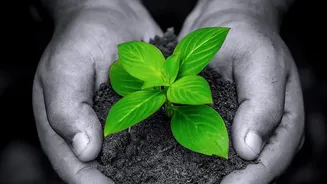
Despite the immense scale of the problem, the data offers some reason for cautious optimism. The fact that the rate of net forest loss has more than halved since the 1990s shows that progress is possible. This is the result of reduced deforestation in some nations and increased afforestation (planting new forests) and reforestation in others. Around the world, more forests are being placed within protected areas and are covered by long-term management plans. Over 90 countries have pledged to restore a combined 190 million hectares of forest. However, the UN warns that the world is not on track to meet its goal of halting deforestation by 2030. The window of opportunity is narrowing, and sustained global commitment is critical to protect and restore these vital ecosystems for future generations.