






The Collapse of Old Frameworks
For years, the international community's approach to Iran's nuclear program was centered on the Joint Comprehensive Plan of Action (JCPOA). Despite its contested legacy, the deal represented a framework where diplomacy was firewalled, to some extent,
from regional politics. However, after the deal's unraveling and failed attempts to revive it through 2025, that era of negotiation definitively ended. Tensions escalated throughout the period, culminating in Iran suspending its cooperation with the International Atomic Energy Agency (IAEA), a move that shattered the remaining mechanisms of trust and transparency. This collapse didn't happen in isolation; it was fueled by a long-standing 'cold war' between Iran and its regional rivals, particularly Saudi Arabia, which had already spawned proxy conflicts across Yemen, Syria, and Iraq. The diplomatic track had run out of road, and the stage was set for a more kinetic phase.
From Proxy Battles to Open War
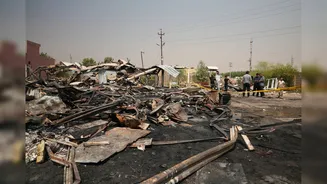
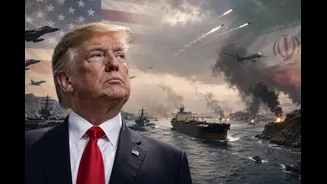
The long-simmering tensions finally boiled over in early 2026. What began as US and Israeli strikes against Iranian military and nuclear infrastructure erupted into a direct and widespread conflict. Iran responded with a torrent of missile and drone attacks, not just against military targets but also against the infrastructure of its regional adversaries, including Saudi Arabia and the UAE. Suddenly, the abstract concept of 'regional fighting' became a concrete reality, with major explosions rocking capital cities and key economic sites like oil refineries being targeted. This escalation marked a significant shift, pulling regional powers like Saudi Arabia from a position of wary observation into direct participation in strikes against Iranian-backed forces. The conflict demonstrated, in the most brutal fashion, that the proxy battlefields and the homeland were no longer separate domains.
A Battlefield of Leverage
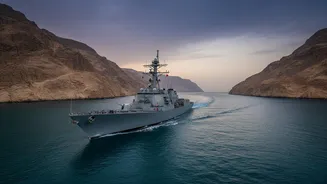
In this new, volatile environment, both regional fighting and nuclear ambitions become tools of leverage. From Iran's perspective, its network of regional proxies and its ability to threaten crucial waterways like the Strait of Hormuz are compensatory measures against its conventional military and economic disadvantages. These actions serve as a powerful, asymmetric way to push back against sanctions and military pressure. Conversely, for the United States and its allies, military actions are framed as necessary to degrade Iran’s capabilities and prevent it from acquiring a nuclear weapon, a policy sometimes referred to as 'mowing the grass'—recurring strikes to manage, rather than solve, the problem. This dynamic creates a vicious cycle: regional attacks justify military responses, which in turn provoke further regional destabilization as a form of retaliation. The bargaining table and the battlefield have effectively merged.
The Stakes for Global Stability and India
This instability has profound implications for the rest of the world, and particularly for India. The Strait of Hormuz is a vital artery for global energy supplies, and any disruption, let alone a full-blown conflict, sends shockwaves through oil and gas markets, directly impacting India’s energy security and economy. The current, fragile diplomatic efforts, mediated by countries like Qatar, are now focused on a more immediate and practical goal: de-escalating tensions just enough to reopen this crucial waterway. This represents a significant downscaling of ambitions, moving from a comprehensive nuclear deal to basic crisis management. For India, which maintains complex and important relationships with all major players in the region—including Iran, Saudi Arabia, Israel, and the US—the conflict creates an intensely difficult diplomatic balancing act. Navigating this web of hostilities without alienating key partners is a monumental challenge.