





A Song Born in a Nation's Awakening
The journey of 'Jana Gana Mana' began long before it became the official anthem. Penned by the Nobel laureate Rabindranath Tagore, the song was first composed as 'Bharoto Bhagyo Bidhata' on December 11, 1911. It was written in a highly Sanskritised form
of Bengali, making its verses accessible across different linguistic regions. The song was first performed publicly by Tagore’s niece, Sarala Devi Chowdhurani, and a group of students at the Calcutta session of the Indian National Congress on December 27, 1911. From its inception, the song was intended as a hymn that captured the spirit of pluralism and the unity in diversity that formed the core of India’s cultural heritage. An early controversy, which alleged the song was written in praise of King George V, was strongly refuted by Tagore himself in 1937.
A Chorus for Freedom
While 'Jana Gana Mana' grew in prominence, it was not the sole soundtrack to the independence movement. 'Vande Mataram', a poem from Bankim Chandra Chatterjee's novel Anandamath, was a powerful and popular rallying cry for freedom fighters. Both songs held immense emotional and historical weight. The global stature of 'Jana Gana Mana' grew when it was adopted by Subhas Chandra Bose's Indian National Army as its anthem in a Hindustani version, 'Shubh Sukh Chain', in 1941. It was even played by the Radio Symphony Orchestra of Hamburg in 1942. A pivotal moment occurred at midnight on August 14, 1947, when the Constituent Assembly concluded its first session as a sovereign body by unanimously singing 'Jana Gana Mana', signalling its de facto acceptance by India's new leaders.
The Constituent Assembly's Final Touches
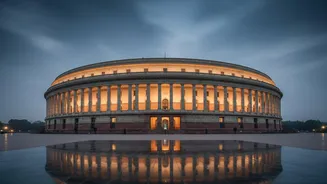
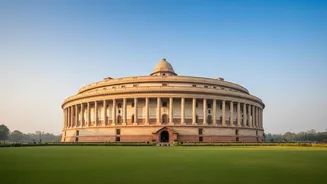
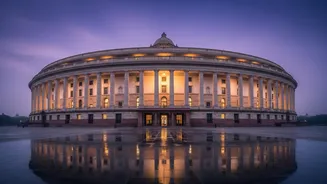
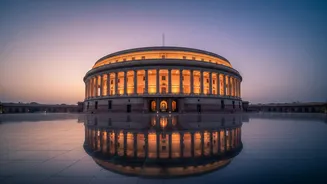
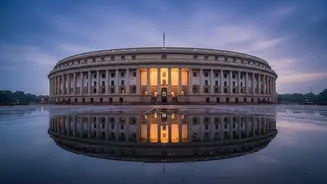
Between 1947 and 1950, the Constituent Assembly was meticulously drafting the Constitution of India, the supreme law that would govern the new republic. While the core articles were debated and finalised, the formalisation of national symbols like the anthem remained pending. The Constitution was officially adopted by the Assembly on November 26, 1949. However, the work was not yet complete. The final document was to be signed and brought into full effect on January 26, 1950. In the interim, the Assembly convened for one last session.
The Proclamation of January 24, 1950
The decisive moment for the national anthem came on January 24, 1950, just two days before India became a republic. During the final session of the Constituent Assembly, its President, Dr. Rajendra Prasad, addressed the pending issue. Instead of a formal resolution and vote, Dr. Prasad made a definitive statement. He declared that 'Jana Gana Mana' would be the National Anthem of India. This act was one of the last official proceedings of the body that framed the nation's future, cementing the song’s place in history at the very moment the framework of the new India was finalised.
An Equal Honour for Vande Mataram
In the same historic statement, Dr. Rajendra Prasad acknowledged the immense contribution of 'Vande Mataram' to the freedom struggle. He announced that 'Vande Mataram' would be honoured equally and would have the same status as 'Jana Gana Mana'. This established 'Vande Mataram' as India's national song. The decision was a masterful stroke of consensus-building, respecting the legacy of two powerful patriotic songs that had inspired a nation. It ensured that while 'Jana Gana Mana' served the official function of the anthem, the historic and emotional significance of 'Vande Mataram' was also formally recognised and preserved for posterity.