








A Fireball Over the Ocean
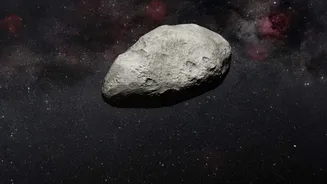
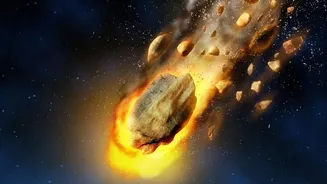
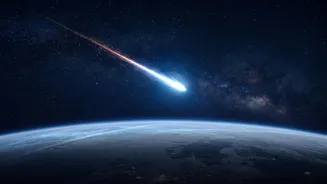
On September 6, 2026, a small space rock, initially designated CERNQ52, entered Earth's atmosphere. The object, estimated to be only about 80 centimetres to 1.5 metres across, disintegrated harmlessly over the Indian Ocean, northwest of Australia. Due
to its tiny size, NASA and the European Space Agency (ESA) confirmed it posed zero threat, with most objects smaller than 25 metres burning up completely upon entry. For anyone on the ground, the event was a non-issue. But for astronomers and planetary defense experts, it was a thrilling success story and a crucial real-world test.
Found Just Hours Before Entry
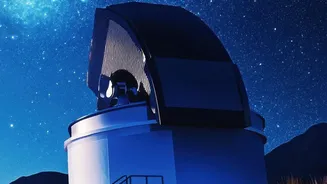
What made this event so remarkable was that astronomers saw it coming. The Mount Lemmon Observatory in Arizona, part of the Catalina Sky Survey, first detected the object just hours before it reached our atmosphere. This was only the 13th time in history that an asteroid has been detected on an impact trajectory just before hitting Earth. Upon discovery, automated systems immediately flagged it, and observatories around the world began tracking its path. Within a short time, its size, trajectory, and impact zone were calculated with impressive accuracy, predicting its fiery demise over a remote stretch of ocean. This rapid detection and analysis is the core mission of modern planetary defense.
A Crucial Test for Planetary Defense
Finding a small, fast-moving rock in the vastness of space is like finding a needle in a cosmic haystack. These objects are dim and move quickly, making them incredibly difficult to spot. Successfully identifying CERNQ52 and predicting its impact demonstrates the growing capability of global detection networks. These systems, funded and coordinated by bodies like NASA's Planetary Defense Coordination Office (PDCO), are designed to find, track, and characterize near-Earth objects (NEOs). While CERNQ52 was harmless, the same systems that found it are our first line of defense against larger, more threatening asteroids. Each detection like this serves as an invaluable real-time drill, allowing scientists to refine their models and response times.
From Surprise Threats to Proactive Strategy
The significance of this detection becomes clearer when compared to past events. In 2013, a much larger, 20-metre asteroid exploded over Chelyabinsk, Russia, without any prior warning, injuring over 1,500 people from its shockwave. That event served as a global wake-up call, highlighting the very real danger posed by undiscovered NEOs. Since then, investment in planetary defense has grown significantly. The ultimate goal is not just to find asteroids but to be able to act. NASA's DART (Double Asteroid Redirection Test) mission in 2022 successfully demonstrated that a spacecraft could alter an asteroid's orbit. Detection, as shown with CERNQ52, is the critical first step in any deflection strategy. The earlier we can spot a potential threat, the more time we have to mount a response.
The Future of Watching the Skies
The detection of CERNQ52 is a testament to the effectiveness of current survey programs like the Catalina Sky Survey. However, the work is far from over. NASA estimates that while most of the truly large, "planet-killer" asteroids have been found, we have only identified about 40% of the asteroids larger than 140 metres—big enough to devastate a city or region. Future projects aim to close that gap. The upcoming Vera C. Rubin Observatory and NASA's NEO Surveyor space telescope are specifically designed to dramatically increase our detection capabilities. These next-generation observatories will be able to find smaller, dimmer asteroids farther from Earth, providing us with years or even decades of warning, rather than hours.