






A Convergence of Crises
The 49th ASEAN Summit, held from November 15-17, took place against a backdrop of significant global uncertainty. Leaders from the 11-member bloc faced a formidable list of challenges that threaten the region's long-term prosperity. High on the list were
the economic shockwaves from conflicts in the Middle East and Ukraine, which have driven up energy and food prices for import-dependent nations. This external pressure combines with internal strains, including the unresolved political and humanitarian crisis in Myanmar, which continues to test the bloc's unity and effectiveness. As host nation President Ferdinand Marcos Jr. warned, global developments are reshaping the region faster than any single country can manage alone, making collective action more critical than ever.
The Geopolitical Squeeze
A central theme of the summit was the intensifying rivalry between the United States and China. ASEAN has long prided itself on its neutrality, but the pressure to align with either Washington or Beijing is becoming increasingly difficult to navigate. This geopolitical tug-of-war has direct economic consequences, impacting investment flows and supply chain strategies across Southeast Asia. The attendance of high-level leaders, including Chinese Premier Li Qiang and US President Donald Trump, underscored the region's strategic importance. While China highlighted its trillion-dollar trade relationship with the bloc, the US engaged in parallel 'Quad' meetings with India, Japan, and Australia, signalling a clear focus on counterbalancing Chinese influence. For ASEAN members, the challenge is to maintain economic partnerships with all sides without being drawn into their disputes, a balancing act that is becoming ever more precarious.
Forging A Path to Resilience
Despite the gloomy outlook, the summit was not just about diagnosing problems. Leaders focused on concrete steps to bolster regional resilience. A major achievement was the signing of the ASEAN Digital Economy Framework Agreement (DEFA), a landmark deal designed to harmonise rules for digital trade and payments. This agreement aims to unlock new growth, with projections that it could double the region's digital economy to $2 trillion by 2030. Discussions also revolved around strengthening energy security through initiatives like regional power grids and shared petroleum reserves, as well as reinforcing food supply chains by expanding emergency reserves beyond just rice. These efforts reflect a growing recognition that ASEAN's future stability depends on its ability to build integrated and resilient internal systems that can withstand external shocks.
Why It Matters for India
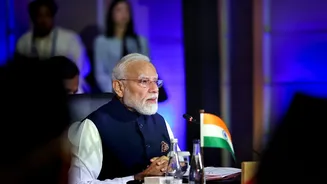
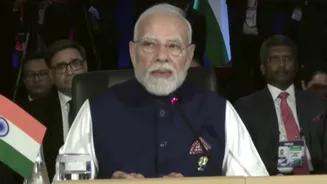
The economic health of Southeast Asia is of profound strategic importance to India. A stable and prosperous ASEAN is the cornerstone of India's 'Act East' policy, which seeks to deepen economic and strategic ties with the region. Prime Minister Narendra Modi, who attended the related East Asia Summit, stressed the need for a partnership built on collaboration to ensure peace and stability across the wider Indo-Pacific. India's trade with ASEAN stands at over $128 billion, and both sides are working to review their existing trade agreement to boost market access and fortify supply chains. Furthermore, cooperation in areas like maritime security, digital infrastructure, and connectivity projects are vital for India's ambitions to play a larger role in the region and counterbalance China's expanding influence. An unstable ASEAN would not only disrupt trade but also complicate New Delhi's broader geopolitical objectives.