



The Power of a Simple Hold
Saina Nehwal recently embraced a “29-Day Plank Challenge” as part of a National Sports Day initiative, showcasing her incredible core strength and endurance. While athletes like her can hold the position for minutes, the beauty of the plank lies in its
scalability. It is an isometric exercise, meaning you engage muscles by holding a static position rather than moving. This makes it a powerful tool for everyone, from elite sportspeople to absolute beginners looking to improve their fitness. The exercise primarily targets the deep muscles of your core, including your abdominals, back, glutes, and shoulders, which are crucial for stability and overall strength.
More Than Just Abs
The benefits of incorporating planks into your routine extend far beyond a toned stomach. A strong core acts like a natural corset, supporting your spine and helping to improve your posture. This can lead to a reduction in back pain, an issue many people face from sitting for long periods. By strengthening the muscles around your trunk, you enhance your body's overall balance and stability, which is vital for performing everyday activities with ease and reducing the risk of injury. Furthermore, planking engages multiple muscle groups at once—including your shoulders, chest, and thighs—making it a highly efficient, full-body exercise.
How to Do a Plank Correctly
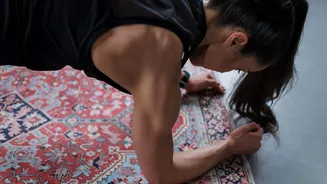
Proper form is everything when it comes to planking. Doing it incorrectly not only reduces the benefits but can also strain your back and shoulders. For a standard forearm plank, start by lying on your stomach. Place your forearms on the floor with your elbows stacked directly under your shoulders and palms flat. Lift your hips off the floor, extending your legs straight behind you and balancing on your toes. Your body should form a straight, rigid line from your head to your heels. Engage your core by pulling your belly button in towards your spine, and squeeze your glutes to keep your hips from sagging. Keep your gaze on the floor just in front of your hands to maintain a neutral neck position.
Common Beginner Mistakes to Avoid
Three common mistakes often trip up beginners. The first is letting the hips sag towards the floor, which puts pressure on the lower back. This usually happens when the core is not engaged enough. The second is the opposite: raising your buttocks too high in the air, which takes the workload off your abs. Remember to maintain that straight body line. The third mistake is dropping your head or looking up, which strains the neck. Your head and neck should always be an extension of your back. If you feel your form breaking, it's better to end the plank, rest, and try again rather than holding a poor position.
Your First 7-Day Plank Plan
Inspired to start your own challenge? The key is gradual progression. Don't aim for a two-minute hold on your first day. Focus on quality over quantity. Here’s a simple plan to get you started: Day 1: Hold for 20 seconds. Rest for 30 seconds. Repeat 2 times. Day 2: Hold for 20 seconds. Rest for 30 seconds. Repeat 3 times. Day 3: Hold for 30 seconds. Rest for 30 seconds. Repeat 2 times. Day 4: Rest or practice form with 10-second holds. Day 5: Hold for 35 seconds. Rest for 30 seconds. Repeat 2 times. Day 6: Hold for 45 seconds. Rest for 30 seconds. Repeat once. Day 7: Try to hold the plank for a full 60 seconds. If holding for the full time is too difficult, break it into shorter intervals. Consistency is more important than duration when you are building foundational strength.