






A Collision Course with the Moon
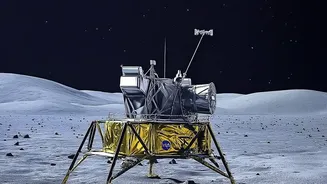
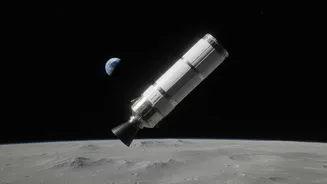
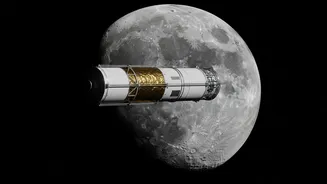
On August 5, 2026, a four-tonne upper stage of a Falcon 9 rocket is predicted to slam into the Moon at over 8,700 kilometres per hour. The object is leftover from a January 2025 mission that successfully sent two commercial lunar landers, Firefly's Blue
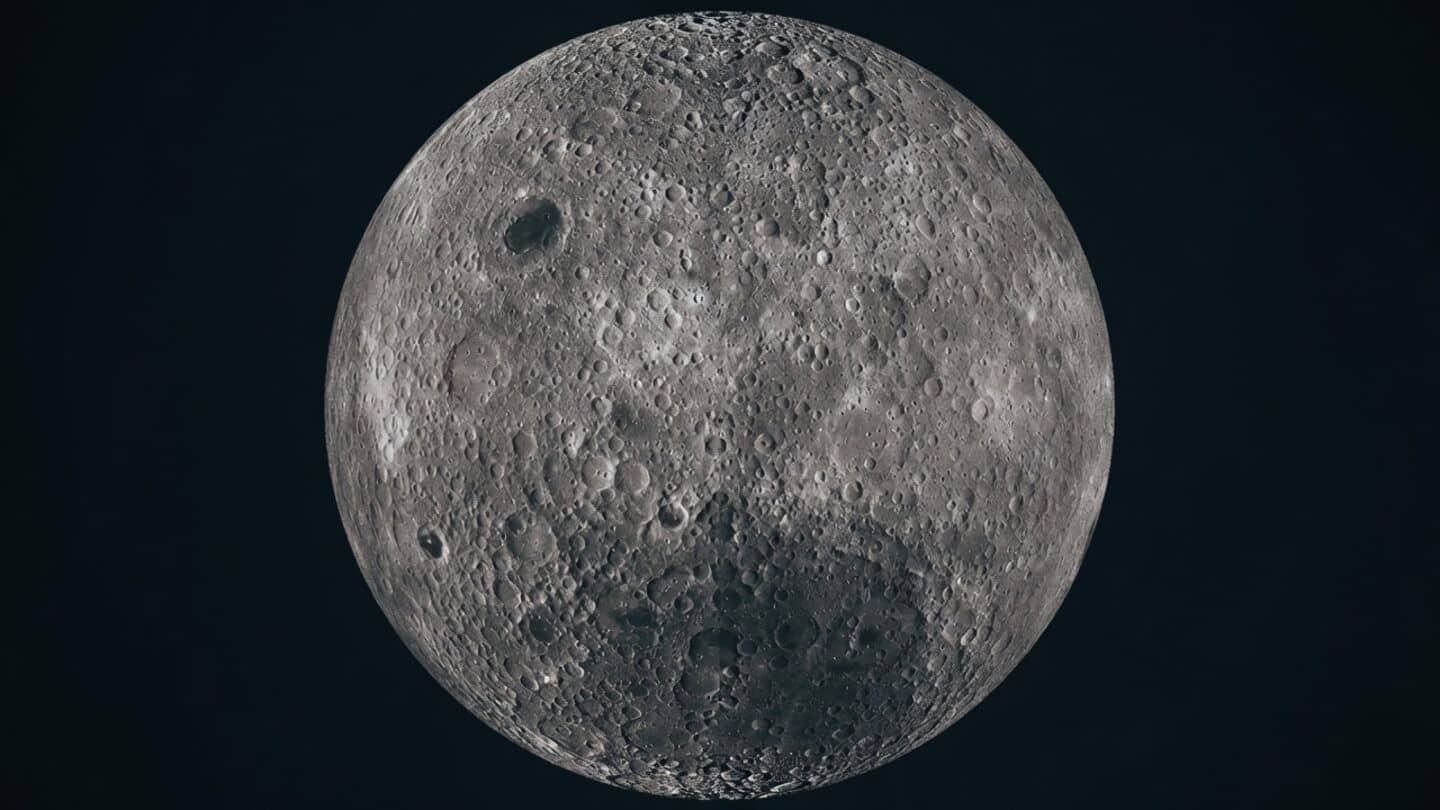
Ghost-1 and ispace's Hakuto-R, towards the Moon. After completing its primary job, the rocket stage had insufficient fuel to either return to Earth's atmosphere for disposal or escape into a stable orbit around the sun. Instead, it entered a chaotic, high-Earth orbit where its trajectory was eventually captured by lunar gravity, setting it on a collision course. Astronomers have been tracking the object, designated 2025-010D, and predict it will strike near the 181-kilometer-wide Einstein Crater, on the western edge of the side of the Moon visible from Earth.
An Accidental Scientific Experiment
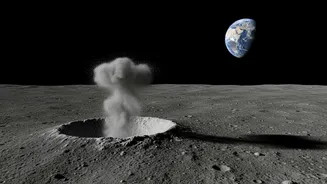
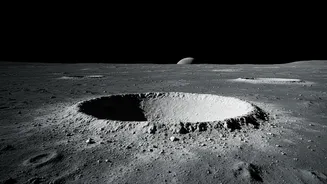
While the impact is accidental, the scientific community sees it as a valuable, albeit uncontrolled, experiment. Researchers know the object's mass, velocity, and composition, allowing them to model the impact and compare the predictions to what actually happens. The collision is expected to create a crater between 20 and 30 meters wide, kicking up a plume of lunar dust and rock, known as ejecta, that could rise dozens of kilometers above the surface. By studying this ejecta, scientists hope to learn more about the composition of the lunar subsurface, potentially revealing materials hidden beneath the top layer of loose rock, or regolith. NASA's Lunar Reconnaissance Orbiter (LRO) will attempt to image the site before and after the collision to locate the new crater and analyze its features, providing crucial data for crater formation models.
What Might We See?
Unlike a solid asteroid, the Falcon 9 stage is a hollow, complex structure. This could result in a uniquely shaped impact site. A similar event in 2022, when a rocket booster later identified as being from a Chinese mission struck the Moon's far side, created a surprising double crater. Scientists theorize that the object had large masses at each end, causing two distinct impacts. The upcoming SpaceX impact could create a similar double feature or something entirely new. Some models predict the resulting dust plume may even be briefly visible from Earth with sensitive telescopes against the dark edge of the Moon. This gives astronomers a rare chance to study the dynamics of an impact plume in real-time, which is usually only possible with planned missions.
The Growing Problem of Space Junk
This event highlights a growing concern: the accumulation of space debris not just around Earth, but in the wider Earth-Moon system. While NASA deliberately crashed Apollo-era rocket stages into the Moon to calibrate seismometers, this is one of the first known unintentional impacts of a large piece of debris. Currently, there are no international regulations governing the disposal of hardware in deep space. As more government and commercial missions target the Moon, the risk of accidental collisions and the accumulation of debris on the lunar surface increases. This raises complex questions about planetary protection and preserving scientifically and historically important sites on the Moon, like the Apollo landing locations. Experts argue that better tracking and management of deep-space junk are becoming essential as humanity expands its permanent presence beyond Earth.