








A Historic Liftoff
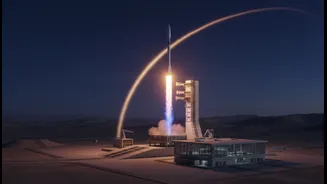
On July 18, 2026, Hyderabad-based startup Skyroot Aerospace made history by successfully launching its Vikram-1 rocket from the Satish Dhawan Space Centre in Sriharikota. Dubbed 'Mission Aagaman', which translates to 'Arrival', the event marked India’s
first-ever private orbital launch. This achievement places India in an elite club alongside the United States and China as countries with private companies capable of sending payloads into a stable orbit around Earth. The Vikram-1, a seven-story, four-stage vehicle, performed flawlessly, deploying its satellite payloads into Low Earth Orbit just minutes after liftoff. This wasn't just a test; it was a declaration that India's private space sector has arrived on the global stage.
Why a Private Rocket Is a Game-Changer
For decades, the Indian Space Research Organisation (ISRO) was the sole custodian of India's space ambitions. While its achievements are monumental, the opening of the sector to private players in 2020 was designed to accelerate growth and innovation. Private companies like Skyroot Aerospace bring a different approach—one driven by commercial demand, speed, and cost-efficiency. They cater to the booming global market for small satellite launches, a segment where demand often outstrips supply. The success of Vikram-1, which uses advanced carbon-composite structures and 3D-printed engines to reduce weight and cost, demonstrates that Indian startups can build world-class technology independently. This frees up ISRO to focus on more complex, research-heavy missions like human spaceflight and deep space exploration, while private firms handle the more routine, commercial launches.
From Ambition to Career Evidence
The most profound impact of Vikram-1’s success is on the ground. It provides concrete evidence that a vibrant career in the space industry is possible within India. Previously, many of the country's brightest aerospace engineers had to seek opportunities abroad. Now, a thriving ecosystem of over 400 space startups is creating thousands of high-value jobs at home. Skyroot Aerospace alone employs over a thousand people. These are not just roles for rocket scientists. The demand spans manufacturing, software development, AI and machine learning, data analytics, telecommunications, and robotics. Following the success of missions like Chandrayaan-3, student interest in aerospace engineering has surged, and Vikram-1 solidifies this trend by showing a clear pathway from university to a cutting-edge job in a domestic company.
The Ripple Effect on Everyday Life
While rocket launches feel distant, their impact is deeply connected to everyday life. The satellites deployed by vehicles like Vikram-1 power services we increasingly rely on. They enhance GPS navigation, improve weather forecasting for farmers and disaster management agencies, enable better communication networks in remote areas, and provide data for urban planning and monitoring climate change. The growth of the private space sector also fuels a broader industrial upgrade. It stimulates advancements in advanced materials, precision manufacturing, and software—capabilities that benefit the entire economy. As India's share of the global space economy is projected to grow from 2% to over 8% by 2033, this will translate into significant economic growth and more opportunities for the nation's workforce.