


Rethinking the Red Planet's Plumbing
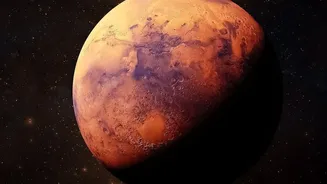
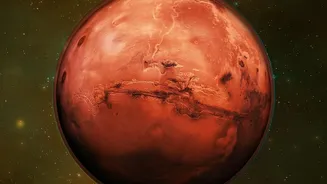
For years, the prevailing view of Martian geology was that of a 'stagnant lid' planet. Unlike Earth, with its dynamic tectonic plates constantly shifting and recycling crust, Mars was seen as geologically simpler. Scientists largely assumed its colossal
(but now dormant) volcanoes sat atop isolated, individual magma chambers. This new study, published in Nature Astronomy, dramatically revises that picture. It proposes that Mars once hosted enormous, interconnected magmatic systems that stretched for hundreds, possibly thousands, of kilometres beneath the northern hemisphere. This phenomenon, known as 'transcrustal magmatism,' was previously thought to be a feature unique to Earth, driven by the engine of plate tectonics. The new findings suggest Mars may have achieved this complexity without them.
Listening to the Heart of Mars
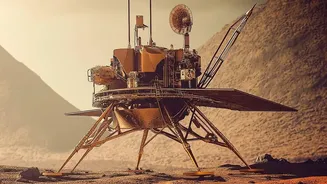
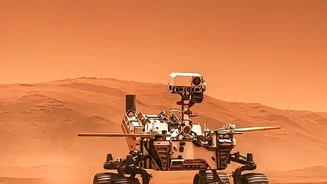
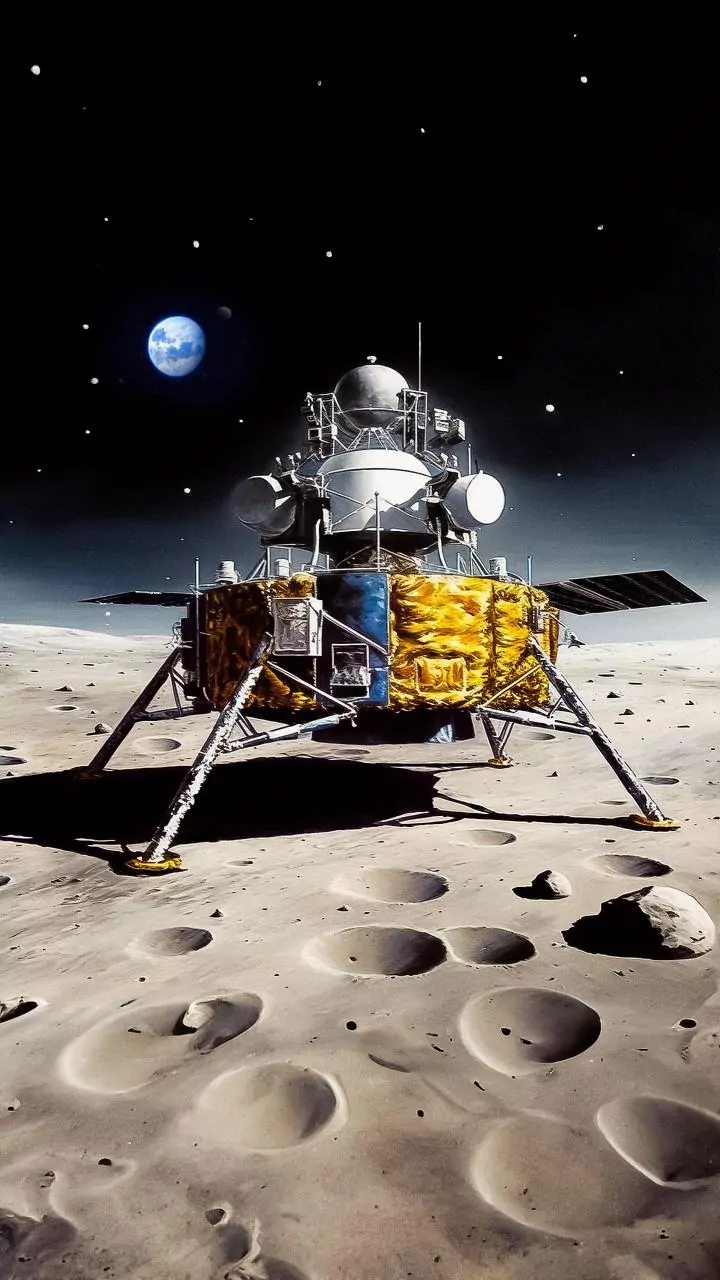
The key evidence for this underground network came from an unexpected source: marsquakes. Data gathered by NASA’s InSight lander, which placed the first seismometer on the Martian surface in 2018, allowed researchers to listen to the planet's interior. By studying how seismic waves from meteorite impacts and internal tremors travelled through the planet, scientists identified a mysterious boundary about 24 kilometres below the surface. The Oxford team used advanced modelling to determine what could cause this boundary. Their analysis pointed to one compelling answer: a layer of molten rock pooling deep within the crust. This suggested not just isolated pockets of magma, but a widespread, interconnected system capable of processing and evolving molten rock over vast areas and long periods.
A More Earth-Like Past?
The discovery that Mars could have sustained such a complex internal plumbing system has profound implications. On Earth, these kinds of large-scale geological processes are crucial for building continents and regulating the climate. They help recycle elements, build a complex crust, and release the gases and water vapour necessary to form an atmosphere and oceans. For a long time, scientists believed that plate tectonics were a non-negotiable prerequisite for these life-supporting conditions to arise. This new research challenges that idea. It suggests that a planet might not need Earth-style tectonics to create a chemically complex crust and the conditions that could potentially support life. This opens up the possibility that more rocky planets in the universe could be habitable than we previously thought.
Implications for a Once-Habitable World
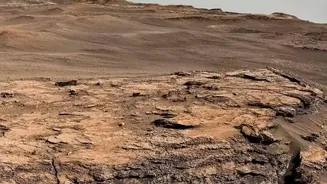
A more dynamic volcanic past changes how we think about the history of Mars. These large, long-lived magmatic systems would have been a sustained source of heat and chemical ingredients, influencing the planet's climate and the distribution of water. Such activity could have created and maintained environments rich in water far from the polar ice caps. Furthermore, these complex systems are known on Earth to generate significant mineral deposits. This research suggests that Mars may hold more near-surface mineral wealth than previously thought, a factor that could be significant for future crewed missions and potential settlement. It paints a picture of a planet that was once much more geologically active and dynamic than its quiet, dusty surface suggests today.