






Why Your Brain Gets Bored
Starting a new exercise plan is exciting. You have new goals, fresh energy, and a clear purpose. But after a few weeks of the same treadmill run or circuit of exercises, the novelty wears off. This isn't a failure of willpower; it's a feature of our brains.
We are wired to seek novelty and engagement. Repetitive tasks, especially physically demanding ones, can feel like a chore. The long-term reward of better health feels abstract compared to the immediate discomfort or monotony of the workout itself. This is where many fitness journeys stall. The mental effort required to force yourself through another identical session becomes greater than the perceived benefit, and soon, you're finding excuses to skip.
The Psychological Power of a Game
Gamification is the process of adding game-like elements—rules, points, competition, and goals—to non-game activities, and it’s a powerful psychological tool for fitness. When you turn exercise into a game, you shift your focus. Instead of concentrating on the burning in your muscles or the minutes left on the clock, your brain becomes engaged in strategy, friendly competition, and achieving the game's objective. This simple shift can dramatically increase enjoyment and satisfaction. Elements like leaderboards, badges, or even just the simple goal of winning a round can trigger a sense of accomplishment, making the activity more appealing and creating a positive feedback loop that encourages you to come back for more.
Strength in Numbers: The Group Effect
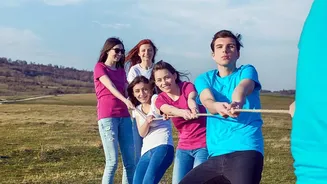
Exercising alone requires immense self-discipline. But when you make it a group activity, you introduce one of the most powerful motivators: social accountability. Knowing that a friend or a team is waiting for you makes it much harder to skip a session. This isn’t about pressure; it’s about a shared commitment. Success rates for fitness goals can jump dramatically with the addition of a partner or group. The shared energy of a group, an effect known as social facilitation, can also help you push harder than you would on your own. The camaraderie and support from others transform a workout from an isolated chore into a fun, social event, which is crucial for long-term adherence.
Short Bursts, Sustainable Habits
The thought of a 60-minute workout can be daunting, especially on a busy day. Research increasingly shows that shorter, more intense bursts of exercise can be just as, if not more, effective for building fitness and improving health. A 15- or 20-minute session feels much more manageable and is easier to fit into your schedule. This lowers the barrier to entry. Instead of needing a large, uninterrupted block of time, you just need a small window. For beginners, this is key. Committing to a short, fun activity is far less intimidating and makes it easier to build the consistency needed for a habit to stick. Studies have shown that multiple short sessions can offer similar or even greater benefits than a single long one.
Simple Games to Get You Started
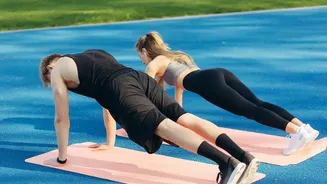
You don't need complex equipment or rules to get started. The best games are simple, adaptable, and can be done almost anywhere.\n\n- Exercise Relays: Form two teams. Set up stations with simple exercises like squats, push-ups, or jumping jacks. The first person on each team completes the first exercise, then runs to tag the next person, who does the second exercise. The first team to finish wins.\n- Deck of Cards: Assign an exercise to each suit (e.g., hearts = squats, diamonds = lunges, clubs = push-ups, spades = burpees). Flip a card and every player performs the number of reps shown on the card for the assigned suit (face cards can be 10, Aces 11 or 1). \n- Tag Variations: Games like "Blob Tag" or "Freeze Tag" are not just for kids. They involve sprinting, dodging, and laughing—a perfect combination for a fun, high-intensity cardio session.\n- Partner Challenges: Compete with a friend to see who can hold a plank the longest, do the most push-ups in a minute, or complete a circuit the fastest. The friendly competition will push you both.