







The New Space Race Is Private
For decades, seeing Earth from space was a capability reserved for a handful of powerful nations and their space agencies. Today, the game has changed completely. A new space race is underway, but this time it is dominated by private companies. In 2024,
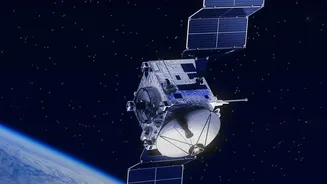
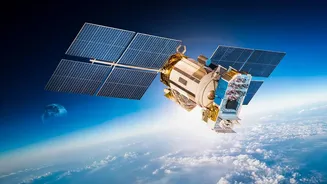
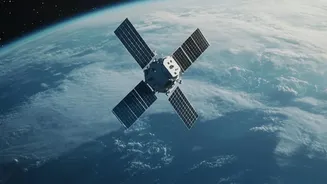
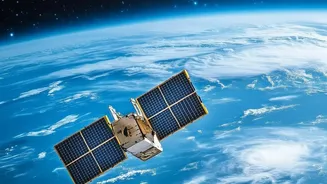
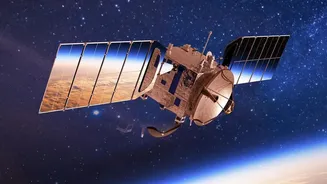
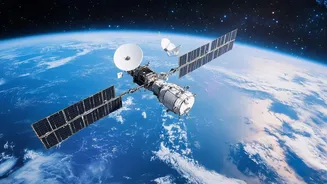
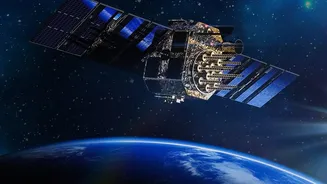
private operators already owned more Earth observation satellites than governments. Thanks to lower launch costs and miniaturised technology, companies like Planet, Maxar, and India's own Pixxel and Dhruva Space are deploying vast constellations of satellites. These networks can image the same spot on Earth several times a day, providing a near-real-time view of the planet that was once the stuff of spy thrillers. This commercial boom has democratised access to high-quality satellite data, making it available to almost anyone for a fee.
AI: The Brains Behind the Eyes
The sheer volume of data beamed down from these satellite constellations is staggering and would be impossible for humans to analyse alone. This is where artificial intelligence comes in. AI and machine learning algorithms act as the brain, processing a flood of pixels into structured, actionable information. Instead of a human analyst spending hours mapping one city, AI can process an entire continent's worth of imagery in the same time. These systems can automatically detect objects, track changes, and identify patterns invisible to the human eye. For example, AI can count cars in a shopping mall's car park to gauge economic activity, monitor construction progress, track deforestation in the Amazon, or even detect ships at sea. Some newer satellites even have AI processors on board, allowing them to analyse images in real-time and send down only the most critical information, speeding up response times for events like wildfires or floods.
What It Means for India
This technological leap has profound implications for India. Indian startups are increasingly building end-to-end systems that combine satellites, ground infrastructure, and data services. A public-private partnership will see a consortium including firms like Pixxel and Dhruva Space deploy a 12-satellite constellation for national needs. The applications are vast and transformative. In agriculture, AI-analysed satellite data can monitor crop health, predict yields, and optimise water use, boosting food security. For urban planning, it can monitor urban sprawl and infrastructure development. In disaster management, it offers a crucial advantage by quickly mapping flood-affected areas or assessing earthquake damage, enabling faster and more effective relief efforts. This data also enhances national security, from border monitoring to maritime awareness.
The Unregulated Frontier
While the benefits are immense, this powerful new capability comes with significant risks and governance challenges. The same technology that tracks illegal fishing can also be used to monitor military movements or corporate activities. This raises urgent questions about privacy, security, and trust. As satellite resolution improves, the ability to see objects in detail sharpens, increasing concerns about surveillance and the erosion of individual privacy. There is also the issue of data veracity; images can be misinterpreted or intentionally misrepresented, creating a new vector for disinformation. Furthermore, since much of this data is collected and controlled by private companies, it raises questions about how governments can ensure access to information critical for national security while not stifling private sector innovation.
The Search for Global Rules
The technology is advancing far faster than the laws designed to govern it. Currently, very few countries have explicit regulations for Earth observation data. Existing legal frameworks for data privacy, like Europe's GDPR, were designed for a terrestrial world and struggle to apply to data centres orbiting the Earth at 17,000 miles per hour. Key legal questions remain unanswered: Who is liable if an AI makes a wrong decision in orbit? How can regulators audit a system they cannot physically access? There is a growing consensus that international dialogue is needed to establish rules of the road. These would need to balance commercial innovation with national security, data privacy, and the public good, ensuring this powerful eye in the sky is used responsibly for the benefit of all.