






A Ticking Clock in the Himalayas
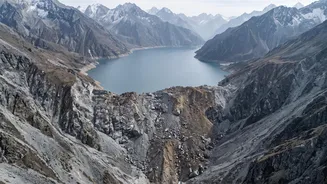
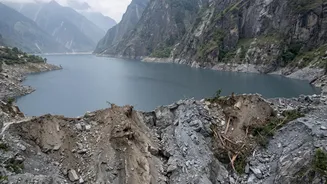
High in the mountains near the China-Nepal border, a massive natural dam has formed, holding back a tremendous volume of water and prompting urgent flood warnings for downstream communities. Chinese authorities alerted their Nepali counterparts after
a significant landslide blocked a major cross-border river. This has created a volatile situation known as a Landslide Dam Outburst Flood (LDOF), where the natural barrier can breach suddenly, releasing a devastating wall of water. The newly formed lake, estimated to hold millions of cubic metres of water, poses a significant threat, particularly as monsoon rains continue to swell the rivers in the region. The alert comes in the wake of recent catastrophic floods in the same area, which have already caused immense devastation and loss of life, making this new threat even more alarming for rescue crews and vulnerable residents.
The River at the Center of the Crisis
The focus of the current crisis is the Bhotekoshi River in Nepal, which is fed by rivers flowing from Tibet. The landslide occurred upstream in Chinese territory, blocking the river's path and creating the dangerous lake. The Bhotekoshi is a crucial part of a larger, vital river system. It flows southward through Nepal, carving its way through steep Himalayan valleys before eventually merging with other tributaries to form the Kosi River system. This river system then flows down into the Gangetic plain in India, particularly affecting the state of Bihar. The Kosi is notoriously known as the "Sorrow of Bihar" due to its long history of devastating floods. Therefore, a major flood event in the Bhotekoshi in Nepal is not just a local crisis; it sends ripples of concern all the way down to the plains of India, where authorities are also monitoring the situation closely.
Anxious Wait as Alarms Sound
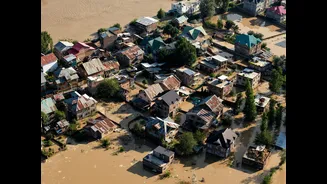
In response to the information shared by China, which included satellite data, Nepali authorities have issued high alerts for several downstream districts. Residents in low-lying areas along the Bhotekoshi river corridor have been urged to evacuate and move to higher ground. Flood warning notices have been sent directly to people's mobile phones, a measure of the seriousness of the threat. For many residents, this is a terrifyingly familiar scenario, coming so soon after the initial devastating floods that have already impacted tens of thousands of people. Rescue teams, who were already engaged in clearing highways and searching for thousands of missing people from the previous disaster, are now on high alert for a potential second wave of flooding.
A Recurring Himalayan Danger
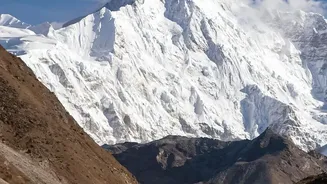
The formation of landslide-dammed lakes is a frighteningly common hazard in the geologically active and fragile Himalayas. The mountain range is one of the youngest in the world, characterized by steep, unstable slopes. Climate change is exacerbating these risks, as warming temperatures accelerate glacier melt, saturating the soil and making massive landslides more likely. In recent years, several catastrophic events linked to glacial lake outbursts and landslides have occurred in the region, including the 2021 Chamoli disaster in Uttarakhand, India. These events highlight the immense power of these natural phenomena and the extreme difficulty in managing them. The remote, high-altitude terrain makes it nearly impossible for engineering teams to reach such landslide dams with heavy machinery to attempt a controlled release of water. As a result, authorities and communities are often left with little choice but to monitor the situation and prepare for the worst.