

A Celestial Lion's Roar
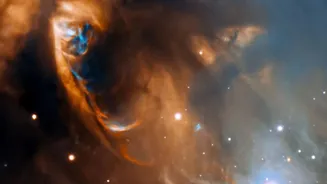
Known to astronomers as NGC 2392, the Lion Nebula is what is known as a planetary nebula. The name is a historical misnomer, as these objects have nothing to do with planets. Rather, they are the intricate, glowing shrouds of gas and dust cast off by
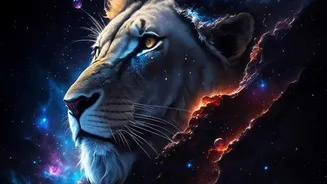
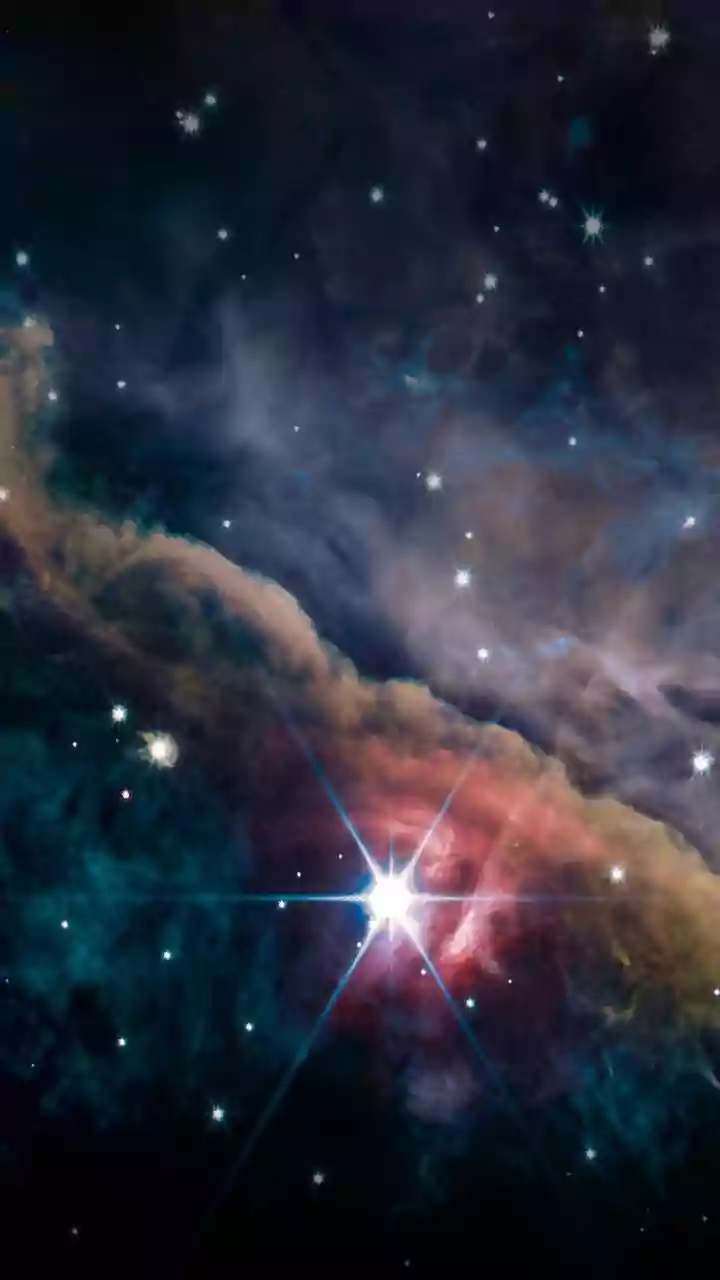
stars like our own Sun as they reach the end of their lives. For thousands of years, this material has been expanding into space. The latest image, a composite from Webb's near- and mid-infrared cameras, provides an unprecedentedly clear view of its complex structure, which resembles the head of a lion. At its very center sits a bright point of light—the star's tiny, collapsed core, appearing like the 'button nose' of the lion.
The Life and Death of a Sun-like Star
Most stars in the universe, including our Sun, are not massive enough to explode as supernovae. Instead, they face a more gradual, elegant end. After billions of years of burning through their hydrogen fuel, they become unstable, swelling up and shedding their outer layers. This ejected material forms the expanding cloud we see as a planetary nebula. What remains at the heart of the cloud is an incredibly dense and hot core called a white dwarf. In the case of the Lion Nebula, this central white dwarf is scorching hot, blasting its surroundings with intense radiation. This energy 'cooks' the nebula from within, causing the gases to glow and giving the celestial lion its majestic appearance.
What Webb's Infrared Eye Reveals
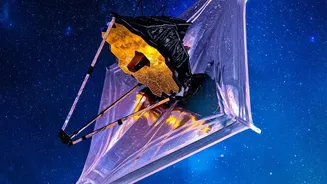
While the Hubble Space Telescope first gave us a stunning visible-light view of the Lion Nebula in 2000, Webb’s infrared capabilities peel back new layers. Webb’s view cuts through the cosmic dust to show details that were previously obscured. The image highlights how the central white dwarf's radiation carves out a bubble of ionized gas, creating the lion's 'face'. As this bubble expands, it destroys some dust in its path. Yet, Webb's instruments also reveal the lion's flowing 'mane,' which is made of compact clumps of dust and molecular hydrogen that have managed to survive the onslaught. These dense clumps create spectacular, comet-like tails, shielding the material behind them from the star's harsh radiation.
A Glimpse of Our Own Future
Observing the Lion Nebula is more than just an astronomical curiosity; it’s a preview of our own solar system's distant future. In about five billion years, our Sun will exhaust its nuclear fuel and begin its own final transformation. It will puff away its outer layers to create its own planetary nebula, leaving behind a white dwarf at its core. While the exact shape our Sun's nebula will take is unknown, the fundamental process will be the same as what we witness in NGC 2392. The stunning portrait of the Lion Nebula is a snapshot of this fleeting cosmic phase. Astronomers estimate that the entire structure will disperse into the vastness of space in about 10,000 years—a mere blink of an eye in cosmic time.