



The Legacy of Ingenuity
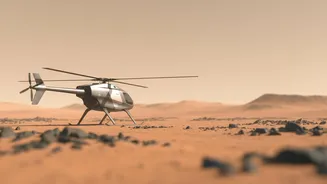
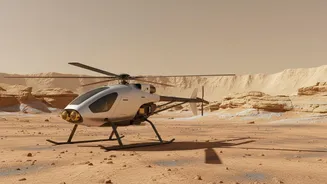
The story of flight on Mars began with a small, four-pound helicopter named Ingenuity. Arriving with the Perseverance rover, its mission was simple: prove that powered, controlled flight was possible in the planet's thin atmosphere. Ingenuity exceeded
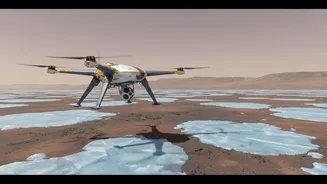
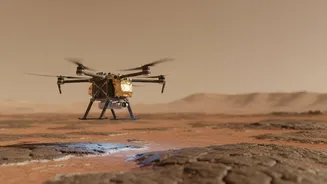
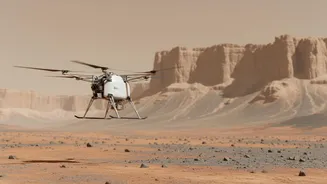
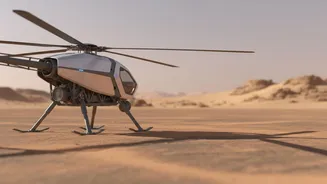
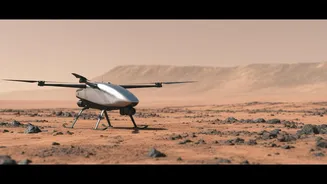
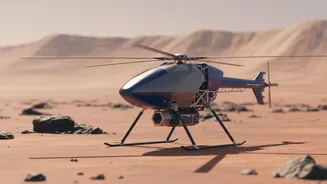
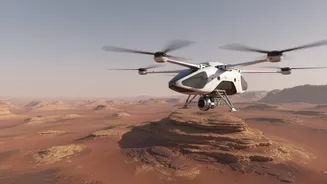
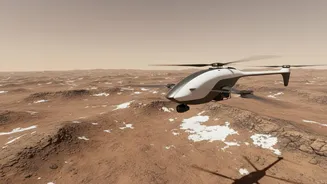
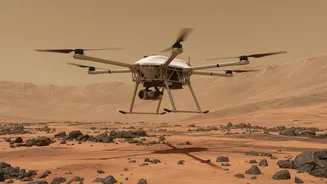
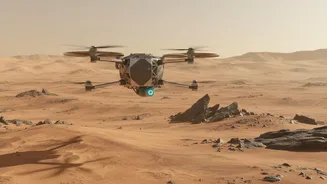
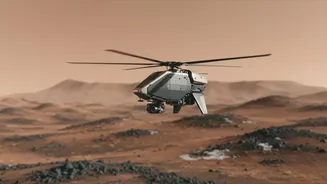
all expectations, completing 72 flights and fundamentally changing our approach to planetary exploration. It served as a scout for the rover, but its primary role was as a technology demonstration. Now, scientists and engineers are building on that success to design the next generation of Martian aviators—rotorcraft that aren't just companions, but full-fledged scientific explorers in their own right. The Skyfall concept represents this leap, envisioning not one but three autonomous helicopters deployed to conduct complex scientific investigations without the need for a parent rover to relay communications.
The Hunt for Subsurface Ice
One of the most pressing questions about Mars is the history and location of its water. While we know vast quantities of ice exist at the poles, discovering accessible water ice at lower latitudes is a key goal for both science and future human exploration. This shallow subsurface ice could hold clues to the planet’s past climate and potentially preserve signs of ancient life. For future astronauts, it represents a vital local resource that could be converted into drinking water, breathable oxygen, and even rocket fuel. However, finding it is a challenge. Radar instruments on orbiting spacecraft can detect deep ice deposits but cannot effectively resolve the crucial upper few meters of the surface. Rovers, like Perseverance with its RIMFAX instrument, can perform detailed ground-level analysis but are limited by speed and terrain. This is the specific problem the Skyfall concept is designed to solve.
A Flying Radar System
The heart of the Skyfall mission is its primary instrument: a novel ground-penetrating radar (GPR). GPR works by sending radio waves into the ground and analyzing the signals that bounce back. Different materials, like rock, dust, and ice, reflect these waves differently, allowing scientists to create a map of the subsurface layers. The innovation for Skyfall is mounting a GPR system on a helicopter. By flying low and slow over the Martian landscape, the helicopters can gather high-resolution data that orbiters can't, and cover far more ground than a rover ever could. Each helicopter is designed to carry a suite of instruments, but the GPR is the star, capable of probing up to 10 to 16 feet below the surface to differentiate between soil and ice.
Engineering the 'Cape'
Miniaturizing a GPR for a lightweight helicopter presented a major engineering hurdle. The solution developed by NASA's Jet Propulsion Laboratory is a flexible, fabric-based antenna that looks like a small cape hanging below the craft. This 'Vivaldi' antenna is ingeniously designed for the harsh realities of Mars. It is about one and a half times longer than the helicopter's legs, meaning it must be able to bend and flex out of the way during every landing, even on uneven, rocky ground. Then, upon takeoff, it must spring back to its precise shape to function correctly. Recent tests have focused on proving the durability of this design, ensuring it can withstand dozens of flight cycles without damage or loss of performance. This lightweight, resilient antenna is the key piece of technology that makes the entire mission concept viable.
A New Era of Martian Scouting
The Skyfall mission concept is more than just a search for water; it's a new paradigm for planetary exploration. The plan involves dropping the three helicopters mid-air, allowing them to autonomously fly to their separate landing zones. In addition to the GPR, they would carry 13-megapixel cameras to create detailed 3D terrain maps, infrared imagers to analyze surface composition, and sensors to measure wind and temperature. This swarm of robotic scouts could rapidly assess large areas, identify scientifically interesting targets, and certify safe landing zones for future robotic or even human missions. By combining the aerial mobility proven by Ingenuity with sophisticated subsurface science, Skyfall aims to give us our first detailed look into the shallow layers of the Martian crust, potentially unlocking the resources and secrets hidden just beneath our feet.