





What is the Mecca Defence Accord?
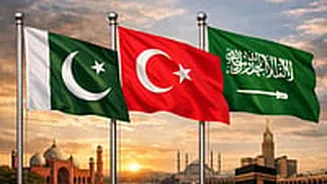
On August 7, 2026, leaders from Saudi Arabia, Türkiye, and Pakistan signed the Mecca Joint Defense Agreement in the holy city. The cornerstone of the pact is a collective security clause, similar to NATO's Article 5, which states that an armed attack
against one signatory will be considered an attack against all. The agreement aims to institutionalize and deepen military ties that have existed bilaterally for years. While officials have stressed the pact is defensive in nature and not aimed at any specific country, its timing against a backdrop of regional conflict has drawn significant attention. This formalizes cooperation on a new level, establishing high-level mechanisms involving the foreign and defence ministers of the three nations for strategic coordination.
An Alliance Driven by Shifting Realities
The pact is widely seen as a response to a changing security environment in the Middle East and a desire by regional powers to reduce their heavy reliance on the United States as the primary security guarantor. For Saudi Arabia, repeated attacks on its oil facilities and the perceived limits of the US security umbrella have accelerated its push to diversify defence partnerships. For nuclear-armed Pakistan, the agreement elevates its status as a key security provider in the Muslim world and embeds it deeper into the West Asian security architecture. Meanwhile, Türkiye, with NATO's second-largest army and a booming defence industry, gains expanded commercial opportunities and reinforces its position as a major regional power broker.
The Defence and Technology Nexus
Beyond the collective security clause, a major component of the agreement is cooperation in the defence industry. Plans include not just the sale of military hardware but also joint development, production, and technology transfer. Priority areas identified include unmanned autonomous systems, electronic warfare, and artificial intelligence. This synergy combines Saudi Arabia's financial might, Türkiye's advanced defence-industrial base—famed for its Bayraktar drones—and Pakistan's military expertise and manpower. There is already precedent for this, with around 200 Pakistani engineers reportedly contributing to Türkiye's fifth-generation KAAN fighter jet program.
Implications for Regional and Global Powers
The emergence of this bloc reshapes the strategic map. It serves as a significant counterweight to regional rival Iran and is also being watched closely by Israel. The move reflects a broader trend of middle powers forging their own security arrangements in an increasingly multipolar world. While officials insist the pact does not seek to replace existing alliances like NATO, it does signal a strategic realignment. The United States' reaction has been muted, with some analysts suggesting that Washington may even welcome allies shouldering more of their own defence burdens. For China, the pact aligns with its long-held view that regional states should manage their own security, potentially reducing US dominance in a strategically vital area.
Why It Matters for India
For New Delhi, this development presents a complex strategic picture. The deepening of the Pakistan-Türkiye-Saudi axis is a cause for concern. Pakistan has historically enjoyed close ties with both nations, and this pact formalizes an alignment of powers that could provide Islamabad with greater diplomatic and military leverage. The use of Turkish drones by Pakistan in past hostilities with India highlights the tangible military dimension of these relationships. While India maintains strong and growing economic and energy ties with Saudi Arabia, the collective defence framework strengthens Pakistan’s role as a security partner to key Gulf powers. Indian national security analysts are monitoring the situation closely, as an alliance that affects the Middle East inevitably has implications for theatres closer to home.