




The Lama Statesman of Ladakh
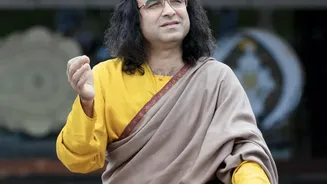
The man memorialised at Ladakh's gateway was the 19th Kushok Bakula Rinpoche, a figure whose life bridged ancient spirituality and modern nation-building. Born into Ladakhi royalty in 1918, he was recognised as a child by the 13th Dalai Lama as the reincarnation
of Bakula Arhat, one of the original sixteen disciples of Gautama Buddha. This destiny set him on a path of deep monastic study in Tibet, where he earned the highest academic degree. Yet, his destiny was not confined to the monastery. Rinpoche became a towering figure in public life, earning the title 'Architect of Modern Ladakh' for his tireless work in politics, social reform, and diplomacy.
From Monastery to Parliament
Following India's independence, at the behest of Prime Minister Jawaharlal Nehru, Rinpoche stepped into the political arena in 1949. He served multiple terms as a Member of Parliament, using his position to advocate for the people of Ladakh and other marginalised communities across India. He was a key voice for Ladakh's interests within the complex political landscape of Jammu and Kashmir, fighting for infrastructure, education, and the preservation of the region's unique cultural and religious identity. His transition from a spiritual leader to a political representative was seamless, guided by a pragmatic desire to serve his people in every possible capacity.
India's Unlikeliest Ambassador
Perhaps the most remarkable chapter of his life began in 1990, when he was appointed India's ambassador to Mongolia. At the time, Mongolia was emerging from decades of Soviet-influenced communist rule that had severely suppressed its deep Buddhist traditions. Rinpoche, a monk in ambassadorial robes, was not just a diplomat but a spiritual catalyst. His decade-long tenure was instrumental in the revival of Buddhism in the country. He helped reopen ancient monasteries, facilitated the education of new monks, and became a beloved figure known as 'Elchin Bagsh' or 'Ambassador Teacher'. In recognition of his service to the nation, he was awarded the Padma Bhushan in 1988, and Mongolia later honoured him with its 'Polar Star' award.
A Vision for Modern Ladakh
Beyond his political and diplomatic roles, Rinpoche was a profound social reformer. He championed education for all, including girls, and worked to combine modern learning with traditional values to equip Ladakh's youth for the future. He understood that for Ladakh to thrive, it needed to be connected to the rest of India and the world, not just by air, but through ideas and opportunities. He was deeply involved in welfare issues, particularly for Scheduled Castes and Tribes, reflecting a broad humanitarian vision that extended far beyond his home region. His efforts laid the groundwork for much of the social and educational progress Ladakh has seen in recent decades.
A Legacy in the Sky
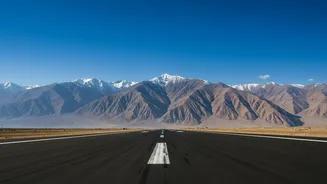
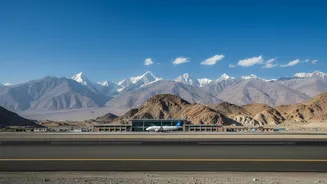
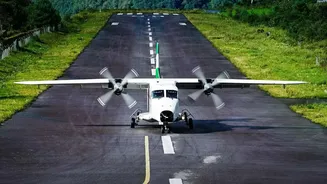
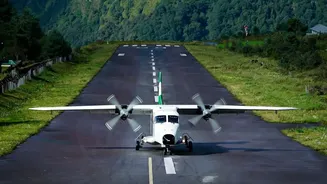
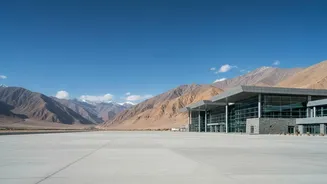
Kushok Bakula Rinpoche passed away in 2003, leaving an indelible legacy. Naming Leh's airport after him was a fitting tribute. The airport is not just a piece of critical infrastructure; it is Ladakh's lifeline, especially during the harsh winter months when road access is cut off. It connects the remote region to the world, just as Rinpoche did throughout his life—first as a spiritual guide, then as a political advocate, and finally as an international diplomat. The airport stands at an altitude of over 10,600 feet, a symbol of reaching great heights, much like the man for whom it is named.