







A Textbook Launch from Sriharikota
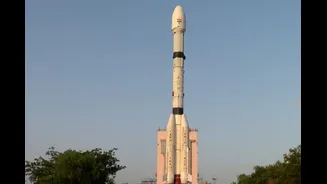
In the early hours of September 4, the Indian Space Research Organisation (ISRO) added another feather to its cap. At 2:55 AM, the powerful Geosynchronous Satellite Launch Vehicle (GSLV-F17) roared to life, lifting off from the Satish Dhawan Space Centre
in Sriharikota. The 51.7-metre-tall rocket performed its duties flawlessly, and about 18 minutes after launch, it successfully placed the EOS-05 satellite into its intended Sub-Geosynchronous Transfer Orbit. The launch was a significant moment for ISRO, marking a major success and demonstrating the reliability of its GSLV rocket, especially after the unsuccessful attempt to launch EOS-03 in 2021. This mission confirmed ISRO's robust capabilities and set the stage for the satellite to begin its crucial work.
Meet EOS-05: India’s New Eye in the Sky
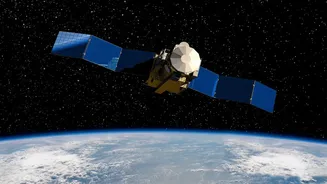
EOS-05, which weighs approximately 2,367 kg, is not just any Earth observation satellite; it is a state-of-the-art geo-imaging satellite. What makes it special is its destination: a geosynchronous orbit nearly 36,000 km above the Earth. Unlike satellites in low-Earth orbit that pass over a location periodically, EOS-05 will orbit in sync with the Earth's rotation. This allows it to constantly monitor the same large geographical area—namely, the Indian subcontinent and its surrounding oceans. It's equipped with advanced imaging payloads, including multispectral and hyperspectral sensors, which can capture images in various light spectrums. This technology enables it to gather highly detailed data for a wide range of applications, from assessing crop health to monitoring environmental changes.
Real-World Impact for a Billion People
The capabilities of EOS-05 translate into direct benefits for India. One of its primary roles is in disaster management. The satellite's ability to provide near real-time imaging of large areas will be invaluable for monitoring natural disasters like cyclones, floods, and forest fires. It can image a selected area of interest every five minutes and the entire Indian landmass every 30 minutes. This rapid revisit capability can provide critical, up-to-date information to emergency response teams, helping to save lives and mitigate damage. Furthermore, its data will support agriculture by monitoring crop health, soil conditions, and water resources. It will also aid in environmental monitoring, urban planning, and infrastructure development, making it a vital tool for the country's progress.
A Strategic Asset in a High Orbit
Beyond its civilian applications, EOS-05 serves crucial strategic purposes. Its constant watch over the Indian subcontinent and border regions provides a significant advantage for national security and surveillance. The ability to continuously monitor a wide area enhances India's strategic awareness and provides another layer of security. The mission is a testament to India's growing self-reliance in space technology. By successfully launching its first dedicated imaging satellite to a geosynchronous orbit, ISRO has achieved a capability that few space agencies possess. This success not only strengthens India's Earth observation network but also reinforces its position as a major player in the global space community, known for developing advanced, cost-effective space assets.