


The Core Mission Objective
The Gaganyaan project's primary goal is to demonstrate India's capability to send humans into space and bring them back safely. The mission plans to launch a crew of three astronauts into a Low Earth Orbit at an altitude of 400 kilometres. They will spend
approximately three days in orbit before splashing down in Indian sea waters. Achieving this will make India the fourth country in the world to have an independent human spaceflight capability, after the United States, Russia, and China. The program is not just a single flight but a stepping stone for future ambitions like a sustained human presence in space, an Indian space station, and potentially crewed missions to the Moon.
Safety First: A Gauntlet of Tests
Human spaceflight is an immensely complex and risky endeavour, and the Indian Space Research Organisation (ISRO) is following a meticulous, safety-first approach. Before any astronaut boards the Gaganyaan capsule, a series of precursor missions are being conducted to test every system to its limits. A crucial component being validated is the Crew Escape System (CES), which is designed to pull the crew module and its occupants to safety in case of an emergency during launch. The first major in-flight test of this system, the Test Vehicle Abort Mission-1 (TV-D1), was successfully conducted in October 2023. Preparations for the next test, TV-D2, are in an advanced stage. These tests, along with integrated air drop tests for the parachute systems, are non-negotiable steps to ensure the crew can survive any potential anomaly.
Meet Vyommitra, the 'Friend in Space'
Before humans fly, a humanoid will take their place. ISRO has developed a 'half-humanoid' robot named Vyommitra, a name derived from the Sanskrit words for 'space' and 'friend'. Vyommitra, which has a torso, head, and two arms but no legs, will fly on the uncrewed orbital missions. Her purpose is to act as a stand-in for the astronauts, simulating human functions and interacting with the spacecraft's systems. Vyommitra can operate switch panels, monitor the cabin environment, and communicate with mission control. The data gathered from her flights will be invaluable for understanding how the life support and other critical systems perform in the harsh environment of space, ensuring everything is perfectly calibrated before the crewed launch.
The Astronauts in Waiting
At the heart of the Gaganyaan mission are the four chosen astronaut-designates: Group Captains Prasanth Balakrishnan Nair, Ajit Krishnan, Angad Pratap, and Wing Commander Shubhanshu Shukla. All four are distinguished pilots from the Indian Air Force, selected for their extensive experience and fitness. They have undergone rigorous generic training at Russia's Yuri Gagarin Cosmonaut Training Centre and are now continuing with mission-specific training in India at the Astronaut Training Facility in Bengaluru. This training covers everything from academic courses on flight systems and microgravity familiarisation to survival and recovery drills, ensuring they are prepared for every phase of their historic flight.
The Final Countdown to Launch
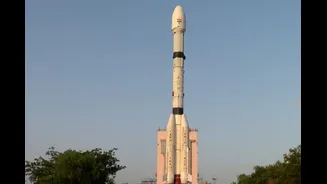
The path to the first crewed flight is a carefully sequenced series of launches. According to recent government and ISRO updates, work is progressing systematically on the first uncrewed mission (G1), which will carry Vyommitra and is targeted for launch within this year. This will be followed by at least one more uncrewed validation flight in 2026. Only after these missions successfully demonstrate the safety and reliability of the launch vehicle, the orbital module, and all life support systems will ISRO proceed with the first human spaceflight, currently anticipated in 2027. This phased approach ensures every technological challenge is met and every risk is mitigated before Indian astronauts write a new chapter in the nation's history.