






The UK Space Agency has a new mission to clean up space and a new spacecraft to do it. Now, it needs a name, and it's asking the public for help. But this is more than just a naming contest; it’s a pioneering step to tackle a cosmic junkyard.
An Orbital Janitor Is Born
The UK's
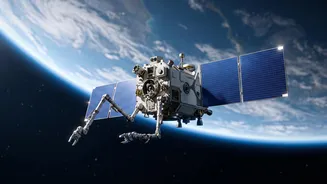
Active Debris Removal (ADR) mission represents a significant national first: a mission dedicated to capturing and removing space junk. The spacecraft, developed by ClearSpace UK, is designed to be a robotic 'tow truck' for the cosmos. Its first task is ambitious: to capture two defunct UK-licensed satellites currently in low-Earth orbit. Using advanced robotics, including giant claws, the craft will grab these non-functioning satellites one by one and guide them into a lower orbit where they will safely burn up upon re-entering Earth's atmosphere. The mission is slated to launch in 2029 from the Saxavord Spaceport in Scotland. What makes this mission particularly innovative is the plan for the spacecraft to be refuellable, potentially allowing it to perform multiple clean-up missions for years to come.
The Peril and Promise of Public Naming
Whenever a government agency asks the internet for naming suggestions, there's a collective memory of one iconic moniker: 'Boaty McBoatface'. The 2016 competition to name a polar research vessel famously saw that whimsical name win by a landslide, only for officials to christen the ship the RRS Sir David Attenborough instead. The 'Boaty' name was ultimately given to a small submersible on the main ship. This history of mischievous suggestions—from 'Mister Splashy Pants' for a whale to 'Hitler did nothing wrong' for a soft drink—highlights the risk and reward of public engagement. The UK Space Agency is likely prepared for some creative, if not entirely serious, submissions like 'Obi-Wan Cleanobi' or 'Mega Maid', a nod to the film 'Spaceballs'. The contest rules ask for a memorable name that reflects the mission of keeping space safe, but the spirit of online polls often has a mind of its own.
A Junkyard Above Our Heads
The need for a mission like this is undisputed. Low-Earth orbit has become a cosmic graveyard. Decades of space activity have left behind a cloud of debris, including defunct satellites, spent rocket stages, and tiny fragments from past collisions. There are hundreds of thousands of tracked objects, but potentially millions of smaller, untraceable pieces, all travelling at speeds over 17,000 miles per hour. At that velocity, even a small paint fleck can cause significant damage to an operational satellite or the International Space Station. The bigger concern is a cascading chain reaction known as the 'Kessler Syndrome', a theory proposed by NASA scientist Donald Kessler in 1978. It describes a scenario where collisions create more debris, which in turn leads to more collisions, potentially rendering entire orbital paths unusable for generations. A 2009 collision between two satellites over Siberia added thousands of new debris pieces to orbit, demonstrating this danger is no longer theoretical.
The UK's Bid for Space Sustainability
This Active Debris Removal mission, backed by over £60 million, is a cornerstone of the UK's ambition to become a world leader in space sustainability. The services we rely on daily—from GPS and online banking to weather forecasting—all depend on a functioning satellite infrastructure that is increasingly threatened by space junk. By investing in in_orbit servicing, which includes debris removal, satellite repair, and refuelling, the UK is positioning itself at the forefront of a growing multi_billion dollar industry. This mission, led by ClearSpace UK from its British base, will not only clean up orbit but also build critical national expertise in complex robotics and autonomous navigation. It's a strategic move to ensure the UK has a sovereign capability to manage its assets in space and contribute to the long_term safety of the orbital environment for all nations.