




The Ever-Changing Peak
The latest survey of Mont Blanc, announced on October 14, 2026, puts its official height at 4,807.47 metres. This is a surprising increase of nearly two metres from the measurement taken in 2023, which was 4,805.59 metres. But it's also lower than its 2025
height. For over two decades, a dedicated team of surveyors has been making the trek to the summit every couple of years to track these changes. This isn't a case of the mountain itself growing or shrinking, but something far more interesting happening at its very top. The measurements reveal a 'breathing' peak, whose altitude rises and falls from one year to the next, driven by the weather it endures.
How Do You Measure a Mountain?
Determining the height of Mont Blanc is a monumental task in itself. Every two to three years, a team of around 20 surveyors and mountain guides embarks on an expedition. They carry nearly 30 kilograms of high-tech measuring equipment, including GPS antennas and ground-penetrating radar, to the summit. Over several hours, they take precise readings to determine the highest point of the snow and ice. This biennial mission is not just about updating a number; it's about building a long-term dataset. Scientists use this information to understand how the summit evolves, creating a unique climate record written in snow and ice.
A Summit Shaped By Weather
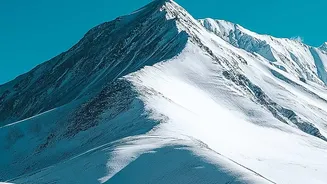
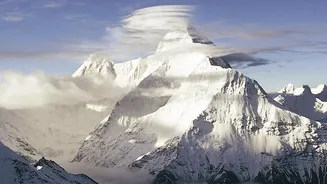
So, if the rock isn't moving, what causes the height to change? The answer lies in the thick cap of 'permanent' ice and snow that covers the summit. This icy crown can be 15 to 20 metres thick. Its volume and shape are dictated entirely by weather patterns. The amount of snowfall each year adds to the cap, while strong winds can scour snow away, reducing the height. The latest increase, for example, is likely due to specific wind and precipitation patterns over the last couple of years that allowed more snow to accumulate. In years with less summer precipitation and different wind conditions, the height has been seen to drop. This makes the summit a dynamic battleground between accumulation and erosion.
The Rock and The Ice
It’s crucial to understand that there are two summits on Mont Blanc: the stable rock peak and the variable ice peak. The rock itself tops out at a consistent height of around 4,792 metres. All the fluctuations happen in the layer of ice and snow sitting on top of this rock foundation. Think of it as the mountain wearing a hat of snow that changes its size and shape with the seasons and the years. This distinction is key to understanding why the mountain's official height is never truly fixed. The measurement captures a single moment in the life of this ever-shifting ice cap.
Not a Direct Sign of Climate Change
With news of melting glaciers worldwide, it's natural to ask if these height changes are linked to climate change. However, the surveyors and scientists involved are quick to caution against drawing a direct line. They stress that the fluctuation of the summit's snowcap is primarily a weather-driven phenomenon, influenced by short-term precipitation and wind. This is different from the long-term, irreversible melting of the mountain's lower glaciers, which is a clear and alarming indicator of a warming climate. For now, the summit itself, due to its extreme altitude and cold, behaves differently from the rest of the mountain, responding more to annual weather than to overall climate trends.