




The Sun’s Familiar Rhythm
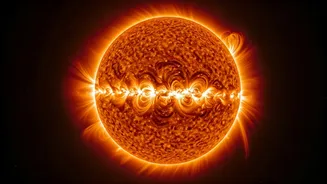
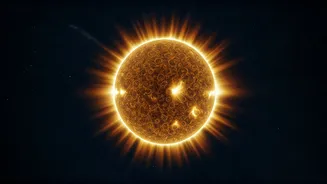
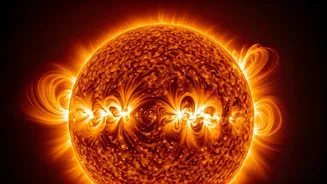
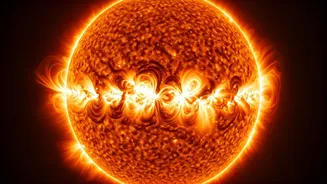
Our sun is not a static, unchanging star. It pulses with activity over a roughly 11-year period known as the solar cycle. This cycle is marked by the ebb and flow of sunspots—dark, cooler areas on the sun's surface driven by intense magnetic activity.
At the cycle's peak, or solar maximum, sunspots are numerous, and the sun emits more energy, solar flares, and radiation. During a solar minimum, the sun is quieter.. This cosmic metronome has been ticking for at least 700 million years, and its effects are felt here on Earth, influencing everything from satellite communications to our planet's magnetic field..
An Unexpected Influence on Wildlife
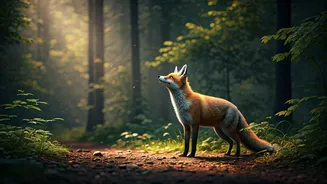
Scientists have known for some time that this solar activity can impact animal life. Research shows a fascinating link between solar cycles and wildlife behaviour. For example, some birds tend to lay eggs earlier during years of high solar activity.. The migration and navigation of birds that fly at night can be disrupted during a solar maximum.. One study of bird migrations over the U.S. Great Plains found a significant reduction in the number of migrating birds during severe space weather events.. Even mammals like hares and voles have shown population changes that align with these solar patterns.. The likely cause is the sun's impact on Earth's magnetic field, which many animals use to navigate..
Unmasking the Real Driver of Change
This is where the story gets complicated. Because the solar cycle has a noticeable, short-term effect, it can create a pattern that appears to be the main cause of behavioural changes. If an animal population fluctuates on a 10-to-12-year cycle, it’s easy to point to the 11-year solar cycle as the primary cause. However, this focus on a familiar pattern can obscure a more significant, long-term trend. The central argument of recent scientific analysis is not that solar cycles have no effect, but that their influence can be a red herring. They create 'noise' in the data that can mask slower, more relentless drivers of change, the most significant of which is our changing climate.
The Climate Change Connection
While the sun's 11-year cycle causes a tiny fluctuation in the energy Earth receives—less than 0.1%—the warming effect from human-produced greenhouse gases is vastly more powerful.. Scientific consensus, including reports from NASA and the IPCC, shows that long-term global warming is driven by human activity, not solar variations.. The danger highlighted by the new line of thinking is that we might attribute an observed change in animal behaviour, like a migration route shifting over a decade, to the solar cycle. In reality, the cycle might only be a minor influence, while the much larger, more critical factor is a long-term temperature rise or a shift in food availability caused by climate change. This risks misinterpreting crucial warning signs about the health of our ecosystems.
A New Lens for Science
This insight calls for a shift in how scientific data is analyzed. Instead of just looking for correlations with short-term cycles, researchers must now work harder to filter out that 'noise' to see the underlying trends. It's like trying to hear a quiet, steady hum while a recurring, louder melody plays over it. By accounting for the known, cyclical effects of the sun, scientists can get a clearer picture of how animal behaviours are fundamentally responding to long-term environmental upheaval. It forces a re-evaluation of previous studies, asking whether the solar cycle was given too much credit for changes that were actually early signs of a much bigger problem.