



The Foundation of a Flawless Updo
The secret to an updo that is both elegant and comfortable starts long before the first pin is placed. Styling freshly washed, silky hair is a common mistake that leads to slippage and collapse. Professionals often advise working with 'second-day' hair,
as the natural oils provide essential grip and texture. If you must wash your hair, skip the heavy conditioners that make strands too slick. Instead, prep damp hair with a volumizing mousse or a texturizing spray to create a gritty foundation. This simple step ensures that twists, braids, and pins have something to hold onto, dramatically increasing the longevity of your style without requiring excessive tightness.
Rethink Your Base and Distribute the Weight
Many updos are built upon a foundational ponytail, but a single, high-and-tight elastic can be the primary source of scalp pain and tension headaches. When all the hair's weight pulls from one central point, it creates constant strain on the hair follicles. A more comfortable approach is to distribute the weight. Instead of one tight ponytail, consider creating several smaller, looser sections. For a low chignon, for example, you can create three small ponytails at the nape of the neck and then twist and pin them together. This sectional construction divides the load, preventing any one area from bearing all the stress and allowing for a secure hold that doesn't feel like it's pulling at your scalp.
The Gentle Art of Pinning
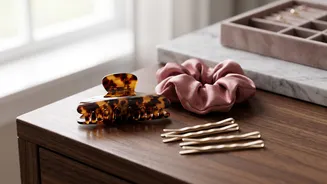
More pins do not necessarily mean more security. In fact, overloading your hair can add unnecessary weight and create uncomfortable pressure points. The key is strategic placement. Instead of simply pushing bobby pins straight into the hair, try an interlocking technique. Place one pin, then anchor it by sliding a second pin over the first in a criss-cross 'X' shape. This creates a much stronger anchor. For heavier sections or thicker hair, U-shaped hairpins are a game-changer. They can hold more hair than a standard bobby pin and distribute the tension more evenly. The goal is to secure the hair to itself and the base, not to clamp it painfully to your scalp.
Choose Styles with Comfort in Mind
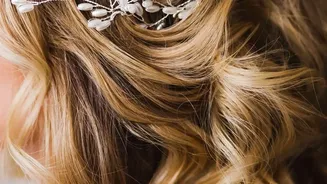
Some romantic updos are inherently more comfortable than others. High, slicked-back buns or tightly woven crown braids can place continuous tension on the hairline. In contrast, softer, lower styles are more forgiving. A loose, curly updo, a low twisted chignon, or a 'messy' bun pinned at the nape of the neck are all elegant options that work with your hair's natural movement rather than fighting against it. Incorporating braids or twists into the style can also help manage the hair and secure it in a way that looks intricate but feels relaxed. These softer silhouettes often feature face-framing tendrils, which adds to the romance while relieving tension from the hairline.
Finish with a Flexible, Not Stiff, Hold
The final step is to lock in your style without creating a stiff, immovable helmet of hair. Modern hairsprays offer strong, flexible holds that prevent flyaways and resist humidity without making your hair feel crunchy or brittle. Look for products labelled 'flexible hold' or 'touchable'. A light mist held about six to eight inches from your head is all you need. For added polish and to tame any lingering frizz, a smoothing cream or shine spray can be applied as a final touch. This ensures your updo remains soft, luminous, and, most importantly, comfortable from the first photo to the last dance.