








More Than Just Counting Carbon
For years, the global conversation on climate has been dominated by carbon. We talk about emissions reduction, carbon footprints, and carbon sinks. While crucial, this 'carbon tunnel vision' can be misleading. The fight against climate change isn't just
a numbers game; it's about restoring balance to the systems that keep our planet stable. This is where Natural Climate Solutions (NCS) come in. Defined as actions to protect, manage, and restore ecosystems, NCS leverage the power of nature to address societal challenges. For India, this approach is not just beneficial—it's essential. It means recognising that a forest is more than a collection of carbon-storing trees and a wetland is more than just waterlogged land. They are complex, living systems that provide a suite of benefits far beyond carbon sequestration.
The Multiple Gifts of Our Forests
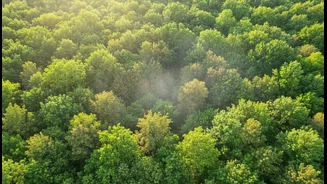
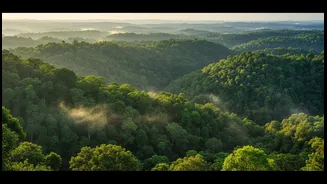
India has pledged to create an additional carbon sink of 2.5 to 3 billion tonnes of CO2 equivalent by 2030, largely through increasing forest and tree cover. This is a cornerstone of the country's climate commitment. However, a healthy forest does much more than just store carbon. The forests of the Western Ghats and the Himalayas, for instance, are critical to regulating India's monsoon patterns and ensuring year-round water flow in major rivers. They prevent soil erosion, which is vital for agricultural productivity, and harbour immense biodiversity. When we focus only on planting trees for carbon credits, we risk creating monoculture plantations that lack the resilience and holistic benefits of a natural, diverse forest. The true value lies in protecting and regenerating these entire ecosystems, which in turn support the livelihoods of millions who depend on them.
Our Coastal and Blue Carbon Guardians
India's extensive coastline is protected by some of the most effective carbon warriors on the planet: mangroves. These unique coastal forests are champions of 'blue carbon', sequestering and storing carbon at rates three to five times higher than tropical rainforests. The Sundarbans, the world's largest mangrove forest, famously protect Kolkata and surrounding areas by absorbing the impact of cyclones and storm surges. Recent government initiatives like the MISHTI scheme aim to restore and protect these shoreline habitats. This isn't just an environmental project; it's an investment in climate resilience. Healthy mangroves protect coastal communities from sea-level rise, prevent land erosion, and serve as vital nurseries for fisheries that support local economies. Ignoring their health means leaving our coasts, and the millions who live there, dangerously exposed.
The Unsung Heroes: Wetlands and Grasslands
Often overlooked and wrongly dismissed as wastelands, wetlands and grasslands are critical pieces of India's ecological puzzle. Wetlands, from the vast Chilika Lake in Odisha to urban marshes like Pallikaranai in Chennai, act as nature's kidneys, filtering pollutants from water. They are also natural sponges, absorbing heavy rainfall to mitigate floods and recharging groundwater tables, which is critical for water security. Similarly, India's grasslands and drylands, which support pastoral communities, store vast amounts of carbon in their soils. Restoring these degraded landscapes, as part of India's commitment under the Bonn Challenge, does more than just sequester carbon; it ensures water security, provides fodder for livestock, and protects unique biodiversity.
The Real Cost of Degradation
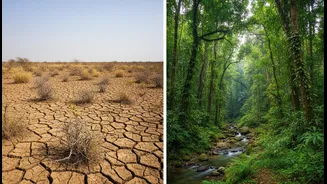
The alternative to investing in healthy ecosystems is stark. When a forest is cleared, a wetland is drained, or a coastline is developed, we don't just lose a carbon sink. Degraded ecosystems can flip and become sources of carbon emissions themselves. More importantly, all the other life-sustaining services they provide disappear. Water quality declines, soil washes away, flood risk increases, and local communities lose their livelihoods. Climate change will only intensify these pressures through more extreme weather events. Therefore, a strategy that focuses only on technological carbon capture or isolated tree-planting projects while allowing the degradation of our natural ecosystems is a strategy doomed to fail. It addresses a symptom (CO2) while ignoring the underlying disease (a broken relationship with nature).