


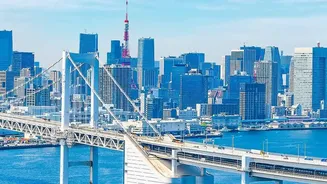
Tokyo's Tremendous Risk
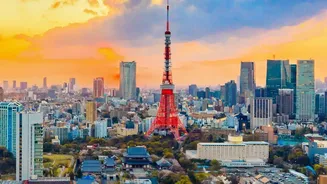
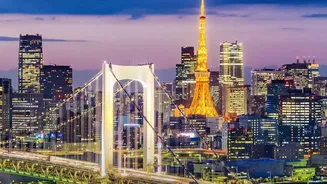
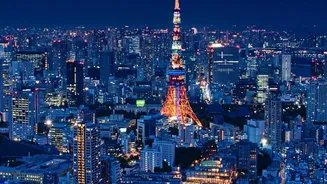
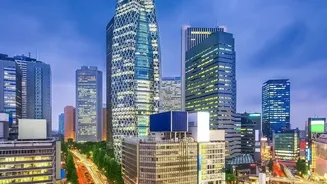
Tokyo is one of the world's great nerve centres, a sprawling metropolis that is home to 30% of Japan's population and generates a fifth of its economic output. But its position on the Pacific Ring of Fire makes it dangerously vulnerable. The government
estimates a 70% chance of a magnitude-7 earthquake striking the capital area within the next 30 years. Such an event could paralyse the nation's government and economy. A megaquake originating in the Nankai Trough, a submarine trench off the coast, is considered a matter of when, not if, and could cause devastation on an unimaginable scale. This existential threat has made finding a backup for Tokyo's critical functions a national security priority for generations.
The Old Search for a Successor
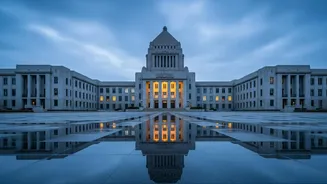
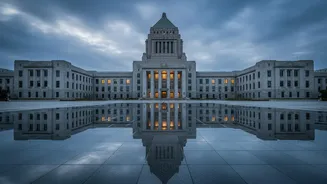
The conversation about relocating capital functions is not new; it dates back to the 1990s and even earlier. For years, the debate centered on identifying and building up a single, alternative city that could take over if Tokyo were incapacitated. The idea was to move the Diet (parliament), central ministries, and the Supreme Court to a new location, safe from the immediate dangers facing Tokyo. However, these plans repeatedly stalled due to immense costs, political disagreements, and a lack of consensus on which city deserved the title. The sheer inertia of Tokyo's dominance proved too powerful to overcome.
A New Networked Vision
Recent legislation passed in July 2026 marks a significant shift in strategy. Instead of crowning a single 'second capital', the new framework allows for the designation of multiple regions to act as backups. This 'network' or 'sub-capital' concept is more flexible and pragmatic. It acknowledges that replicating all of Tokyo's functions in one place is unrealistic. Instead, key government and business operations could be distributed across several capable urban centres, creating a web of resilience. This model aims to ensure continuity by having different cities ready to take on specific roles, both in an emergency and during normal times, to help decentralise the country.
The Contenders Emerge
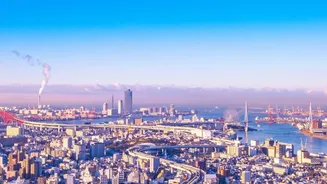
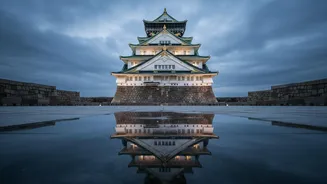
The new law has sparked a flurry of interest from regional powerhouses. The governors of Osaka, Aichi (home to Nagoya), and Fukuoka have all thrown their hats in the ring, eager for the investment and prestige that would come with a designation. Osaka, Japan's second-largest metropolitan area, is often seen as a leading candidate due to its economic scale and infrastructure. The Aichi and Nagoya region is a manufacturing titan, while Fukuoka on the southern island of Kyushu is a dynamic and growing hub. Even cities farther afield, like Sapporo in Hokkaido, have expressed interest. Under the network concept, it's possible several of these could be designated, each playing a part in the national backup plan.
More Than Just a Backup
The push for a networked capital is not just about disaster preparedness. It's also a core part of a broader strategy to tackle Japan's long-standing issue of over-centralisation in Tokyo. For decades, talent and capital have flowed from the regions to the capital, leaving other parts of the country struggling with depopulation and economic stagnation. By designating sub-capitals, the government hopes to reverse this trend. The plan includes tax incentives and deregulation to encourage private companies to invest and relocate functions to these regional hubs, fostering more balanced national development. It’s a chance to revitalise regional economies while making the entire nation more resilient.