





India's System of Direct Taxation
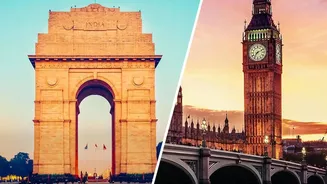
In India, the income tax system is a cornerstone of the nation's revenue and is governed by the Income Tax Act. It operates on a progressive slab-based structure, meaning the tax rate increases as income rises. This direct tax is levied on the earnings
of individuals, Hindu Undivided Families (HUFs), and corporations. For the vast majority of salaried individuals and professionals, filing an annual ITR is a mandatory exercise to declare income, claim deductions, and pay the requisite tax. This system is designed to fund extensive public services, infrastructure development, and welfare programs for a population of over 1.4 billion people.
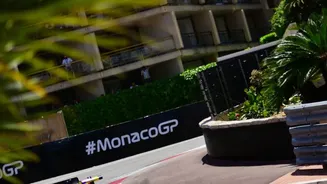
Monaco’s No-Income-Tax Policy
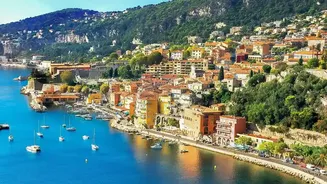
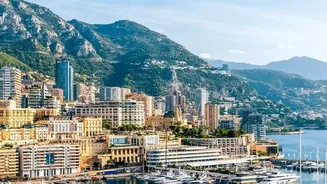
In stark contrast, the Principality of Monaco, a tiny city-state on the French Riviera, has not levied a personal income tax since 1869. For residents of Monaco, this means that income from salaries, capital gains, dividends, and interest is completely tax-free. This policy applies to all residents, regardless of their nationality, with one major exception: French citizens. A 1963 treaty between France and Monaco stipulates that French nationals living in the principality are still subject to French income tax, a rule designed to prevent tax evasion by its citizens.
How Does Monaco Fund Itself?
If residents don't pay income tax, how does the government afford to provide high-quality public services, including having the most police per capita in the world? The answer lies in a different approach to revenue generation. A significant portion, estimated to be around 50%, of the government's budget comes from a Value-Added Tax (VAT). This consumption tax is set at 20%, the same as in France, due to a customs union between the two countries. Another major source is a corporate tax of 25% on business profits, but this only applies to companies that generate more than 25% of their turnover outside of Monaco. The state also earns revenue from monopolies it holds in sectors like tobacco and postal services, as well as from its world-famous state-owned casinos, although casino profits contribute only a small fraction (around 3-5%) of the state's budget.
The Real Cost of Tax-Free Living
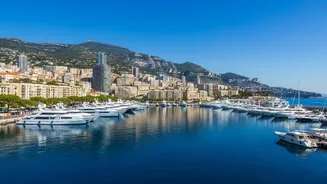
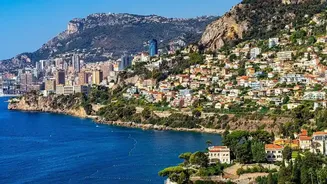
Living in this tax-free paradise comes with a formidable price tag. To even be considered for residency, an individual must prove they have sufficient financial means. This includes depositing a minimum of €500,000 (over ₹4.5 crore) into a Monaco bank account and providing proof of accommodation. And accommodation is perhaps the biggest hurdle. Monaco has the most expensive real estate in the world, with the price per square metre being the highest globally. A single person's estimated monthly living costs can be around €6,430 (nearly ₹5.8 lakh), and renting a simple one-bedroom apartment can cost over €6,000 per month. The high demand from the world's wealthy, coupled with the country's tiny size of just two square kilometres, keeps prices astronomically high.
Two Different Economic Philosophies
The contrast between India and Monaco highlights two fundamentally different economic models. India employs a broad-based tax system to provide for a massive and diverse population, focusing on social welfare and national development. It is a model built for a large, developing economy. Monaco, on the other hand, operates as a boutique economy for the ultra-wealthy. Its model is not designed for mass-scale public welfare but to attract a small, high-net-worth population that contributes to the economy through high consumption (via VAT), business activities, and simply by being incredibly rich. The absence of income tax is the primary lure, but the cost of entry ensures that only a select few can enjoy its benefits.