




A Mandate for Talking Cars
India's Ministry of Road Transport and Highways (MoRTH) has set the wheels in motion for a significant leap in automotive safety. A recent draft notification proposes making Vehicle-to-Vehicle (V2V) communication systems mandatory for all new vehicle
categories—including cars, two-wheelers, and trucks—manufactured from October 1, 2028. This plan, built around a new standard called AIS-230, effectively mandates that future vehicles be able to 'talk' to each other in real-time. The core idea is to create a cooperative network where vehicles share critical information about their speed, position, and actions, providing drivers with warnings about dangers that are beyond their direct line of sight. This marks a pivotal moment, shifting from passive safety features like airbags to a proactive, connected ecosystem aimed at preventing accidents before they happen.
How Sudden-Braking Alerts Actually Work
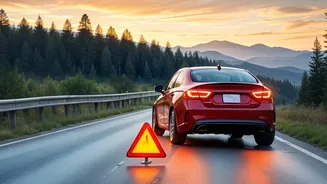
The star application of this new plan is the sudden-braking alert. It operates using a technology called Cellular Vehicle-to-Everything (C-V2X), which allows cars to send and receive small packets of data over a dedicated, license-free radio frequency band. When a V2X-equipped car slams on its brakes, it automatically broadcasts a digital message containing its status. Nearby vehicles receive this signal almost instantly. The system's key advantage is that it doesn't rely on cameras or radar, which can be blocked by other vehicles or compromised by bad weather. A car several places behind in traffic can receive the warning that a vehicle far ahead has braked hard, giving its driver crucial extra seconds to slow down and prevent a potential pile-up. The alert appears on the dashboard, giving a clear, non-visual warning of a hazard the driver cannot yet see.
Beyond Braking: A Network of Safety
While emergency braking alerts are a headline feature, the V2X ecosystem is designed to address a much wider range of dangerous scenarios common on Indian roads. The same technology will enable Forward Collision Warnings, alerting a driver if they are approaching a stopped or slow-moving vehicle too quickly. It can also issue Wrong-Way Driving alerts, a critical feature for highways where this is a persistent danger. Another key application is the Blind Intersection Collision Warning. Here, two vehicles approaching an intersection from different directions can warn each other of a potential collision path, even if buildings or other obstructions block their view of each other. The system can even alert drivers to the approach of emergency vehicles, helping clear a path faster and more safely.
The Hurdles on India's Roads
Despite its immense potential, the road to a fully connected vehicle ecosystem in India is filled with challenges. The primary issue is achieving critical mass; the system's safety benefits only truly materialize when a high percentage of vehicles are equipped with V2X technology. Until then, its effectiveness will be limited. Cost is another significant barrier, both for integrating the technology into new, budget-conscious vehicles and two-wheelers, and the impossibility of retrofitting the millions of older vehicles already on the road. Furthermore, India's unique and chaotic traffic mix—with cars, buses, rickshaws, pedestrians, and animals often sharing the same space—presents a complex challenge for the system, which must avoid generating false alarms that would cause drivers to ignore it. Finally, robust cybersecurity measures will be essential to prevent hacking or spoofing of these critical safety messages, and ensuring reliable network coverage across the country remains a major infrastructural hurdle.