








A Holistic Approach to Farming
Across the globe, a new kind of agricultural study is taking root, centred on one of the oldest domesticated animals: the sheep. These initiatives, often broadly termed 'sheep projects', are part of a movement called regenerative agriculture. Instead
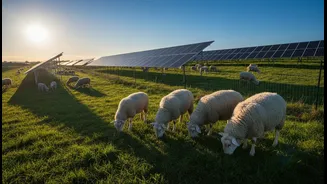
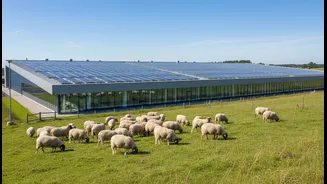
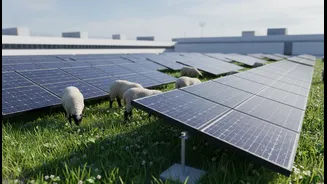
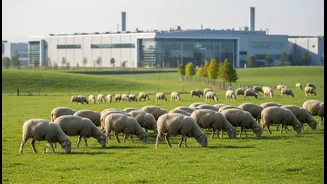
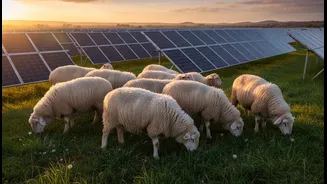
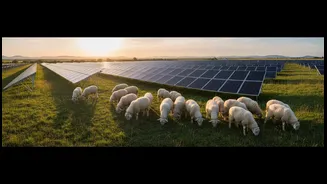
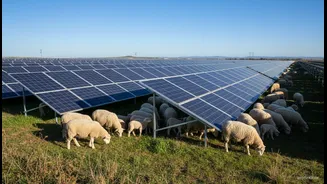
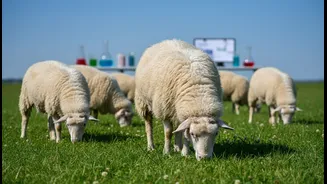
of viewing farming as a process that takes from the land, this approach aims to restore and enhance it. The core idea is to move away from specialised, single-outcome thinking and towards a holistic system where every component benefits the others. Recently, a project at a Volkswagen plant in Poland gained attention for using a flock of 100 sheep to manage vegetation at its solar farm, while simultaneously conducting a large-scale scientific study. This initiative, in partnership with Poznań University of Life Sciences, examines how the grazing sheep affect biodiversity, soil quality, and their own welfare, showcasing how industry and nature can coexist.
The Power of Rotational Grazing
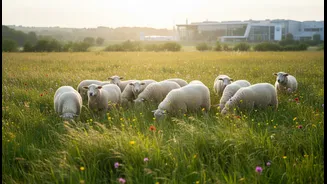
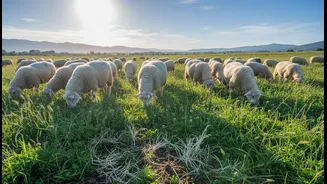
The key practice behind these projects is often rotational or holistic planned grazing. This method involves moving a dense flock of sheep through a series of smaller pastures, or paddocks, on a regular schedule. Unlike continuous grazing where animals can selectively eat the tastiest plants and compact the soil, this method mimics the natural movement of wild herds. The flock grazes an area intensely for a short period before moving on, leaving the pasture to rest and recover for an extended time. This rest period is crucial. It allows grasses and other plants to regrow, developing deeper roots and improving the overall health of the pasture. This simple act of moving animals intentionally has profound and positive effects on the entire ecosystem, from deep in the soil to the wider environment.
Rebuilding Soil From the Ground Up
Healthy soil is the foundation of a healthy farm. Projects integrating sheep into land management are proving to be powerful tools for soil regeneration. As sheep graze, their hooves gently break up compacted earth, which improves water infiltration and aeration. Their manure and urine act as a natural fertiliser, returning essential nutrients like nitrogen and phosphorus directly to the land, reducing or eliminating the need for synthetic inputs. Studies have shown that this process stimulates the activity of beneficial microorganisms, earthworms, and insects in the soil. These tiny engineers decompose organic matter, further enriching the soil and enhancing its structure. The result is land that is more resilient to drought, less prone to erosion, and better able to sequester carbon from the atmosphere, helping to mitigate climate change.
A Haven for Biodiversity
When soil health improves, biodiversity flourishes. The varied habitats created by rotational grazing support a wider array of plant species. This, in turn, provides food and shelter for more insects, birds, and other wildlife. By managing vegetation naturally, sheep can also control invasive weeds without the use of chemical herbicides. They are known to eat a wider variety of plants than cattle, including many species considered weeds, effectively turning problem vegetation into protein and wool. This creates a more balanced and resilient ecosystem. Research projects, like the one in Poland, carefully monitor these changes, tracking the return of native plants and the increase in insect and bird populations as a direct result of managed grazing.
Prioritising Animal Welfare
A crucial pillar of these integrated projects is ensuring the well-being of the animals themselves. In rotational systems, sheep have constant access to fresh, nutrient-rich pasture, which improves their overall health and reduces stress. The shade from solar panels in agrivoltaic systems, for instance, can help reduce heat stress for the animals during hot days. Furthermore, because the animals are moved regularly to clean ground, their exposure to internal parasites can be significantly reduced, a major health concern in conventional sheep farming. Researchers observe the animals' behaviour closely, and signs like a flock grazing calmly in smaller, separated groups are seen as positive indicators that they feel safe and have adapted well to their environment. This focus ensures that the system is not only ecologically sound but also ethical.