






What Exactly Is Rooibos?
First, let's clear up a common misconception: rooibos is not technically a tea. While it's brewed and enjoyed like one, it doesn't come from the Camellia sinensis plant that gives us black, green, and oolong teas. Instead, rooibos (pronounced 'roy-boss')
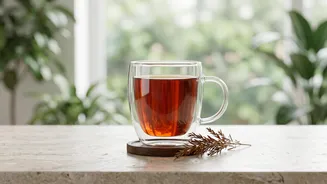
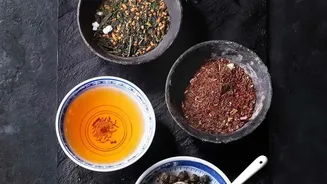
is an herbal infusion made from the needle-like leaves of the Aspalathus linearis plant. This shrub, whose name means 'red bush' in Afrikaans, is grown exclusively in the Cederberg mountain region of South Africa's Western Cape. After harvesting, the leaves are crushed and fermented, a process that develops their signature reddish-brown colour and enhances their natural sweetness. There's also a green rooibos, which is unfermented and has a lighter, grassier taste.
A Uniquely Sweet and Earthy Flavour
One of the main attractions of rooibos is its distinctive taste. It is naturally sweet and smooth, with a profile often described as having notes of honey, vanilla, and caramel. Unlike black tea, it is very low in tannins, the compounds that can cause a bitter or astringent taste, especially if over-brewed. This means rooibos is incredibly forgiving; you can steep it for a long time without it ever turning bitter. Its flavour is rich and full-bodied, with a slightly nutty and earthy base that some describe as woody or even reminiscent of light tobacco, but without any harshness. This complex but gentle character makes it delicious on its own or with a splash of milk, a slice of lemon, or a drizzle of honey.
The Caffeine-Free Advantage
For many, the single biggest draw of rooibos is that it is entirely, naturally caffeine-free. Unlike decaffeinated black or green teas, which undergo a process to remove caffeine and may retain trace amounts, rooibos never had it to begin with. This makes it a perfect beverage for any time of day, whether it's a morning cup to ease into the day, an afternoon refresher, or a soothing drink before bed. Its relaxing qualities make it an ideal evening ritual for those looking to wind down without the stimulating effects of traditional tea or coffee. It's also a suitable choice for children and those sensitive to caffeine.
Potential Wellness Perks
Rooibos is celebrated not just for its taste, but also for its potential health benefits. It is packed with antioxidants, including a unique one called aspalathin. Antioxidants are compounds that help protect the body's cells from damage. Some research suggests that the antioxidants in rooibos may contribute to heart health by positively impacting cholesterol levels and blood pressure. Its low tannin content also means it won't interfere with the body's absorption of certain nutrients, like iron, as much as black tea might. Furthermore, its antispasmodic properties may help soothe digestive discomfort for some individuals. However, it's important to note that while promising, much of the research is still developing, and rooibos should be enjoyed as part of a balanced lifestyle, not as a medical treatment.
How to Brew the Perfect Cup
Brewing rooibos is wonderfully simple. Because it's robust and lacks bitterness, it's hard to go wrong. Use one to two teaspoons of loose-leaf rooibos or one teabag per cup. Unlike more delicate green teas, rooibos thrives in very hot water, so bring your water to a full boil (around 100°C or 212°F). Pour the water over the leaves and let it steep for at least 5 to 7 minutes to draw out its full, rich flavour. Feel free to let it sit even longer if you prefer a stronger brew—it will only get richer, not bitter. Rooibos is also fantastic as an iced tea. Simply brew it hot, let it cool, and pour over ice, or cold brew it by steeping the leaves in a pitcher of cold water in the refrigerator for 6 to 12 hours.