





The 'True Format' Obsession
When people talk about Christopher Nolan's 'true format', they are referring to IMAX 15/70mm film. It is the director's gold standard for cinematic immersion. Unlike standard 35mm film, which runs vertically through a projector, IMAX 15/70mm film runs horizontally.
Each frame is 15 perforations wide, creating a negative that is nearly nine times larger than a conventional 35mm frame. This massive size allows the camera to capture an astonishing amount of detail, resulting in an image with breathtaking clarity and depth. Nolan himself says it creates a feeling of 3D without the glasses, by filling the audience's entire peripheral vision. For years, he has used IMAX cameras for key sequences in films like The Dark Knight and Oppenheimer, but The Odyssey marks the first time a feature film has been shot entirely in this demanding format.
A Matter of Aspect Ratio
One of the most noticeable differences with IMAX 15/70mm is the aspect ratio, which is 1.43:1. This is much taller and more squarish than the widescreen formats most moviegoers are used to. When projected on a proper floor-to-ceiling IMAX screen, which can be as large as 79 by 59 feet, this ratio completely envelops the viewer. The intention is for the screen to 'disappear,' creating a hyper-realistic and immersive experience that cannot be replicated at home. However, most standard cinemas and even many screens branded as IMAX use a wider 1.90:1 aspect ratio. When a film shot in 1.43:1 is shown on these screens, the top and bottom of the image must be cropped, meaning you don't see the full picture as the director composed it.
The Projector Problem
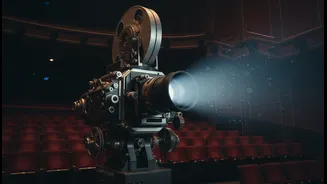
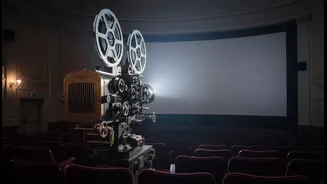
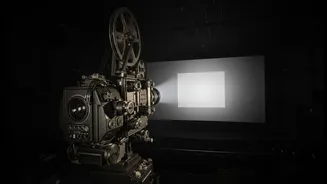
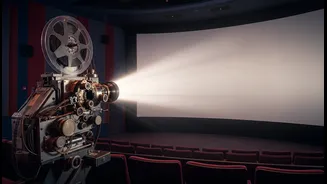
The primary reason so few cinemas can show a film like The Odyssey in its true format is the rarity and complexity of the projectors. An IMAX 15/70mm film projector is a mechanical marvel, but also a beast. It's enormous, incredibly expensive, and requires highly trained projectionists to operate and maintain it. Furthermore, the film prints themselves are unwieldy; the print for Nolan's Oppenheimer was reportedly 18 kilometres long and weighed nearly 300kgs. As the industry shifted to cheaper and more convenient digital projection over the last two decades, most cinemas decommissioned their analogue film projectors. As a result, only a tiny fraction of theatres retained the specific equipment needed. For the release of The Odyssey, it's estimated that only about 41 to 45 theatres worldwide have the capability to project it in true IMAX 70mm film.
Digital 'Lie-MAX' vs. The Real Deal
The term 'IMAX' itself can be confusing for consumers. In the 2000s, IMAX introduced a digital system that allowed existing multiplexes to convert standard auditoriums into IMAX-branded screens at a lower cost. This led to a proliferation of screens called IMAX, but many of them feature smaller screens and 2K digital projectors, a far cry from the colossal screens and ultra-high-resolution film of a true IMAX venue. This discrepancy earned the digital version the nickname 'Lie-MAX' among film purists. While newer 'IMAX with Laser' systems offer a much-improved digital experience with 4K resolution and the ability to project the full 1.43:1 aspect ratio, they still cannot match the effective resolution of 70mm film, which is estimated to be equivalent to 16K or even 18K.
The Cinematic Ideal
While it's true that less than 3% of the world's IMAX-branded theatres can show The Odyssey as Nolan shot it, the director's team works for months to optimize the film for every other format. From standard 70mm (a high-quality but different film format) to digital laser projections and even regular 35mm prints, great care is taken to ensure the experience is artistically sound on any screen. For Nolan, the push for film is not about exclusivity but about striving for the absolute best possible image and creating an event that draws people to the cinema. By shooting on the highest quality format in existence, the versions created for every other screen are derived from the best possible source. In the end, while the 'true format' experience remains a rare pilgrimage for dedicated fans, Nolan's commitment elevates the cinematic experience for everyone.