


The Challenge of Tsunami Detection
For coastal nations like India, the memory of the 2004 Indian Ocean tsunami serves as a stark reminder of the critical need for timely warnings. For years, the primary method of detection has relied on a network of seismic sensors and Deep-ocean Assessment
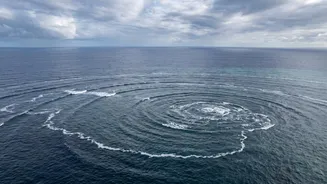
and Reporting of Tsunamis (DART) buoys. Seismic sensors detect the undersea earthquakes that often trigger tsunamis, while DART buoys, which consist of a seafloor pressure recorder and a surface buoy, confirm the existence of a tsunami wave by measuring changes in water pressure. However, this system has limitations. The buoys only detect a tsunami once the wave is already travelling across the ocean, and not all undersea earthquakes generate a destructive wave. Furthermore, tsunamis caused by non-seismic events, like volcanic eruptions or landslides, can be much harder to predict.
Nature's Underwater Alarm
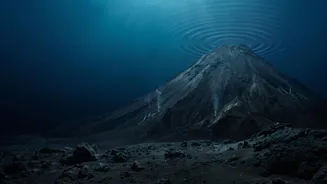
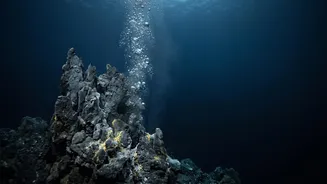
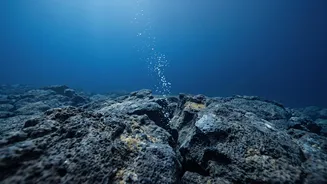
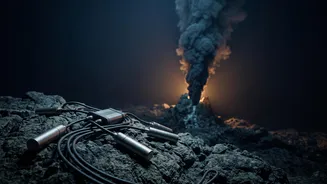
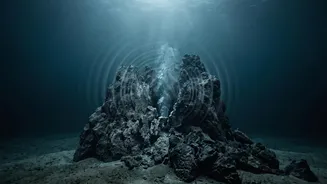
The game-changing discovery came from listening, not just watching. The violent eruption of an underwater volcano creates immense sound waves, known as hydroacoustic waves or T-waves, that travel through the ocean. Think of it like a giant bell being struck underwater. These sound waves travel through seawater at about 1.5 kilometres per second—many times faster than the tsunami wave itself. This speed difference is the key. By detecting the acoustic signal first, scientists can get a crucial head start, potentially gaining precious minutes or even hours of warning time before the destructive tsunami wave makes landfall.
A Groundbreaking Case Study
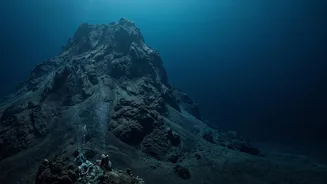
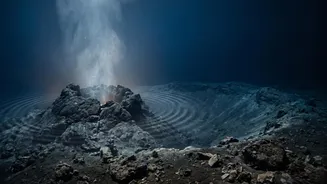
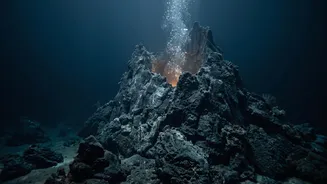
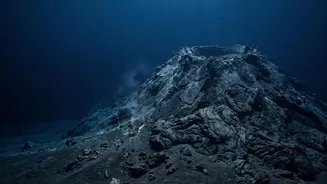
The 2022 eruption of the Hunga Tonga-Hunga Ha'apai volcano became a pivotal moment for this new field of research. The eruption was one of the most powerful volcanic events in modern history, sending shockwaves and tsunamis across the Pacific. Scientists studying the data discovered that the most destructive local tsunami was not caused by the initial explosion, but by the subsequent collapse of the volcano's caldera about an hour later. Crucially, this collapse generated a massive, distinct underwater sound that was detected by hydrophones thousands of kilometres away. Researchers were able to correlate the timing of this acoustic signal with the destruction of a communications tower in Tonga, confirming that the sound preceded the tsunami's arrival by about 17 minutes.
From Sound to Safety with Hydrophones
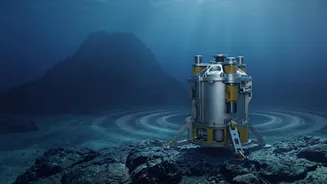
The technology at the heart of this method is the hydrophone, essentially an underwater microphone designed to detect sound waves in the ocean. These sensitive instruments can pick up the tell-tale acoustic signatures of volcanic events like landslides, explosions, and caldera collapses. By using arrays of hydrophones, researchers can triangulate the source of the sound, pinpointing the location of the eruption in near real-time. This is similar to how seismologists use networks of seismographs to locate an earthquake's epicentre. The challenge now is to learn the specific 'sound signatures' that distinguish a tsunami-generating event from a harmless one, turning raw noise into actionable intelligence.
The Future of Tsunami Warnings in India
This acoustic monitoring method is not designed to replace existing systems, but to enhance them. India, through the Indian Tsunami Early Warning Centre (ITEWC) in Hyderabad, already operates a world-class warning system established after the 2004 disaster. This system integrates seismic data, sea-level sensors, and advanced modelling. More recently, ITEWC has developed standard operating procedures for volcanically-induced tsunamis. Integrating real-time hydroacoustic data into this framework could create a more robust, multi-layered defence. By combining the speed of acoustic detection with the confirmation provided by DART buoys and seismic data, warning centres could issue alerts that are not only faster but also more accurate, reducing the risk of false alarms and building greater public trust. This fusion of technologies promises a safer future for India's extensive coastline.