






A Grand Plan for Pedestrians
In response to long-standing public demand and a Supreme Court directive affirming walking on footpaths as a fundamental right, Bengaluru authorities have launched the 'Safe Footpath Campaign'. Spearheaded by the Greater Bengaluru Authority (GBA), the initiative
has two primary goals: first, to clear widespread encroachments, and second, to repair and upgrade the city's pedestrian infrastructure. Bengaluru Development Minister Krishna Byre Gowda announced that a budget of ₹70 crore has been allocated specifically for the repair works, which aim to cover an extensive network of nearly 2,000 kilometres of footpaths across the city's five corporations.
Why This Mission is Critical
The need for this overhaul is backed by grim statistics. According to officials, pedestrians account for nearly 30% of the 1,000 road accident fatalities reported in Bengaluru, a number many believe can be significantly reduced with better infrastructure. A recent study underscored the problem, finding that while Bengaluru ranks high in footpath availability compared to other Indian cities, a staggering 45.4% of its footpaths are obstructed and unwalkable. These obstructions, from parked vehicles to illegal structures, force pedestrians onto dangerous, congested roads, making a simple walk a life-threatening risk. The campaign is a direct attempt to tackle this daily hazard.
Clearing the Path First
Before repairs can begin, the city must first reclaim its walkways. The campaign kicked off in July 2026 with a large-scale encroachment clearance drive. Impressive progress has already been reported, with authorities clearing encroachments from over 770 kilometres of pavements by early August 2026—achieving about half of their initial clearance target. This drive involves removing illegally parked vehicles, abandoned construction materials, unauthorized sheds, and debris. A sensitive aspect of this operation is the relocation of street vendors. Officials have clarified that the goal is not to evict vendors but to move them from major arterial roads to designated ward roads to ensure pedestrian pathways remain clear.
The ₹70 Crore Facelift
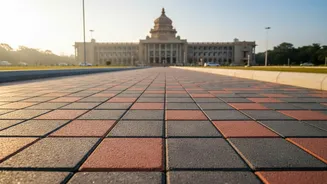
The allocated ₹70 crore is earmarked for the crucial second phase: the physical repair of the cleared footpaths. The funds will be used to address the myriad issues plaguing the city's pavements, such as fixing broken slabs, replacing damaged kerb stones, and correcting uneven surfaces that make walking difficult and dangerous. The objective is to create continuous, hazard-free walkways that are accessible to all, including the elderly and persons with disabilities. Officials have stressed that repair works are to be taken up simultaneously as stretches are cleared, ensuring that reclaimed spaces are quickly made safe and usable for the public.
The Unfinished Walk Ahead
While the initial progress has been praised, the long-term success of the campaign faces significant challenges. The persistent menace of two-wheelers using footpaths as shortcuts remains a major safety concern, with thousands of violations reported monthly. Furthermore, residents and civic activists point out that without sustained enforcement, encroachments are likely to return. The true test of the mission will be the city's ability to maintain these cleared and repaired footpaths. Success will depend not just on this one-time drive, but on a lasting shift in enforcement and public behaviour to ensure that Bengaluru's footpaths permanently belong to pedestrians.