


The Challenge of the Ghats
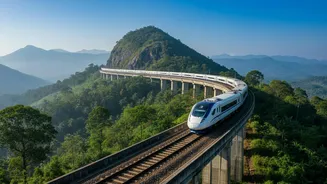
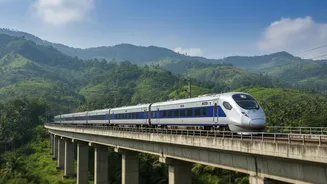
The focus of the trials is the Sakleshpur-Subramanya Road section, a 55-kilometre stretch of track that is famously difficult to navigate. This line, which connects Bengaluru to the coastal city of Mangaluru, cuts through the Western Ghats and presents
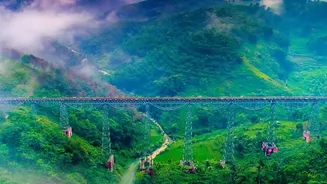
a formidable operational challenge for Indian Railways. The primary difficulty is its steep gradient, classified as '1 in 50', which means the track rises or falls one metre for every 50 metres of horizontal distance. This, combined with 108 sharp curves, 57 tunnels, and 226 bridges, makes maintaining control, speed, and braking a highly technical exercise. Due to these conditions, the Commissioner of Railway Safety has historically capped the maximum speed for all trains on this stretch at just 30 kmph to ensure safety.
A Specially Modified Vande Bharat
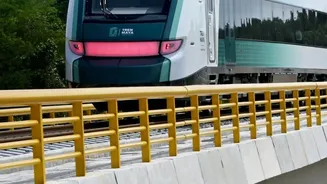
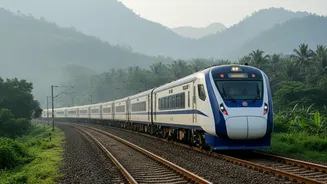
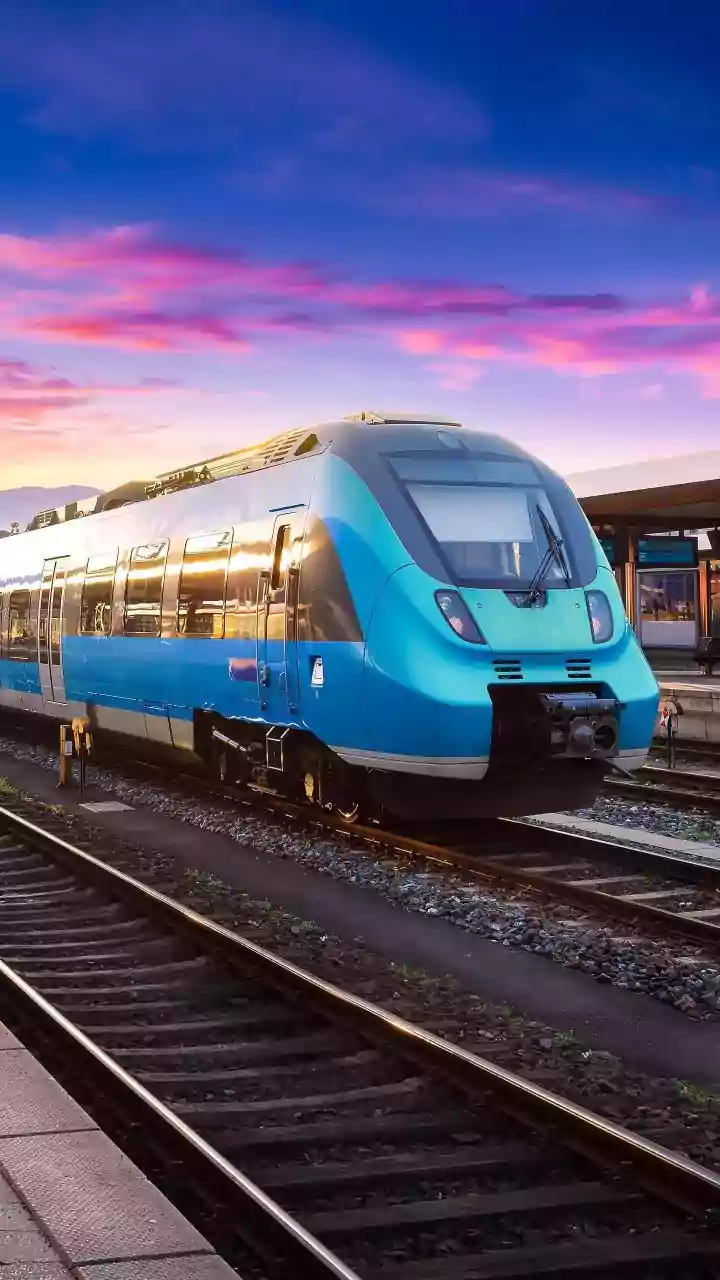
To conquer this terrain, Indian Railways is not using a standard Vande Bharat rake. A specially modified 20-car trainset was dispatched from the Integral Coach Factory (ICF) in Chennai for these tests. The key modification is the inclusion of an integrated Automatic Emergency Braking (AEB) system. While Vande Bharat trains already feature advanced electro-pneumatic and regenerative braking, the perilous ghat section requires an additional layer of safety. Conventionally, trains traversing this route use additional 'banker' locomotives equipped with their own emergency brakes. However, attaching and detaching these locomotives to a Vande Bharat trainset would be time-consuming and impractical. This custom-built rake, with its own onboard AEB, is designed to be self-reliant, a critical step for efficient operation.
Inside the Crucial Trial Run
The field trials, which began on August 12 and are expected to continue until August 20, are being meticulously monitored. Personnel from the Research Designs and Standards Organisation (RDSO), the railway ministry's technical body, are on board to examine a range of parameters. The tests focus on the train's acceleration, stability on curves, and, most importantly, its braking performance on the steep inclines. The Automatic Emergency Braking system is preset to the 30 kmph speed limit and is being rigorously evaluated to ensure it can be relied upon to control the train's speed automatically. On the first day of testing, the train successfully travelled from Sakleshpur down the ghat to Subrahmanya Road, a journey that took just over four hours, before preparing for the ascent.
What This Means for Passengers
The successful completion of these trials would be a significant milestone, paving the way for the introduction of a regular Vande Bharat Express service between Bengaluru and Mangaluru. This would drastically improve connectivity between the state capital and the vital coastal region, benefiting commuters, tourists, and commercial activities in districts like Hassan and Dakshina Kannada. Currently, the journey by rail is slow due to the ghat section's limitations. A Vande Bharat service, even while adhering to safety speeds in the ghats, could offer a faster and more comfortable travel experience overall. The hope among local residents and officials is that these tests will finally make a long-awaited, modern rail connection a reality.
A Blueprint for Hill Routes
The implications of these tests extend far beyond Karnataka. If the Vande Bharat proves its mettle on the Sakleshpur-Subramanya ghat, it could create a blueprint for deploying these advanced trainsets on other challenging, high-altitude, and steep-gradient routes across the country. Indian Railways has other difficult ghat sections, such as the Thal Ghat and Bhor Ghat near Mumbai, where specially equipped Vande Bharat trains are already in operation. Each successful deployment on such terrain reinforces the versatility of the Vande Bharat platform and brings modern, semi-high-speed rail closer to communities in India's geographically diverse regions. These trials are not just about one route; they represent a significant step in expanding the network's capabilities.