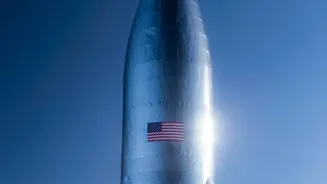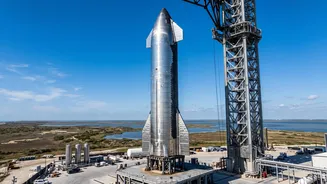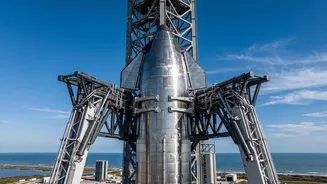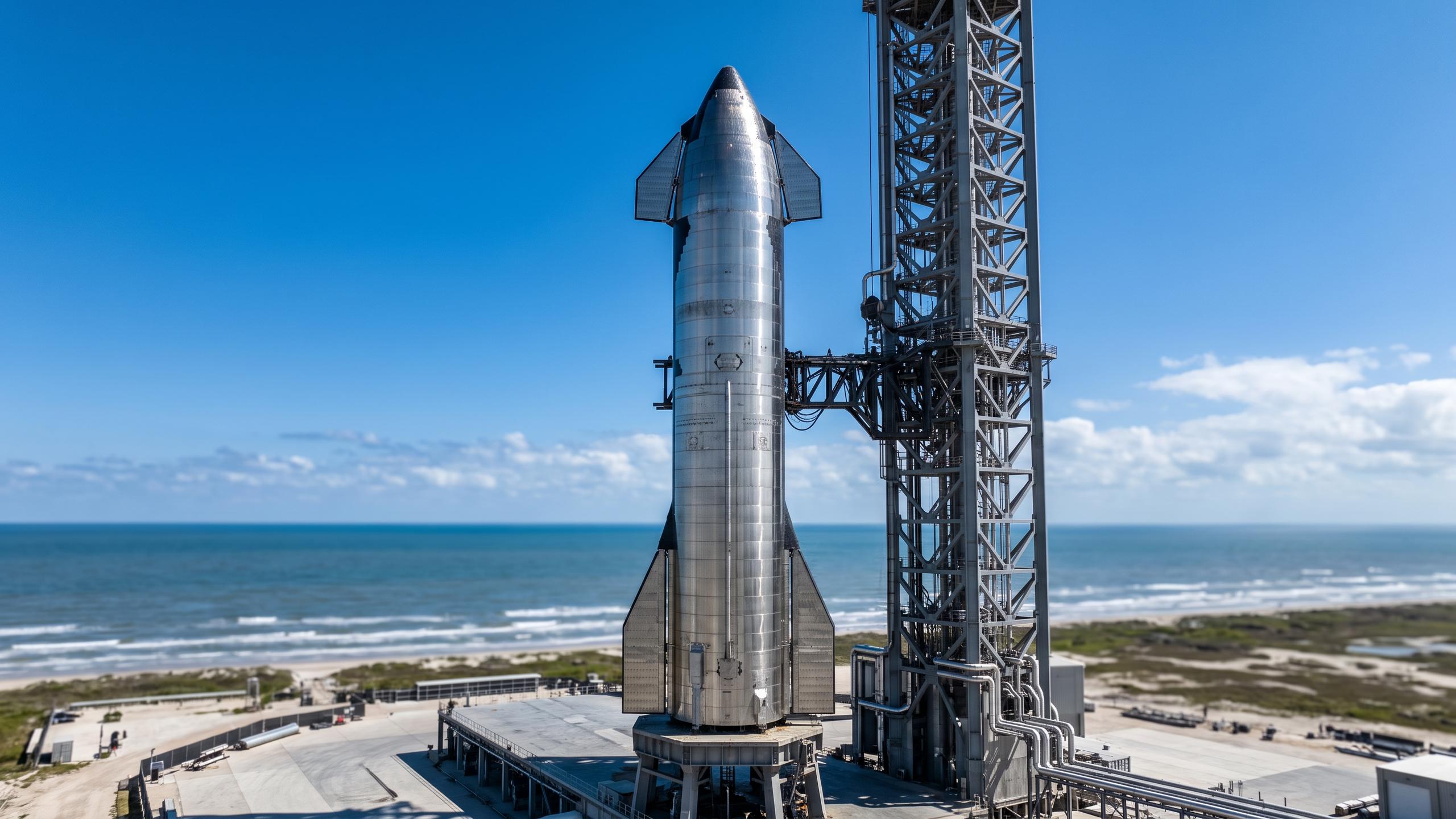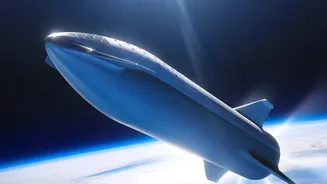





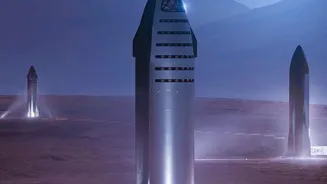
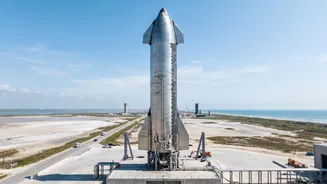
In a moment that felt like science fiction becoming reality, SpaceX successfully caught its Starship spacecraft with its launch tower after a 22-hour orbital mission. This wasn't just another test; it was the 'holy grail of spaceflight'.
A Landmark Flight Ends in a Historic Catch
After circling
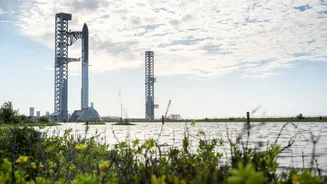
the Earth 14 times over more than 22 hours, the 171-foot-tall Starship vehicle began its fiery descent. Travelling at around 27,000 kilometres per hour, its heat shield of 18,000 ceramic tiles glowed as it sliced through the atmosphere. The world watched as the massive spacecraft, charred from re-entry, executed a final 'bellyflop' manoeuvre, fired its Raptor engines to flip upright, and hovered beside the launch tower. Then, two giant mechanical arms, nicknamed 'Mechazilla', closed in and clasped the ship, bringing a historic mission to a gentle end. The flight marked the first time a spacecraft returned from orbit to be caught this way, a crucial step toward a fully reusable system. While the mission's ambitious goal of also catching the Super Heavy booster was not met—the booster was safely diverted and splashed down in the Gulf of Mexico after an anomaly—the successful recovery of the Starship upper stage itself has changed the game.
The Holy Grail: Full and Rapid Reusability
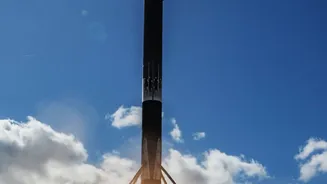
For decades, rockets have been expendable, with millions of dollars of hardware discarded after a single use. SpaceX's own Falcon 9 rocket revolutionised the industry by making its first-stage boosters reusable, but the upper stage was still lost on every flight. Starship is designed to change this entirely. The goal is a system where both the booster and the upper stage can be recovered, refuelled, and launched again in hours, not weeks. Catching the rocket with the tower is the key. It eliminates the need for heavy landing legs, which frees up mass for more payload. More importantly, it places the vehicle directly back on the launch mount, ready for integration and its next flight. This 'airline-like' operational cadence is what unlocks the massive cost reduction that has been the program's primary driver.
What 22 Hours in Orbit Unlocks
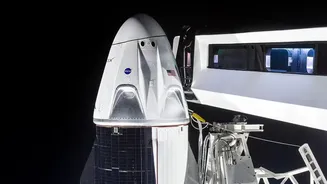
The mission's extended duration was just as significant as the landing. By staying in orbit for nearly a full day, SpaceX demonstrated Starship's capability for long-haul missions. During its flight, the ship successfully deployed 26 next-generation Starlink satellites, proving its primary business case as a heavy-lift platform for building out its space-based internet constellation. An endurance of 22 hours proves the vehicle's life support, power, and propulsion systems can handle extended stays in the harsh environment of space. This is a critical validation for future, more ambitious missions. It lays the groundwork for multi-day trips to deploy complex scientific instruments, service space stations, and eventually, carry crew and cargo for the week-long journey to the Moon and the months-long trek to Mars.
A New Economic Era for the Space Industry
The success of this mission is less about a single flight and more about ushering in a new economic model for the space industry. With a fully reusable system, the cost of launching a kilogram to orbit is projected to fall dramatically, by as much as 99 percent compared to the Space Shuttle era. Some estimates suggest a future Starship launch could cost as little as $10 million, compared to the roughly $67 million for a Falcon 9 or the estimated $2 billion for NASA's expendable SLS rocket. This radical cost reduction doesn't just make existing space operations cheaper; it makes entirely new ones possible. Industries like in-space manufacturing, large-scale data centres in orbit, and resource extraction from asteroids move from the realm of theory to viable business plans. For India, as for other nations, the shift toward reusability is a critical development, setting a new standard for commercial competitiveness and strategic access to space.
The Road Ahead for Starship
Despite the landmark success of catching the ship, SpaceX's work is far from over. The immediate focus will be on understanding the anomaly that prevented the Super Heavy booster's recovery and ensuring both stages can be reliably caught on future flights. Perfecting the 'double catch' is essential for achieving the rapid turnaround times that underpin Starship's economic model. Beyond that, the company will continue its iterative development, refining the heat shield for greater durability and pushing toward human-rating the vehicle. NASA is relying on Starship to land its Artemis astronauts on the Moon, a mission that is rapidly approaching. This successful orbital return and catch shows that while challenges remain, the vision of a reusable, interplanetary transport system is no longer a distant dream. It is happening now, one historic flight at a time.