



A Known Carcinogen We Breathe Daily
For years, the health discourse around Delhi's smog centred on respiratory distress, but the medical consensus has shifted to something far more alarming. The International Agency for Research on Cancer (IARC), a branch of the World Health Organization,
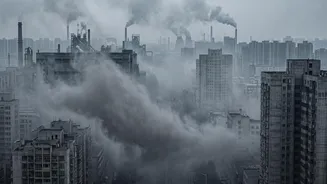
has officially classified outdoor air pollution, and specifically its component PM2.5, as a Group 1 carcinogen. This places the air in polluted cities in the same high-risk category as tobacco smoke and asbestos, meaning it is definitively proven to cause cancer in humans. This isn't a theoretical risk; it's a certainty backed by extensive scientific evidence. For every 10 microgram per cubic metre increase in long-term PM2.5 exposure, the risk of developing lung cancer rises significantly. With Delhi's annual PM2.5 levels often far exceeding WHO safe limits, residents are continuously exposed to this threat.
How Pollution Turns a Cell Rogue
The danger lies in the smog's tiniest particles. PM2.5, or particulate matter smaller than 2.5 micrometres, is so fine it can bypass the body's natural defences, penetrating deep into the lungs and even entering the bloodstream. Once inside, these particles trigger a cascade of harmful biological responses. They cause chronic inflammation and oxidative stress, which can damage cellular DNA. Over time, this sustained damage can lead to mutations in healthy cells, switching off tumour-suppressing genes and activating cancer-causing ones. Recent research has even identified a mechanism where pollution doesn't cause the initial mutation but acts on pre-existing dormant mutations (like EGFR mutations), 'waking them up' and triggering them to turn cancerous.
Lung Cancer in Non-Smokers
One of the most disturbing trends doctors are observing is the rise of lung cancer in people who have never smoked. While smoking remains a primary cause, air pollution is now recognised as a significant independent risk factor. Fine particles like PM2.5, along with other carcinogens in the air like benzene and benzo-a-pyrene from vehicle exhaust and industrial emissions, are directly implicated. This explains why a growing number of patients with no history of tobacco use are being diagnosed with lung cancer. Doctors on the front lines confirm that the link between breathing Delhi's air and developing lung cancer is no longer a suspicion but a medical fact they confront daily.
Beyond the Lungs: A Systemic Threat
The toxic impact of air pollution is not confined to the respiratory system. Once pollutants enter the bloodstream, they circulate throughout the body, posing a wider threat. The IARC notes a positive association between air pollution and an increased risk of bladder cancer. More recently, medical experts in Delhi have raised alarms about another disturbing trend: gastrointestinal (GI) cancers appearing in patients as young as 15. While research is ongoing to firmly establish a causal link, long-term exposure to pollutants is a suspected environmental stressor. Studies have found that ingested pollutants can alter the gut environment and cause systemic inflammation, potentially contributing to cancers of the digestive tract.
What Doctors Advise
In the face of this environmental threat, medical professionals urge a two-pronged approach: personal protection and systemic change. For individuals, the advice is consistent. Monitor the daily Air Quality Index (AQI) and limit strenuous outdoor activity, especially near high-traffic roads, when levels are 'poor' or worse. Using a well-fitted N95 mask when outdoor exposure is unavoidable can help filter out fine particulate matter. At home, keeping windows closed during high-pollution days and considering an air purifier with a HEPA filter can improve indoor air quality. Vulnerable groups, including children, the elderly, pregnant women, and those with existing heart or lung conditions, should take extra precautions. However, doctors also stress that these are mitigating measures, not a cure. The ultimate solution lies in stricter regulations and a collective effort to reduce pollution at its source.