



The Illusion of Choice at the Checkout
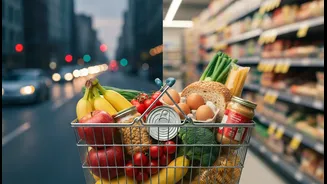
For many Indian households, the battle for a healthy diet is seemingly lost at the point of sale. Studies consistently show that healthier foods are more expensive per calorie than less healthy, often ultra-processed, options. A basket filled with fresh
fruits, vegetables, and pulses often costs significantly more than one with packaged noodles, biscuits, and sugary drinks. This price disparity isn't an accident. Processed foods are designed for a long shelf life, mass production, and intense marketing, all of which lower their relative cost. Fresh produce, on the other hand, is perishable and subject to price volatility. This economic reality pressures families, particularly those on tight budgets, into making choices that are affordable in the short term but carry long-term health costs. The result is a diet where low-quality carbohydrates and processed items are over-represented, not always by choice, but by economic necessity.
A Broken Path From Farm to Plate
A significant portion of the price you pay for an apple or a tomato has little to do with the farmer who grew it. India's agricultural supply chain is notoriously fragmented and inefficient. Produce passes through multiple intermediaries, each adding their own margin, which inflates the final price for the consumer while the farmer's share remains low. A major culprit is the staggering level of post-harvest loss, with some estimates suggesting a third of fresh produce is wasted before it even reaches a consumer. This is largely due to a critical lack of infrastructure, particularly cold storage and refrigerated transport. When a significant portion of a perishable crop is expected to be lost, the price of the remaining, sellable produce must cover those losses, creating an inbuilt system of high prices.
How Government Policy Skews the Menu
For decades, India's agricultural policy has been geared towards ensuring food security, primarily by guaranteeing prices for staple grains like wheat and rice through the Minimum Support Price (MSP) system. This has successfully prevented widespread famine but has had the unintended consequence of distorting what farmers choose to grow. With a guaranteed buyer and stable price for staples, there is less incentive to cultivate fruits, vegetables, or pulses, which are more susceptible to market fluctuations and pests. This policy focus means that the raw materials for many processed foods—derived from wheat, rice, and sugar—are often more abundant and artificially cheaper than the ingredients for a healthy, balanced meal. While government schemes to boost food processing and agricultural infrastructure exist, their impact is yet to fully counterbalance the deep-rooted subsidy structure favouring staples.
The Supermarket's Silent Influence
Retailers, from large supermarkets to the local kirana store, also play a role. Processed foods are a more attractive business proposition in many ways. They don't spoil quickly, they come in standardized packaging that is easy to stock and display, and they are often backed by large advertising budgets from manufacturers. This leads to more prominent placement and promotion of unhealthy items. The economics are simple: a product that can sit on a shelf for months without spoiling is less risky and often more profitable than a crate of tomatoes that might go bad in a few days. As a result, the food environment we navigate is heavily tilted towards the convenience and profitability of processed goods, making the healthy choice the one that requires more effort and more money to find and purchase.