





From Hours to Minutes
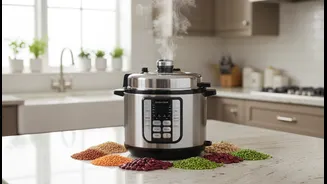
The most significant advantage of a pressure cooker is speed. By trapping steam, it raises the internal pressure and temperature, cooking food far faster than a regular pot. Traditionally, dried chickpeas (chana) can take over an hour to become tender
on the stovetop, even after soaking. In a pressure cooker, the same task can be accomplished in about 15-20 minutes. Unsoaked kidney beans (rajma), which can take hours, are tender in under 40 minutes. This turns what was once a weekend-only project into a feasible Tuesday night dinner. For everyday dals like toor (arhar) or moong, a pressure cooker reduces the cooking time to just a few whistles, making a fresh, comforting bowl of dal possible in minutes.
Improved Texture and Deeper Flavour
Beyond just speed, pressure cooking fundamentally changes how pulses cook. The high-pressure environment forces moisture into the beans and lentils, resulting in an exceptionally creamy and uniform texture that’s difficult to achieve with stovetop boiling. This method breaks down the pulses more thoroughly, creating a smoother base for curries and soups. Flavours also meld more intensely. Spices added at the beginning infuse deeply into every single grain, leading to a more flavourful and integrated dish without needing to simmer for hours. The result is a dal that tastes like it has been slow-cooked all day.
The Soaking Debate: Optional in a Pinch
Traditionally, soaking pulses overnight is non-negotiable. It helps soften them for faster cooking and makes them easier to digest. While soaking is still recommended for the best texture and to reduce gas-causing compounds, the pressure cooker makes it possible to skip this step when you're short on time. Forgot to soak the chana last night? No problem. Simply wash the pulses, place them in the cooker with enough water, and extend the cooking time. For unsoaked chana dal, you might need 5-6 whistles instead of the 3-4 for soaked dal. This flexibility is a game-changer for spontaneous meal planning.
Better for You: Nutrients and Digestibility
You might think the high heat and pressure would destroy nutrients, but the opposite is often true. Because cooking times are drastically reduced, pressure cooking can preserve heat-sensitive vitamins and minerals better than prolonged boiling. Furthermore, the process is highly effective at reducing anti-nutrients like phytic acid and lectins found in legumes. These compounds can interfere with mineral absorption and cause digestive discomfort. One study showed that pressure cooking reduced phytic acid in peas by 54%, compared to just 29% for boiling, making the nutrients in the pulses more available to your body and easier on your gut.
A Quick Guide for Common Pulses
Cooking times can vary based on the age of the pulses and your specific cooker, but here are some general guidelines for a standard stovetop pressure cooker: Toor Dal (Arhar Dal): Soaking isn't necessary. Cooks in about 3-4 whistles. Chana Dal (Bengal Gram): Soaked for 1-2 hours, it needs 3-4 whistles. Unsoaked, it requires 5-6 whistles. Whole Chickpeas (Kabuli Chana): Soaked overnight, they take about 15-20 minutes (or 6-7 whistles). Unsoaked, plan for 35-40 minutes. Kidney Beans (Rajma): It's best to soak these. After soaking, they need about 20-25 minutes (or 7-8 whistles). Unsoaked can take upwards of 40 minutes. * Whole Moong (Green Gram): Soaked for a few hours, it cooks in about 3-4 whistles. Unsoaked takes a little longer, around 5-6 whistles.