



The Reusability Revolution
For decades, the model for spaceflight was incredibly wasteful. Rockets powerful enough to escape Earth’s gravity were treated as disposable, single-use machines. Each launch required building a new vehicle from scratch, making access to space astronomically
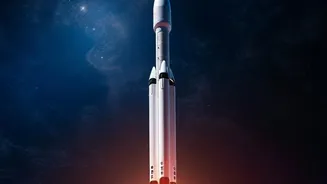
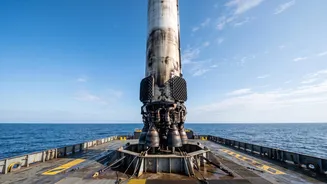
expensive. The cost of a launch during the Space Shuttle era, for example, was roughly $54,000 per kilogram sent to orbit. This paradigm shifted dramatically with the advent of reusable rockets, pioneered most visibly by SpaceX's Falcon 9. By designing first-stage boosters that can land themselves back on Earth, be refurbished, and fly again, the largest single hardware cost of a launch is spread across multiple missions. This airline-like approach has been the single biggest driver in cost reduction, slashing the price per kilogram by over 90% in some cases. A new Falcon 9 booster costs millions to build, but if it flies fifteen times, the hardware cost per flight drops dramatically, a feat impossible with traditional expendable rockets.
Payload Weight: A Heavy Price
The fundamental challenge of any launch is overcoming gravity, and the heavier the payload, the more energy is required. This principle has a direct and significant impact on cost. A heavier satellite demands a more powerful rocket, more propellant, and a more robust structure, all of which increase the price tag. Think of it like a cosmic shipping fee; just as it costs more to mail a heavy parcel, it costs more to launch a heavy satellite. A company can book a dedicated launch on a vehicle like the Falcon 9 for around $74 million, which can carry a maximum of 22,800 kg to Low Earth Orbit (LEO). This brings the theoretical cost down to around $3,245 per kilogram if the rocket is fully loaded. For smaller satellites, booking an entire rocket is inefficient. Instead, they can use 'rideshare' programs, which are like a carpool to space. While a dedicated launch offers schedule control, a rideshare slot costs more per kilogram—around $7,000—but is far cheaper overall for a small payload, with a 50kg satellite costing about $350,000 to launch.
Mission Requirements: Destination Matters
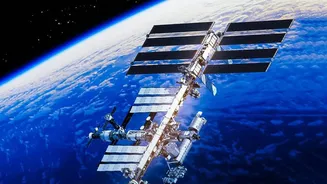
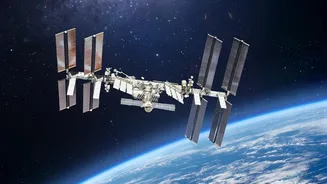
Not all orbits are created equal, and the destination has major cost implications. The most common and cheapest destination is Low Earth Orbit (LEO), the region where the International Space Station and many satellite constellations reside. Missions to higher orbits, like Geostationary Transfer Orbit (GTO), require significantly more energy. GTO is an intermediate path used to place satellites in a final geostationary orbit far above the Earth, a prime spot for communications satellites. Reaching GTO demands more propellant and often means the rocket's first stage cannot be recovered, forcing it into an expendable mode which forfeits the cost savings of reusability. As a result, a rocket's payload capacity to GTO is much lower than its capacity to LEO. For example, a Falcon 9 that can lift 22,800 kg to LEO can only carry about 8,300 kg to GTO. This energy penalty directly translates to a higher effective cost per kilogram for the mission. Interplanetary missions or those to other complex orbits are even more demanding and, therefore, more expensive.
Other Factors in the Final Bill
Beyond the big three, several other elements influence the final price of a launch. Launch frequency, or cadence, plays a crucial role; providers who launch dozens of times a year can spread their fixed operational costs—like ground crews and infrastructure—across more missions, achieving economies of scale. Insurance is another substantial cost, providing a financial safety net in a high-risk industry. Furthermore, specific payload needs can add to the bill. Some satellites require special handling, clean room facilities, or specific orbital inclinations that can only be reached efficiently from certain launch sites. As the space economy grows and competition increases with new vehicles from companies like Blue Origin and other national agencies, these factors will continue to evolve. However, the core principles of reusability, mass, and destination will remain the fundamental drivers of the cost to reach orbit.