




A New Defensive Triangle
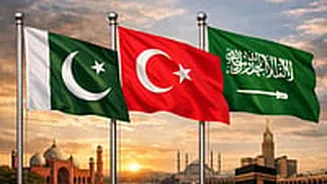
Signed on August 7, 2026, by leaders from Riyadh, Ankara, and Islamabad, the Mecca Pact establishes a formal collective defense framework. Its central clause stipulates that an armed attack against any of the three nations shall be regarded as an attack against them
all, a principle similar to NATO's Article 5. This agreement brings together three major Sunni-majority states with complementary strengths: Saudi Arabia's immense financial resources and energy influence, Turkey's large, technologically advancing military, and Pakistan's nuclear capabilities and vast army. Officials have characterized the pact as purely defensive, not aimed at any specific country, and open to other states who wish to join. The agreement builds upon a previous bilateral defense deal signed between Saudi Arabia and Pakistan in September 2025.
The Shifting Geopolitical Context
The timing of the pact is critical, arriving amidst heightened regional instability, including the ongoing conflict with Iran and renewed attacks by Houthi forces in Yemen. For years, many regional states relied on the United States as the primary security guarantor. However, a perception of waning American commitment has prompted these powers to seek greater autonomy and build their own security architecture. The agreement is seen by analysts as an assertion of regional ownership over security, creating a framework for deterrence that does not solely depend on external powers. While the signatories all maintain partnerships with the US, the Mecca Pact signals a move towards a more multipolar world where middle powers are creating a web of diverse alliances to hedge their bets.
Beyond a Paper Pact?
While the "attack on one, attack on all" language is strong, the pact is viewed by many experts as a framework for coordination rather than a rigid military alliance. The full text has not been released, leaving the precise military obligations of each member unclear. The agreement calls for deeper cooperation in defense industries, joint military exercises, and intelligence sharing. However, its true test will come during a crisis. Analysts note that the divergent strategic priorities of the three nations—from Saudi Arabia's focus on Gulf security to Turkey's ambitions in the Mediterranean and Pakistan's rivalry with India—could complicate a unified response. The pact's immediate value may lie more in its power as a signal to both adversaries and allies, creating strategic ambiguity and strengthening the bargaining position of its members.
What It Means for India
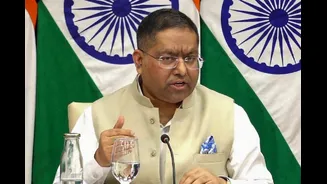
For India, the Mecca Pact is a significant development that requires careful monitoring. The Ministry of External Affairs has stated it is examining the agreement's implications for national security and regional stability. The pact formalizes a security axis involving Pakistan, which raises concerns in New Delhi about the potential for Islamabad to gain greater diplomatic, financial, and technological support from its powerful partners. India has cultivated strong, independent relationships with both Saudi Arabia and Turkey. The challenge now will be to navigate this new trilateral grouping while preserving its vital bilateral ties. Analysts suggest that while the pact may embolden Pakistan, Saudi Arabia is unlikely to jeopardize its robust economic and strategic partnership with India. New Delhi's response is one of cautious observation, focusing on strengthening its own partnerships in the region to mitigate any potential fallout.