





The Science of a Good Beat
Music is a powerful tool for enhancing exercise. One of its key benefits is its ability to distract from pain and fatigue. When your mind is focused on a great song, it pays less attention to signals of physical strain, which can lower your rate of perceived
exertion (RPE). This means the workout can feel less strenuous than it actually is, allowing you to push harder and last longer. Studies show that listening to music, particularly preferred tracks, can delay fatigue and improve energy efficiency. Furthermore, music triggers the release of dopamine, the brain's 'feel-good' neurotransmitter, which boosts motivation and associates your workout with positive feelings, making you more likely to stick with it.
Finding Your Rhythm
Beyond simple distraction, your body has a natural tendency to synchronize its movements to a rhythmic beat, a phenomenon known as rhythmic or auditory-motor synchronization. When your steps, pedal strokes, or movements align with the music's tempo, your body can become more efficient. This synchronization helps maintain a consistent pace, improves coordination, and can even reduce oxygen consumption, making the same effort feel easier. Choosing music with the right beats per minute (BPM) is crucial. A tempo of 120-140 BPM is often recommended for moderate-intensity activities like brisk walking or running, as it aligns well with a steady heart rate and pace. Structuring a playlist that gradually increases in tempo for your warm-up and peaks during high-intensity portions can make your entire workout feel more fluid and intentional.
Choreography as a Mental Workout
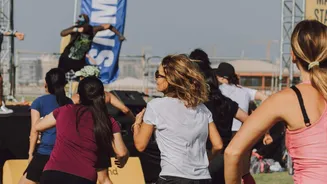
Choreography takes the power of music a step further by adding a layer of mental engagement. Instead of mindlessly repeating the same motion, following a set routine turns exercise into a skill-based activity. Learning and executing choreographed sequences requires focus on coordination, memory, and spatial awareness, effectively turning your workout into a brain game. This mental workload not only prevents boredom but can also increase the overall energy expenditure of a session. Fitness classes like Zumba, dance cardio, and even structured spin classes use choreography to create an immersive experience. This structured approach keeps participants engaged and makes the workout feel more like a fun, shared activity than a solitary chore.
Putting It All Together
To harness these benefits, start by curating playlists that match your workout's intensity. For a 30-minute run, you might begin with songs around 100-120 BPM for a warm-up, build to 130-140 BPM for the main portion, and cool down with tracks under 100 BPM. Many streaming apps have pre-made playlists categorized by BPM or activity. If you're looking for choreography, you don't need a studio membership. Countless free resources on platforms like YouTube offer guided dance fitness, aerobics, and HIIT routines set to music. Even simple, repetitive choreography has been shown to be effective, as it allows you to focus on form and intensity once you've mastered the steps. The key is to find a style that you genuinely enjoy, as pleasure is a major factor in long-term adherence to any fitness routine.