






1. The 2015 Gorkha Earthquake: The Wake-Up Call for Building Codes
When a magnitude 7.8 earthquake struck Nepal in April 2015, the devastation was immense, claiming nearly 9,000 lives and affecting millions. For both Nepal and the adjacent, seismically active states of India, the disaster was a brutal reminder of the importance
of structural integrity. The biggest lesson was that while earthquakes are unavoidable, mass casualties are not. The tragedy exposed the fatal consequences of weak law enforcement and a lack of monitoring for building codes. It drove home the urgent need for earthquake-resistant construction, not just as a guideline but as a strictly enforced mandate. The disaster spurred the creation of new disaster management authorities in Nepal and reinforced the need for retrofitting old, vulnerable buildings across the entire Himalayan belt.
2. The 2013 Kedarnath Floods: The Peril of Unregulated Development
The 2013 flash floods in Uttarakhand were a horrifying confluence of a multi-day cloudburst, a glacial lake outburst, and landslides. The disaster, which claimed over 5,700 lives, served as a stark lesson on the dangers of unchecked development in fragile ecosystems. The investigation revealed that rampant, unregulated construction along riverbanks and on steep slopes had massively amplified the damage. The key takeaway was that development must respect the ecological carrying capacity of the mountains. The tragedy highlighted an urgent need for sustainable tourism models, better land-use planning, and a shift away from building in high-risk zones.
3. The 2021 Chamoli Disaster: Understanding New Climate Change Threats
The Chamoli disaster was a shocking new kind of threat. It wasn't a typical glacial lake outburst flood (GLOF). Instead, a massive rock and ice avalanche from Ronti Peak crashed into the valley, generating a devastating debris flow that wiped out two hydropower projects and killed over 200 people. The lesson here was about the evolving and unpredictable nature of climate-related risks. Scientists concluded the avalanche consisted of 80% rock and 20% ice, and the heat from the fall melted the ice, creating a catastrophic slurry. This event forced authorities in both India and Nepal to recognize that climate change is destabilizing entire mountain slopes, not just glaciers, creating complex cascading hazards that existing models had not fully accounted for.
4. The 2023 Sikkim GLOF: The Limits of Early Warning Systems
The 2023 glacial lake outburst flood from South Lhonak Lake in Sikkim was a disaster that had been predicted. The lake’s rapid growth was well-documented. Yet, the resulting flood was catastrophic, breaching a major dam and causing widespread destruction. While timely warnings from authorities upstream did save many lives, the event exposed critical deficiencies in hazard assessments. The trigger was the collapse of a lateral moraine (the side wall of the glacier), a factor often overlooked in GLOF modeling. The lesson was twofold: early warning systems are vital and effective, but they must be built on more comprehensive risk assessments that account for cascading events, like landslides into lakes and massive sediment erosion downstream.
5. The Joshimath Land Subsidence: The Cost of Ignoring Warnings
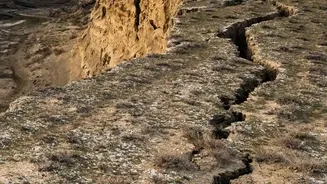
The slow-motion disaster in Joshimath, where the town began sinking and developing massive cracks in early 2023, was a crisis decades in the making. The primary lesson from Joshimath is about the dire consequences of ignoring scientific warnings. A 1976 report had already declared the town unsafe for heavy development, as it is built on ancient landslide debris. Yet, decades of unregulated construction, coupled with major infrastructure projects like hydropower plants and highways, pushed the fragile geology past its breaking point. Joshimath became a symbol of unsustainable development, teaching a painful lesson on the importance of respecting geological fragility and heeding expert advice before it's too late.
6. The 1998 Malpa Landslide: The Need for Hazard Zonation
One of the worst landslides in India's history wiped out the entire village of Malpa in Uttarakhand, killing over 200 people, including pilgrims on the Kailash Mansarovar Yatra. The tragedy, caused by prolonged heavy rainfall on steep, unstable slopes, underscored a fundamental need for identifying and managing hazard-prone areas. An analysis after the event concluded that much of the loss could have been minimized if the area had been recognized as a high-risk zone and construction restricted. The enduring lesson from Malpa was the necessity of creating detailed hazard maps and implementing strict land-use regulations to prevent settlements from being built in the direct path of known dangers.
7. The 1991 Uttarkashi Earthquake: Rediscovering Traditional Wisdom
When a 6.8 magnitude earthquake struck Uttarkashi, it caused widespread destruction, with over 768 fatalities. In the aftermath, a crucial observation was made: traditionally built timber-laced houses, known as 'koti banal', suffered significantly less damage than modern concrete structures. These old-style homes had features like timber tie-bands that held the structure together during shaking. The earthquake taught a powerful lesson in valuing traditional architectural wisdom. It showed that modern materials were not inherently safer and that local, time-tested construction techniques offered a blueprint for resilience that had been foolishly discarded.