





Start with High-Quality Threads
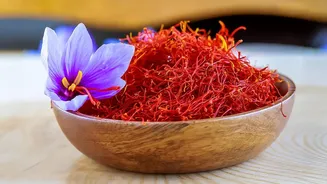
Before any technique, the quality of your saffron is paramount. Look for deep, uniformly red threads, known as stigmas, with a minimal amount of yellow or white style attached. Real saffron has a distinct aroma that is a complex mix of floral, honey-like,
and earthy notes. If it smells faint or musty, it's likely old or of poor quality. Similarly, if it lacks a strong scent, it might not be genuine. Since you're aiming to maximize a small amount, starting with a potent, high-grade product ensures you have the best possible foundation. It’s always better to use a tiny amount of excellent saffron than a larger quantity of a substandard one.
Gently Toast and Grind
One of the most effective ways to amplify saffron's character is to awaken it with a bit of heat. A gentle toasting for a few seconds in a dry pan helps release the spice's natural oils and aromatic compounds. Be extremely careful not to burn the delicate threads; they should become brittle and fragrant, not scorched. Once toasted, transfer the threads to a mortar and pestle. Grinding them into a powder dramatically increases the surface area, allowing the flavour and colour to be extracted much more efficiently when you introduce a liquid. Adding a pinch of coarse salt or a sugar cube can provide the necessary friction to make grinding easier.
Master the Art of Blooming
Simply tossing dry saffron threads into a dish is a common mistake that wastes their potential. To get the most from your saffron, you must 'bloom' it. This means steeping the ground powder in a liquid to draw out its essence before adding it to your recipe. This simple step ensures the flavour and brilliant golden colour disperse evenly throughout your dish, rather than concentrating in one spot. The liquid infusion, threads and all, should be added to your recipe. This step is crucial for transforming a few threads into a powerful ingredient.
Choose Your Liquid Wisely
The liquid you choose for blooming plays a significant role. The most common and versatile choice is warm water. Use water that is warm to the touch but not boiling, as excessively high temperatures can destroy the delicate aromatic compounds and create a bitter taste. For creamy dishes like kheer, custards, or risottos, warm milk is an excellent option. A light broth that complements your recipe can also be used. Some experts note that while saffron's colour is water-soluble, some of its flavour compounds are fat-soluble, meaning a liquid with some fat, like milk, may extract a slightly different and richer profile.
Consider the Cold Method
An alternative technique, championed by some chefs for yielding a deeper colour and aroma, involves using ice. After grinding the saffron, place the powder in a small bowl and set an ice cube directly on top. As the ice melts slowly, it gently extracts the saffron's compounds without any heat, which some believe better preserves its delicate notes. This method takes more time—up to an hour, depending on the size of the ice cube—but is a fantastic option when you're not in a rush. The resulting infusion is often described as slightly more aromatic.
Store It Like Treasure
Finally, protecting your saffron from its enemies—light, heat, and moisture—is essential for preserving its aroma and flavour over time. Store your saffron threads in a clean, airtight container. A metal tin or a dark-tinted glass jar is ideal. Keep this container in a cool, dark place like a cupboard or pantry, away from the stove or any windows. Avoid the refrigerator, as opening the container can introduce condensation, which is detrimental to the dried threads. By storing it correctly, you ensure that every pinch you use is as potent as the day you bought it.