



To Beat the Crowds
Many of India's most famous sunrise spots are, unsurprisingly, very popular. Take Tiger Hill in Darjeeling, for instance. During peak season, hundreds of vehicles and thousands of visitors flock to the viewpoint to see the first light hit Kanchenjunga.
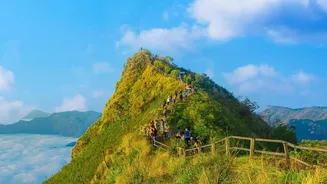
An early start—often as early as 3:30 a.m.—is less about preference and more about necessity to secure a decent viewing spot. By arriving before the main rush, you trade a frantic, crowded experience for a moment of relative peace. You get to choose your vantage point, set up your camera, and actually absorb the stillness before the grand reveal. This principle applies to many other popular trails, where starting just an hour before everyone else can mean having the trail largely to yourself.
For Clearer Views and Stable Weather
In mountain environments, weather is a critical factor. This is especially true in the Himalayas, where mornings are often clear and calm, while afternoons can bring clouds, mist, or even rain. On treks like the Chandrashila summit in Uttarakhand, known for its 360-degree Himalayan panorama, an early start significantly increases your chances of a clear view. The post-monsoon months of October and November are particularly prized for their crystal-clear skies, making an early trek even more rewarding. Starting in the dark and reaching the summit for dawn means you experience the landscape in its best possible light, before clouds roll in and obscure the very peaks you came to see. It’s a simple strategy: the earlier you start, the better your odds against unpredictable mountain weather.
The Golden Hour for Photographers
For anyone with a camera, the moments just before and after sunrise are known as the 'golden hour' for a reason. The light is soft, diffused, and casts a warm, ethereal glow. On a trail like Sandakphu in West Bengal, this is when you can capture the famed "Sleeping Buddha" silhouette of the Kanchenjunga range as it gets painted in hues of pink, orange, and gold. An early start ensures you are in position not just for the sunrise itself, but for the entire light show that precedes it. The pre-dawn blue hour offers its own moody beauty, followed by the dramatic first light hitting the peaks. Arriving late means you miss half the performance. By starting early, you give yourself the time to witness and photograph the full, breathtaking transition from night to day.
For a Safer and More Enjoyable Trek
Safety is a paramount concern on any trek. Starting early provides a significant buffer of daylight. On longer trails like the 18-22 km Kudremukh trek in Karnataka, an early start is crucial to ensure you complete the challenging route and return before dark. Trails are also cooler in the morning, which reduces the risk of heat exhaustion and makes for a more comfortable hike. You'll use less water and feel more energetic. Furthermore, an early start gives you more flexibility. If the trail is tougher than expected or you want to take longer breaks, you have the time. Rushing to beat sundown is stressful and increases the risk of a misstep. A pre-dawn start turns the journey into a relaxed exploration rather than a race against the clock.
To Experience Nature's Morning Symphony
Beyond the visual spectacle, a pre-dawn trek is an immersive sensory experience. Before the human chatter begins, the mountains have their own soundtrack. As you ascend in the quiet, you’ll hear the world waking up around you—the first bird calls, the rustle of unseen animals in the shola forests of the Western Ghats, and the sound of the wind through the pines. This peaceful solitude allows for a deeper connection with your surroundings. It's a meditative time, where the focus is simply on your footsteps, your breath, and the subtle sounds of nature. It’s an experience often lost in the noise of a midday hike. By the time the sun is fully up and the trail gets busy, you've already had the most serene and personal moments with the mountain all to yourself.