



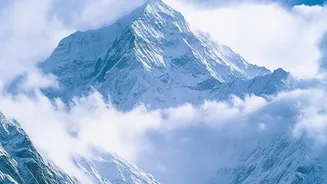
The 2021 Chamoli Flash Flood
On February 7, 2021, a massive chunk of rock and ice broke off from Ronti Peak in Uttarakhand’s Chamoli district. This was the first domino. The resulting avalanche tumbled down the valley with such force that the friction melted the ice component, transforming
the slide into a fast-moving, destructive debris flow. This slurry of mud, rock, and water temporarily dammed the Rishiganga river, leading to a catastrophic flash flood downstream that obliterated two hydropower projects and claimed over 200 lives. It was a textbook case of a cascade: a rock-ice avalanche triggering a debris flow, which in turn caused a devastating flood.
The 2013 Kedarnath Tragedy
One of India's worst natural disasters began not with an earthquake but with unusually heavy monsoon rains in June 2013. This intense precipitation was the trigger for the first stage of the cascade: the moraine dam containing the Chorabari glacial lake gave way. A devastating glacial lake outburst flood (GLOF) surged down the Mandakini river valley. The wall of water, mud, and boulders, combined with countless landslides triggered by the saturated slopes, washed away the town of Rambara and devastated Kedarnath, resulting in the deaths of over 5,700 people.
The 2023 Sikkim Glacial Lake Outburst
In the early hours of October 4, 2023, the South Lhonak glacial lake in northern Sikkim breached its banks following heavy rainfall. This initial event triggered a powerful GLOF down the Teesta River. The disaster cascade escalated dramatically when the floodwaters reached the Chungthang Dam. The dam, unable to withstand the sudden surge, failed catastrophically, releasing an even greater volume of water. This secondary disaster amplified the flood's destructive power, causing immense damage to towns, bridges, and infrastructure far downstream in both Sikkim and West Bengal.
The 2015 Nepal Earthquake's Aftermath
When a 7.8 magnitude earthquake struck Nepal on April 25, 2015, the immediate shaking was only the beginning of the horror. The seismic event triggered a deadly cascade across the high mountains. The most infamous secondary disaster was the massive avalanche on Mount Everest that killed at least 19 people at Base Camp. Elsewhere, thousands of landslides were initiated, burying entire villages like Langtang and blocking critical roads needed for rescue efforts. Some of these landslides dammed rivers, such as the Kali Gandaki, creating new flood risks for communities downstream that had to be evacuated.
The 1950 Assam-Tibet Quake and Flood
On August 15, 1950, a colossal earthquake with a magnitude of 8.6 struck the remote border region of Assam and Tibet. The immense shaking was the primary hazard, causing widespread destruction. However, a delayed but deadly secondary hazard followed. The earthquake triggered enormous landslides in the Mishmi and Abor Hills, which blocked numerous rivers. One such landslide dammed the Subansiri River. Eight days later, this natural dam burst, unleashing a seven-metre-high wall of water that inundated villages and killed over 500 more people who had survived the initial quake.
The 2010 Attabad Lake Landslide
Not all cascades are instantaneous. On January 4, 2010, a massive landslide in the Hunza Valley of northern Pakistan buried the village of Attabad, killing 20 people. This landslide acted as a giant, unplanned dam, completely blocking the flow of the Hunza River. Over the next five months, a massive lake began to form, eventually stretching over 21 kilometres long. This new lake, now known as Attabad Lake, submerged villages, farms, and a significant portion of the Karakoram Highway. The landslide created a long-term hazard—a beautiful but dangerous new lake with the potential for a dam-breach flood.
The 2012 Seti River Debris Flow
On May 5, 2012, a flash flood tore through Nepal's Seti River valley, killing over 70 people without the warning of heavy rain. The trigger, high in the Annapurna mountains, was a massive rock and ice avalanche from the slopes of Annapurna IV. The energy and friction from this avalanche falling over 5,000 meters generated enough heat to melt ice, creating a torrent of water and debris. This slurry then burst through a smaller, temporary dam created by an earlier rockfall, generating a 10-metre-high debris flow that devastated communities near Pokhara.