







The Old Way: Spaceflight’s Disposable Model
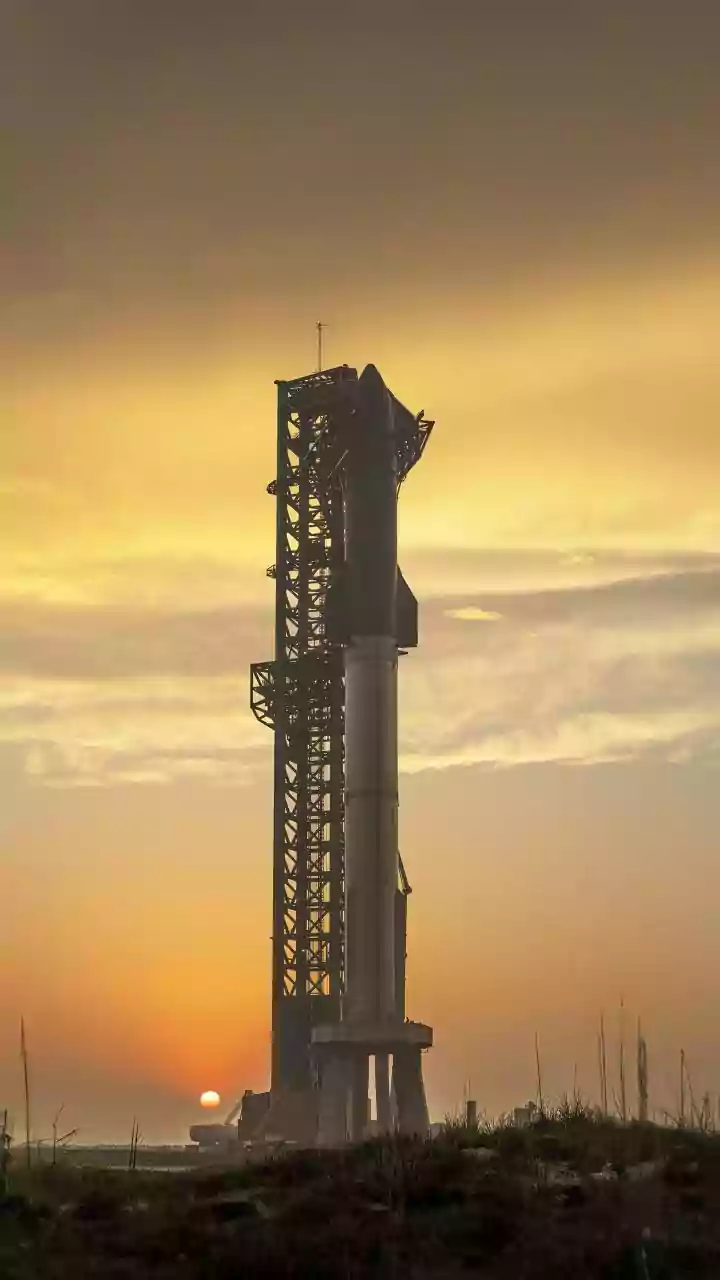
Every rocket launch is a marvel of controlled explosions. To get a payload out of Earth’s gravity, rockets are built in stages. The massive first stage provides the initial thrust and then falls away. The smaller second or upper stage then ignites, carrying
the satellite the rest of the way. After deploying its payload, this upper stage has traditionally been an afterthought. With its job done, it's left to its fate: either it falls back and burns up in the atmosphere or it remains in orbit as a piece of high-speed space junk, contributing to an already crowded environment. This 'use once, throw away' model was simply the cost of doing business in space. The upper stage, a sophisticated piece of engineering with fuel tanks, engines, and electronics, was treated as disposable packaging.
A Paradigm Shift: From Space Junk to Space Asset
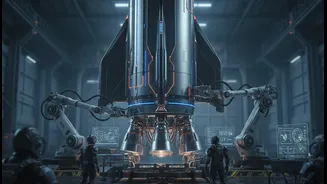
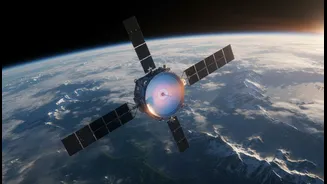
The new, revolutionary idea is simple: why throw away a perfectly good piece of space hardware? A growing number of companies are pioneering a new approach where the upper stage doesn't just die after its primary mission. Instead, it gets a second life. By equipping these stages with solar panels for power, their own small thrusters for navigation, and advanced control systems, they can be transformed from debris into functional, long-lasting orbital platforms. This concept turns the upper stage into an Orbital Transfer Vehicle (OTV) or 'space tug'. It can move satellites from the drop-off point of a large rocket to their precise, final orbits, acting as a last-mile delivery service in space. Some concepts go even further, envisioning these empty fuel tanks as the foundation for workshops, fuel depots, or even habitats.
Pioneers of a Sustainable Space
This isn't just science fiction; companies are actively building this future. Firefly Aerospace is developing its Elytra line of orbital vehicles, designed to provide a wide range of in-space services, from maneuvering payloads to providing long-term platforms in orbit. Another company, Nanoracks, has a program called 'Outpost' dedicated to converting spent rocket stages into commercial space stations for research and manufacturing. The idea has historical roots, too. America's first space station, Skylab, was famously constructed from a modified upper stage of the giant Saturn V moon rocket. What was once a bold experiment is now becoming a viable business model, driven by the need for more sustainable and cost-effective space operations.
The Indian Context and Global Impact
This global trend holds immense significance for India's burgeoning space ambitions. The Indian Space Research Organisation (ISRO) is already a world leader in cost-effective launches and is making strides in reusability with its 'Pushpak' Reusable Launch Vehicle (RLV) program. Adopting technologies for upper-stage repurposing would be a natural and powerful next step. For Indian space-tech startups, this opens up a new frontier. Imagine an Indian company offering services to fine-tune the orbits of satellites launched on a PSLV, or using a spent upper stage as a platform for testing new components. It aligns perfectly with ISRO's goal of bringing down launch costs to as low as $2,000 per kg and enabling a new ecosystem of space-based enterprises. By turning 'waste' into a resource, India could further solidify its position as a competitive and innovative player in the global space economy.