







A Universe in a Single Frame
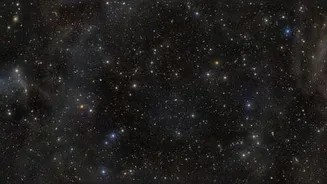
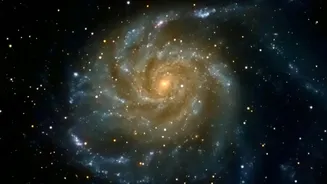
The new image, released in early August 2026, showcases the renowned COSMOS field, a patch of sky in the constellation Sextans. This area was chosen because it offers a relatively clear window into the distant universe, with few foreground stars from
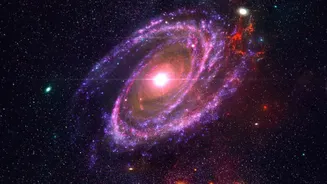
our own Milky Way to block the view. The result is a cosmic portrait crowded with over half a million galaxies of all shapes and sizes: delicate spirals, smooth ellipticals, and distorted galaxies caught in the act of merging. This single, incredibly deep image was created by stacking hundreds of individual observations taken by the LSST Camera, demonstrating its power to reveal faint and distant objects. It marks the first data preview based on observations from the world's largest digital camera, giving scientists their first taste of the data to come.
The Power of the LSST Camera
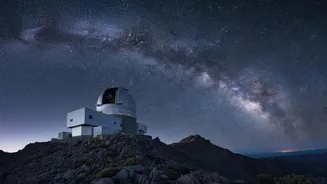
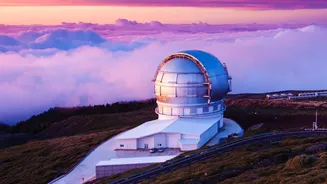
At the heart of the Rubin Observatory is the LSST Camera, an engineering marvel. Weighing about 3,000 kilograms and roughly the size of a small car, it is the largest digital camera ever constructed for astronomy. Its focal plane packs an astounding 3,200 megapixels (3.2 gigapixels), composed of 189 individual sensors that must be cooled to -100°C to operate effectively. This incredible resolution means a single image would require hundreds of high-definition TV screens to be displayed in its entirety. The camera is mounted on the 8.4-meter Simonyi Survey Telescope high in the Chilean Andes, where the dry air and dark skies provide ideal observing conditions. This powerful combination allows the observatory to capture a vast area of the sky in a single shot with extreme sensitivity.
The Greatest Cosmic Movie Ever Made
This image is just the opening scene of a much grander production. In June 2026, the Rubin Observatory officially began its decade-long mission: the Legacy Survey of Space and Time (LSST). The goal is to create the most comprehensive, high-definition cinematic record of the universe ever attempted. The observatory will image the entire southern sky every few nights, capturing about 10 terabytes of data each night. This rapid, repeated scanning will allow scientists to track changes in the cosmos, from asteroids moving across our solar system to the explosive deaths of distant stars. By the end of the 10-year survey, the observatory will have revisited each patch of sky around 800 times, creating a time-lapse movie that will reveal the dynamic nature of the universe.
Unlocking the Universe's Biggest Mysteries
The LSST has four primary science goals that drove its design. First, it will probe the nature of dark energy and dark matter, the mysterious substances that make up the vast majority of our universe. By mapping the distribution of galaxies and how their light is bent by gravity, scientists hope to better understand these invisible components. Second, the survey will take a comprehensive inventory of our solar system, discovering millions of new asteroids and comets. Third, it will map our own Milky Way galaxy in unprecedented detail. Finally, by cataloging billions of transient and variable objects, it will explore the ever-changing sky, alerting astronomers worldwide to new phenomena within minutes of detection. The data will be made widely available, empowering a global community of scientists and the public to participate in the exploration.