



A Frozen Treasure from Space
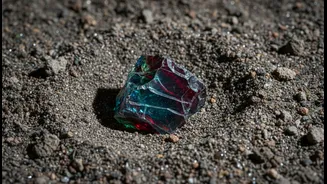
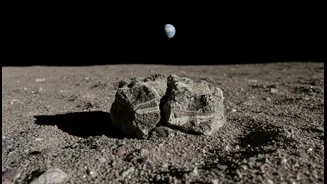
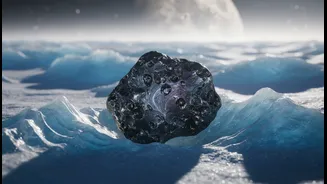
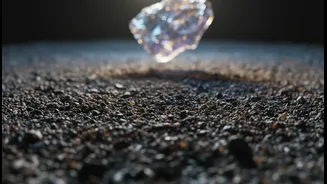
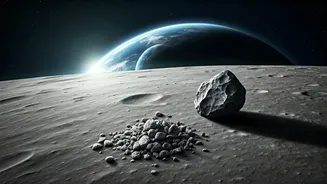
In 1981, a team of scientists on an expedition in the Allan Hills region of Antarctica found a peculiar rock. It wasn't just any rock; its chemistry would later prove it had been blasted off the surface of the Moon by an ancient asteroid impact, journeyed
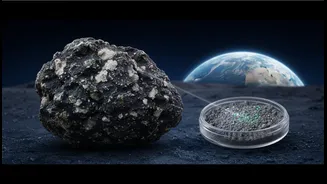
through space, and eventually landed on Earth. Catalogued as ALHA 81005, it holds a special place in history as the very first meteorite to be conclusively identified as originating from the Moon. For decades, it sat in collections, a silent piece of another world. Antarctica, with its pristine, icy landscape, is an ideal place to find meteorites, as the dark rocks stand out against the white expanse and are preserved in the cold, dry environment.
Enter Chandrayaan-3
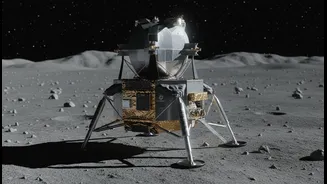
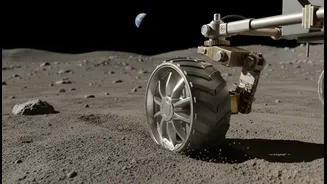
Fast forward to August 2023. India's Chandrayaan-3 mission successfully soft-landed its Vikram lander near the Moon's south pole, a historic first. The Pragyan rover rolled out onto the lunar surface at a site named 'Shiv Shakti Statio' and began its analysis. One of its key instruments was the Alpha Particle X-ray Spectrometer (APXS), a device developed by the Physical Research Laboratory (PRL) in Ahmedabad. The APXS bombards the lunar soil with alpha particles and X-rays and then analyses the resulting radiation to determine the elemental composition of the surface. This gave scientists an unprecedented, on-the-spot chemical fingerprint of the soil in this unexplored region of the Moon.
Unlocking the Cosmic Connection
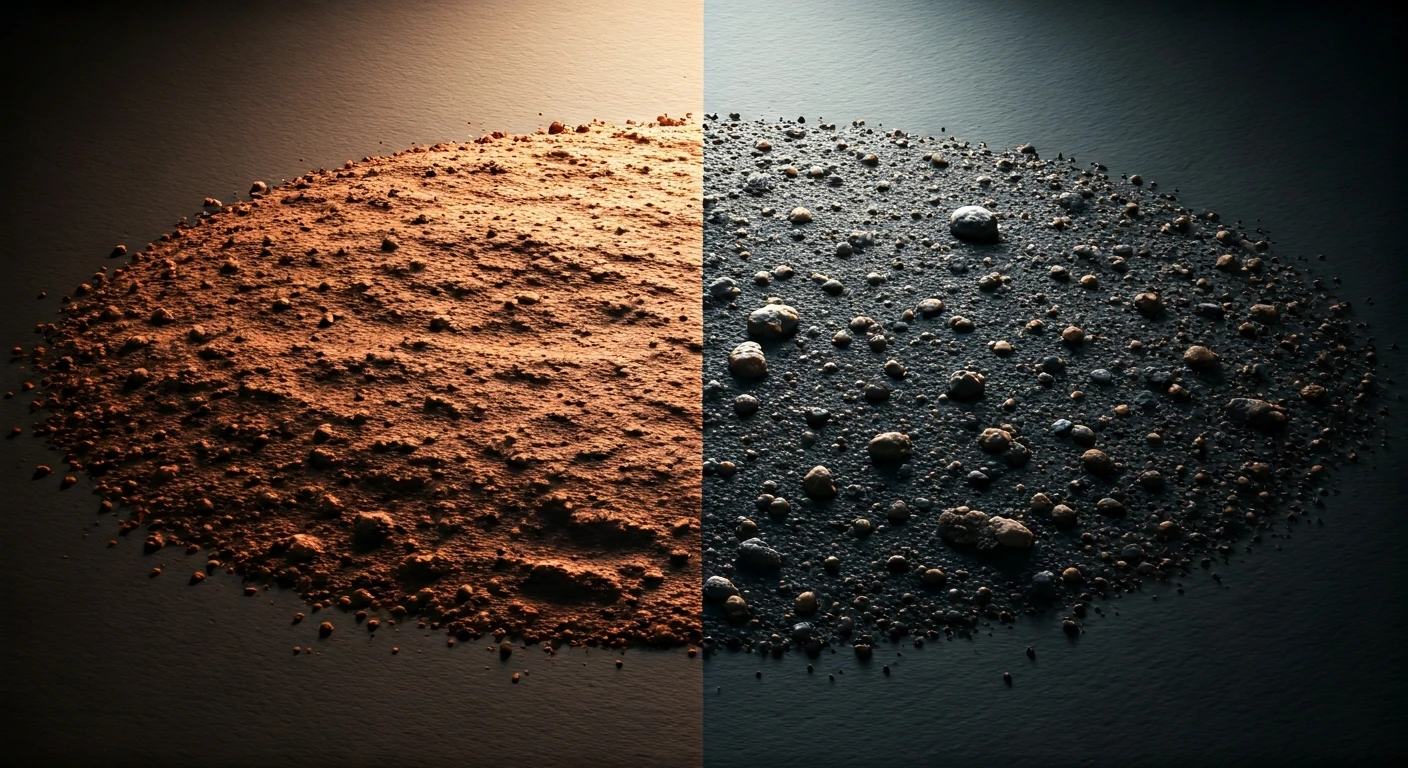
In a recent study published in the journal NPJ Space Exploration, scientists from PRL revealed a stunning connection. They compared the data sent back by Pragyan's APXS from the Shiv Shakti landing site with the known chemical makeup of 66 different lunar meteorites found on Earth. One meteorite stood out as a remarkably close geochemical match: ALHA 81005. The analysis showed that both the Antarctic meteorite and the soil at the Chandrayaan-3 landing site had a similar, and rather unusual, composition. They both contained lower levels of aluminium oxide and significantly higher levels of iron and magnesium oxides compared to the typical lunar highlands.
What Does This Match Mean?
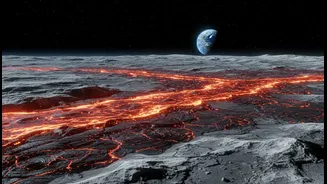
ISRO has clarified that this doesn't mean the meteorite was physically launched from the exact spot where Chandrayaan-3 landed. Rather, it suggests that both the Shiv Shakti site and the rock that became meteorite ALHA 81005 represent the same type of magnesium-rich crust from the Moon's highlands. Scientists theorise that this unique material was excavated from deep within the Moon's crust. The prime suspect for this cosmic excavation is the massive South Pole-Aitken Basin, one of the largest known impact craters in the solar system, located about 350 kilometres from the landing site. A cataclysmic impact billions of years ago could have blasted this deeper material across the lunar surface, some of which was later knocked off the Moon entirely to eventually land on Earth.
A Testament to Indian Ingenuity
This discovery is more than just a fascinating coincidence; it's a landmark achievement that underscores the scientific prowess of India's space program. It is one of the first studies to directly link in-situ measurements from the lunar surface with the vast library of lunar meteorites on Earth. This connection not only validates the quality of the data from Chandrayaan-3's instruments but also provides a crucial 'ground truth' for meteorite studies. By linking a specific type of meteorite to a known region on the Moon, scientists can now study these rocks with a much clearer understanding of their geological context. It supports the Lunar Magma Ocean hypothesis—the idea that the Moon was once covered in molten rock—and opens new avenues for understanding how the ancient lunar crust was formed.