



What is Project Astra?
Project Astra is a research prototype from Google DeepMind designed to be a universal AI assistant. Unlike many current AIs that primarily process text, Astra is multimodal, meaning it understands and responds to a combination of video, audio, and text in real-time.
During demonstrations, Astra has shown it can identify objects through a phone's camera, explain the function of parts of a diagram, remember where an item was placed, and even interpret drawings. It's built on Google's Gemini family of models and is designed to be a context-aware companion that can be integrated into phones and smart glasses, making interactions feel more natural and intuitive.
The 'Ten Results' and Their Meaning
While the headline's 'ten results' may not refer to a specific list of ten published findings, it captures the essence of a series of capability demonstrations that have profound implications. Some reports mention OpenAI's similarly named 'Astra' model solving ten major mathematical problems, highlighting a trend of AI tackling complex scientific challenges. For Google's Astra, the key 'results' are its demonstrated abilities: real-time visual interpretation, contextual memory, and the capacity to explain complex subjects. It can, for instance, look at a diagram of a scientific concept and explain it, or identify a species of plant from a live video feed. These are not just parlor tricks; they represent a new frontier where AI can actively participate in the process of observation and interpretation.
The Promise: An AI Research Partner
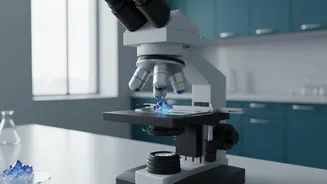
For scientists, the potential is enormous. An AI like Astra could act as a tireless research assistant, capable of analyzing visual data from experiments, cross-referencing findings with millions of published papers, and even proposing novel hypotheses. Imagine a biologist in the field identifying organisms instantly, a chemist visualizing molecular structures with verbal commands, or a physicist having a complex equation explained in simple terms. This technology promises to accelerate the pace of discovery by handling immense datasets and spotting patterns that may be invisible to the human eye, freeing up researchers to focus more on creativity, critical thinking, and experimental design.
New Question 1: Reproducibility and Bias
The first major question is one of trust and validity. If an AI suggests a groundbreaking correlation, is it a genuine discovery or the result of biases within its vast training data? The scientific method is built on reproducibility, but how can another lab reproduce a finding that originated from a proprietary, ever-changing AI model? Ensuring that AI-generated insights are free from hidden biases and can be independently verified is a critical hurdle that the research community must address to maintain scientific integrity.
New Question 2: De-skilling or Augmentation?
Another concern is the potential de-skilling of future generations of scientists. If an AI can perform complex data analysis and even formulate hypotheses, will researchers lose the fundamental skills of critical inquiry and hands-on investigation? The optimistic view is that AI will be a tool for augmentation, not replacement. It could handle the tedious aspects of research, allowing scientists to ask bigger, more creative questions. However, finding the right balance where AI assists without diminishing the core skills and intuition of the human researcher is a challenge that universities and labs must now consider.
New Question 3: Who Owns the Discovery?
Finally, the rise of AI collaborators raises thorny issues of intellectual property and authorship. If a discovery is made through a combination of human direction and AI analysis, who gets the credit? Does the Nobel Prize go to the scientist, the AI, or the corporation that built the AI? This is no longer a hypothetical question. As AI's role shifts from a simple tool to an active participant in the discovery process, academic institutions, journals, and funding bodies need to establish clear guidelines on how to attribute and recognise these new forms of human-machine collaboration.