







Beyond Kilowatts: The Rise of Agrivoltaics
The idea of a solar farm has traditionally been simple: use land to generate electricity. But as land becomes an increasingly precious resource, especially in densely populated countries like India, a more innovative model is taking root. Known as agrivoltaics,
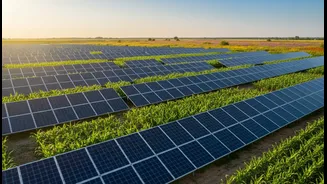
or dual-use solar, the practice involves integrating solar power generation with agricultural activities on the same plot of land. Instead of land being used for either energy or food, it can now be used for both simultaneously. This approach doesn't just solve a land-use conflict; it creates a symbiotic relationship. The solar panels can protect crops from harsh weather, while the crops, through transpiration, can help cool the panels, making them more efficient. This is a significant shift from treating solar farms as isolated power stations to viewing them as integrated, productive ecosystems.
Farming Under the Sun
One of the most promising applications of agrivoltaics is growing crops under elevated solar panels. The partial shade created by the panels can be incredibly beneficial, especially in hot, arid climates. It reduces heat stress on plants and lowers water evaporation from the soil, leading to significant water savings. Research has shown that many crops, particularly shade-tolerant varieties like leafy greens, tomatoes, peppers, and even strawberries, can thrive in these conditions. In some cases, crop yields have actually increased compared to traditional open-field farming. For farmers, this opens up a new world of possibilities. They gain a second, stable income stream from selling electricity back to the grid or leasing their land to solar developers, supplementing the often-unpredictable income from agriculture.
A Boost for Biodiversity
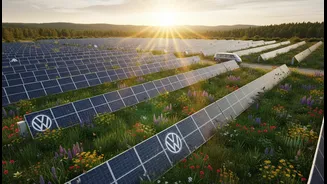
The benefits extend beyond agriculture. When managed thoughtfully, solar farms can be transformed into havens for biodiversity. Instead of bare ground or gravel, the land under and around panels can be planted with native wildflowers and grasses. This creates crucial habitat for pollinators like bees and butterflies, whose populations are under threat globally. Studies have shown that pollinator-friendly solar farms can see a dramatic increase in insect populations, which in turn benefits nearby agricultural land by improving crop pollination. These sites also provide shelter for small mammals and birds, creating protected corridors for wildlife in landscapes often dominated by monoculture agriculture.
The Rise of Solar Grazing
Another innovative use is 'solar grazing,' where sheep are used to manage vegetation on the site. This is a win-win solution. The solar farm operator gets natural, cost-effective lawn-mowing services without the need for noisy, polluting machinery or chemical herbicides. The sheep, in turn, get access to pasture and are protected from the intense sun by the shade of the panels. Studies have shown that this practice improves soil health, as the sheep's grazing and manure naturally fertilize the land. For farmers, it offers a way to expand their grazing land without having to purchase or rent expensive new pastures, creating a new economic opportunity for 'solar shepherds'.
The Indian Context: A Timely Solution
For India, which has ambitious renewable energy goals and a massive agricultural sector, agrivoltaics is not just an interesting concept—it's a critical solution. With land pressure mounting, the ability to generate power without displacing food production is invaluable. Pilot projects are already showing success across the country, from Gujarat to Maharashtra. A project in Sagar, Madhya Pradesh, grows crops like strawberries and lettuce under panels, while a project by the Central Arid Zone Research Institute (CAZRI) in Jodhpur has demonstrated significant increases in land productivity. Government initiatives like the PM-KUSUM scheme are further encouraging farmers to adopt solar technology, paving the way for wider adoption. By providing farmers with dual income streams and making agriculture more resilient to climate change, agrivoltaics aligns perfectly with national goals for both energy security and rural prosperity.