


The River's Relentless Rise
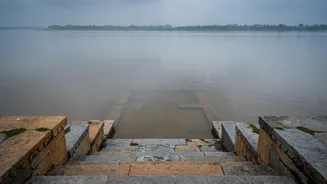
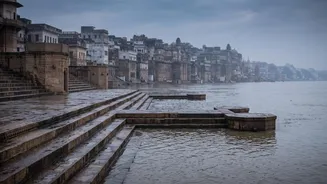
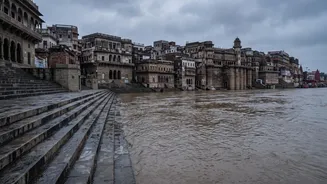
As of early September, the Ganga river, known locally as the Ganga, has been rising steadily, fueled by relentless monsoon rains. According to India's Central Water Commission, the water level has surpassed 70.5 meters, pushing past the established warning
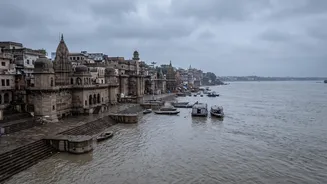
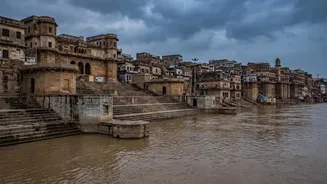
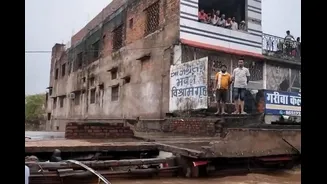
benchmark of 70.26 meters. With the river swelling by as much as two centimeters per hour, it is inching closer to the official danger mark of 71.26 meters. In response, authorities have suspended all boat traffic along the riverfront, a critical artery for commerce and tourism, and have urged residents and pilgrims to stay away from the powerful currents sweeping through the submerged ghats. The crisis is compounded by the flooding of the Varuna river, a key tributary, which has inundated several low-lying residential areas, displacing thousands of people and turning streets into canals.
A Sacred City Submerged
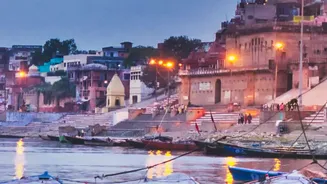
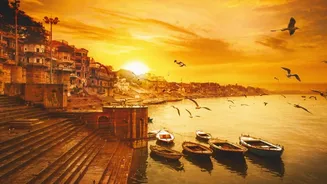
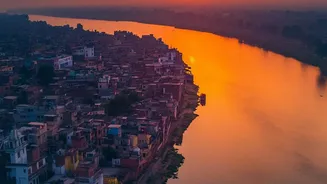
For a U.S. audience, it’s crucial to understand that Varanasi is not just any city. It is to Hindus what the Vatican is to Catholics—a spiritual epicenter. Its heart is its sprawling riverfront, a series of over 80 ghats, or stone stairways, that lead down to the water. These are places of prayer, bathing, and, most famously, cremation. The current flood has submerged vast stretches of this iconic landscape. The famed Dashashwamedh Ghat, where the spectacular evening Ganga Aarti (a fire ceremony) is performed, has seen its lower platforms disappear under the murky water, forcing priests to move the ancient ritual to higher ground and nearby rooftops. This disruption strikes at the very core of the city’s daily rhythm, a rhythm that has been practiced for centuries and draws visitors from across the globe.
Life and Death, Interrupted
Perhaps the most visceral sign of the flood's impact is the scene at Manikarnika Ghat, one of India’s most sacred cremation grounds. Here, funeral pyres are meant to burn 24/7, releasing souls from the cycle of rebirth. But the rising Ganga has completely inundated the traditional cremation platforms. In a sight that is both heartbreaking and a testament to resilience, cremations have been moved to the terraces and rooftops of adjacent buildings. Grieving families, who traditionally carry their loved ones on their shoulders through the ghat's narrow lanes, are now forced to use boats to navigate the flooded alleys and pay higher costs to perform these last rites in makeshift locations. It is a profound disruption of a ritual that is central to the Hindu faith.
An Escalating Emergency
This is far from a surprise event; it is an annual, and seemingly worsening, crisis. The district administration has been on high alert, with Prime Minister Narendra Modi, who represents Varanasi in Parliament, directing officials to mount a relief effort on a “war footing.” Dozens of flood relief camps have been established to house the thousands of residents displaced from at least 29 villages and city wards. Teams from the National Disaster Response Force (NDRF) are patrolling in boats, helping to evacuate families and monitor the situation. But with weather forecasts predicting more heavy rainfall through the coming week, the fear is that the worst is yet to come. The city finds itself in a precarious state of waiting, watching the water and hoping the ancient structures and modern defenses hold.